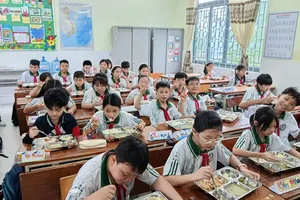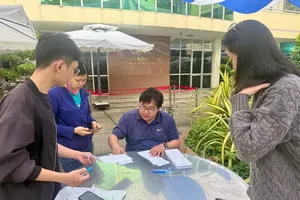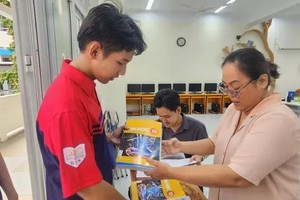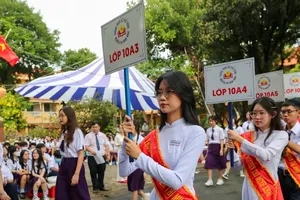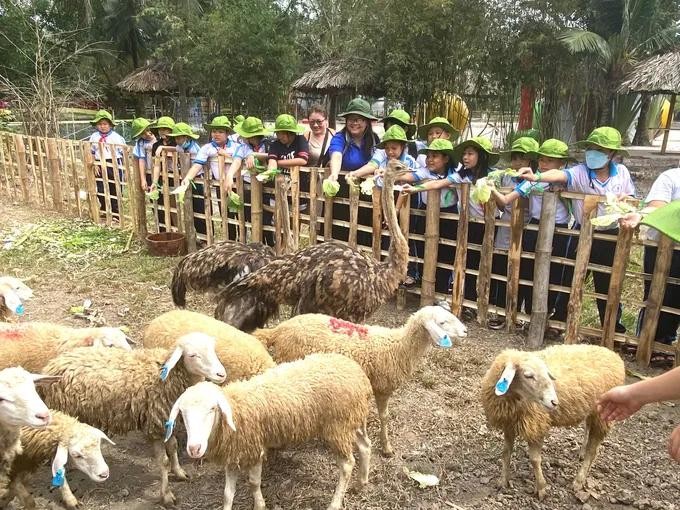
Extracurricular activities beyond the school campus have helped students connect more closely with real life. Yet behind each trip there remains a persistent concern over how to balance student safety with the effectiveness of the experience. In response to this challenge, many schools in Ho Chi Minh City have proactively developed procedures and solutions to ensure that extracurricular activities are both meaningful and secure.
Touching the real world
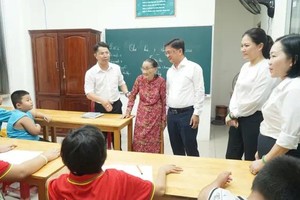
Stepping beyond the classroom, students at Phuoc Hung Secondary School in Ho Chi Minh City’s Ba Ria Ward take learning to the real world through annual field trips. Each year, they visit historical landmarks such as the Long Phuoc Tunnels, the Vo Thi Sau Monument, and the Minh Dam War Zone; explore traditional crafts at the An Ngai rice paper-making village; and experience hands-on lessons at vocational training centers. The school also arranges visits to Vietnamese Heroic Mothers and local orphanages - activities that foster empathy, gratitude, and lasting memories among students.
Principal Phan Thi Hong Cam explains that although the secondary school curriculum does not explicitly require experiential activities, the school has made them a priority. Lessons are no longer confined to textbooks but come alive through stories, characters, and real-life settings. Students gain maturity, deepen their knowledge, and receive moral and character education through direct participation.
Lessons beyond textbooks
Highlighting the importance of practical experience, Phan Thi Thu Nga, Principal of Le Thanh Duy Primary School, shared a simple yet revealing story. During a field trip, the head of the student council pointed to a cassava field and asked, “What kind of plant is this?” Many students confidently answered incorrectly—that it was a papaya tree. The incident underscored a crucial point: textbook knowledge alone is not enough. Students need hands-on experiences to truly understand and apply what they learn.
For Phan Thi My Hanh, Vice Principal of Tran Nguyen Han High School in Tam Thang Ward, experiential education is central to building a “happy school.” She believes expanding learning spaces beyond the classroom and strengthening ties between school, family, and community are essential to creating a dynamic environment filled with joy and laughter.
Despite the clear benefits, schools remain cautious. Vice Principal Phan Thi My Hanh notes that off-campus activities carry risks, including traffic accidents and injuries. Parental attitudes also pose challenges: some parents prioritize academic learning alone, while others worry about safety and prefer their children remain within the “protective embrace” of the family.
To address these concerns, schools emphasize meticulous planning. Tasks are clearly assigned, potential risks anticipated, and contingency measures prepared. Teachers closely monitor students, conduct thorough attendance checks, and follow detailed scripts for each program. Transportation providers must meet strict legal and safety standards. Equally important is collaboration with parents—schools survey opinions, encourage voluntary participation, gather feedback, and make commitments before any activity takes place. Thanks to careful preparation and coordination, many schools have successfully organized safe and enriching extracurricular programs.
Teacher Phan Thi Hong Cam stresses that effectiveness depends on selecting age-appropriate content and locations, conducting thorough surveys, and sharing plans early with relevant departments. Proactive risk assessment and prevention are vital, alongside strong cooperation between schools, teachers, and parents throughout the process.