As it enters a new era of development, the city is seeking a robust legal framework to support its ambition of becoming a globally competitive special metropolis and a sustained engine of national growth.
Legacy of reform
On May 19, 2026, the Politburo issued Resolution No. 09-NQ/TW on the construction and development of Ho Chi Minh City in the new era, setting out a long-term vision through 2075. The resolution targets average annual GRDP growth of 10 percent during 2026–2045, with per capita GRDP reaching approximately US$75,000 by 2045, a Human Development Index (HDI) of 0.9, net-zero emissions and a stronger position for the city within the global network of metropolitan centers.
While Ho Chi Minh City's economic contributions over the past 50 years are often measured in GDP growth and budget revenues, another lasting legacy lies in its role in shaping Vietnam's economic institutions and reform agenda.
Throughout four decades of the Doi Moi (Renewal) process, the city has demonstrated its trademark dynamism, creativity and resilience under the leadership of the municipal Party Committee. Faced with outdated regulations that no longer reflected economic realities, city leaders often sought practical solutions beyond existing administrative constraints, a practice widely known as "fence-breaking," referring to pioneering policy experiments that later informed national reforms.
These initiatives helped establish Ho Chi Minh City as the country's leading economic hub and an important driver of institutional innovation.
The reform policies adopted at the sixth National Party Congress in 1986 were heavily influenced by practical experiences from across the country, including Ho Chi Minh City's vibrant local economy.
Between 1979 and 1986, as Vietnam struggled with severe shortages of food, raw materials and industrial inputs, city leaders refused to remain constrained by rigid planning mechanisms. State-owned enterprises such as Viso, Khanh Hoi Cigarette Factory, Saigon Beer, Thanh Cong Textile and Phong Phu Textile introduced supplementary production beyond centrally assigned quotas.
Although initially criticized, these market-oriented practices proved successful in reviving production and improving workers' livelihoods. City authorities continued to document and report these experiences to the central government, providing valuable evidence for broader national reforms.
The experiments led the Government to issue Decision No. 25-CP on January 21, 1981, granting state-owned enterprises greater autonomy in production, business operations and financial management. The decision marked one of Vietnam's earliest institutional reforms and laid the foundation for enterprise autonomy following Doi Moi.
Beginning in the early 1990s, Vietnam gradually established the legal framework for its socialist-oriented market economy. By the ninth National Party Congress in 2001, this economic model had been formally affirmed.
Many pioneering initiatives first introduced in Ho Chi Minh City, including Tan Thuan Export Processing Zone, the Ho Chi Minh City Securities Trading Center, the Urban Development Investment Fund, Vietnam's first joint-stock commercial bank, the "one-stop, one-seal" administrative model and poverty reduction programs, were later expanded nationwide.
During the 2000s, the central government continued decentralizing authority by allowing the city to pilot new policies. More recently, the National Assembly adopted Resolutions 54, 98 and 260, authorizing special mechanisms to support the city's development.
According to the article, these local innovations have continued to serve as important testing grounds for refining Vietnam's institutional framework.
From capital-driven growth to knowledge economy
Ho Chi Minh City has set an ambitious goal of achieving double-digit economic growth during 2026–2030 and beyond.
The objective reflects not only the city's determination to break away from its traditional growth model but also its commitment to maintaining its role as Vietnam's economic locomotive while demonstrating the effectiveness of special institutional mechanisms.
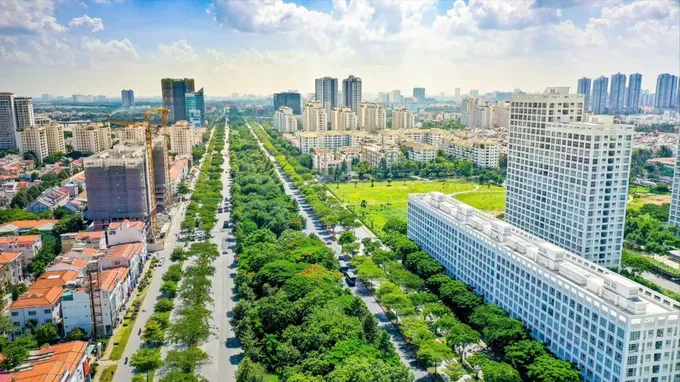
Following administrative expansion, Ho Chi Minh City now covers 6,773 square kilometers and is home to approximately 14 million people. It contributes 23.1 percent of Vietnam's GDP and more than 30 percent of total state budget revenue.
However, officials acknowledge that the traditional growth model, driven largely by investment capital, labor-intensive manufacturing and real estate, is losing momentum.
The city's relatively high Incremental Capital Output Ratio (ICOR), slower labor productivity growth and limited contribution from science and technology to total factor productivity underscore the need for structural transformation.
Reform delays could weaken long-term growth prospects
Consequently, HCMC leaders view science, technology, innovation and the digital economy as the foundation of future development.
If Ho Chi Minh City sustains average annual GRDP growth of 10 percent between 2026 and 2035, its economy could reach approximately US$310 billion by 2035, creating the basis for a highly developed, modern and livable metropolis.
Reforming institutions is the first step toward transforming the city's growth model. Technology alone cannot drive change without supportive policies and governance. Ho Chi Minh City is well-positioned to capitalize on a rare opportunity as longstanding institutional barriers and transport infrastructure constraints are gradually eased. The city's growing autonomy, reflected in the principle of "local authorities decide, implement and take responsibility," has already been reinforced through special mechanisms covering urban rail development and the International Financial Center.
Ho Chi Minh City is also hoping the National Assembly will soon approve the proposed Special Urban Law, which would establish a comprehensive legal framework tailored to governing a metropolitan area of its scale and complexity.
To support its long-term vision, the article proposes four strategic priorities.
The first is to build stronger institutions and public confidence by effectively implementing the proposed Special Urban Law and translating Party Resolutions No. 57-NQ/TW and No. 68-NQ/TW into concrete action. It also recommends piloting breakthrough regulatory frameworks for fintech, artificial intelligence and the International Financial Center.
The second is to accelerate investment in strategic infrastructure, including transport connectivity, regional logistics, urban rail systems, digital infrastructure and renewable energy.
The third is to restructure the city's economy around high-value industries such as semiconductors, biotechnology, smart logistics and financial services while advancing the International Financial Center and the Cai Mep Ha Free Trade Zone.
The fourth is to cultivate a world-class workforce by deepening collaboration among industry, universities and research institutions and attracting leading domestic and international talent, including overseas Vietnamese experts.
Ho Chi Minh City is transitioning from a capital-driven economy to a knowledge-based growth model that places greater emphasis on productivity, innovation and technology, with the long-term goal of becoming Southeast Asia's leading technology, finance and startup hub.
The proposed Special Urban Law is expected to provide the stable and comprehensive institutional foundation needed to unlock the city's competitive advantages in the decades ahead.
Throughout its development, Ho Chi Minh City has combined dynamism and innovation with a strong commitment to social solidarity. While pioneering new economic models and institutional reforms, the city has consistently advanced poverty reduction programs, cared for people with meritorious service, supported workers and expanded its social welfare system.
From assisting vulnerable groups within the city to supporting other provinces and cities during times of hardship, Ho Chi Minh City has forged a distinctive development model, one that places people at its center, draws strength from practical experience and makes compassion the foundation of the resilience of the city that bears President Ho Chi Minh's name.






)