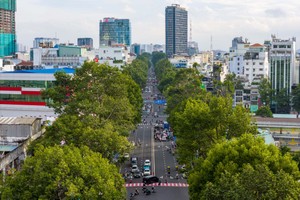
Route No. 74 (Cu Chi Bus Station–Ben Thanh) will be the first to operate under the free fare policy, departing at 3:30 a.m., followed by Route No. 9 at 3:45 a.m. By approximately 4:30 a.m., all 134 urban bus routes in Ho Chi Minh City will implement the policy simultaneously.
Mr. Pham Ngoc Dung, Director of the Ho Chi Minh City Public Transport Management Center under the municipal Department of Construction, said on June 30 that the policy will officially take effect on July 1.
He said the program aims to encourage greater use of public transport, reduce travel expenses, alleviate traffic congestion and contribute to environmental protection.
The policy will be implemented in two phases. From July 1 to September 30, 2026, passengers will receive 100 percent of fare support without the requirement for verification or identification.
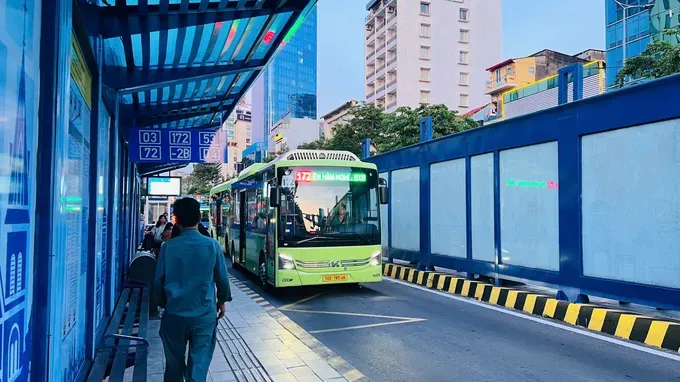
From October 1 to December 31, 2026, fares will remain free, but travel data will be recorded via chip-based citizen ID cards, VNeID, bank cards, e-wallets, the MultiGo app or other electronic payment methods.
The Ho Chi Minh City Public Transport Management Center has completed legal frameworks, contracting mechanisms, data management systems and monitoring procedures, and is coordinating with transport operators to ensure service quality.
Ho Chi Minh City currently operates 180 bus routes, including 158 urban and 22 interprovincial routes. Of these, 102 out of 109 subsidized routes have been put under bidding arrangements, accounting for 93.5 percent.
Alongside the free fare policy, the city is accelerating its transition to green transport. The bus fleet currently consists of 2,432 vehicles, of which 1,649 run on electricity or environmentally friendly fuels, accounting for nearly 68 percent.
Under the roadmap, all urban buses are expected to use electric or clean energy by January 1, 2027, while the entire bus fleet, including interprovincial services, is set to be fully electrified by January 1, 2029.
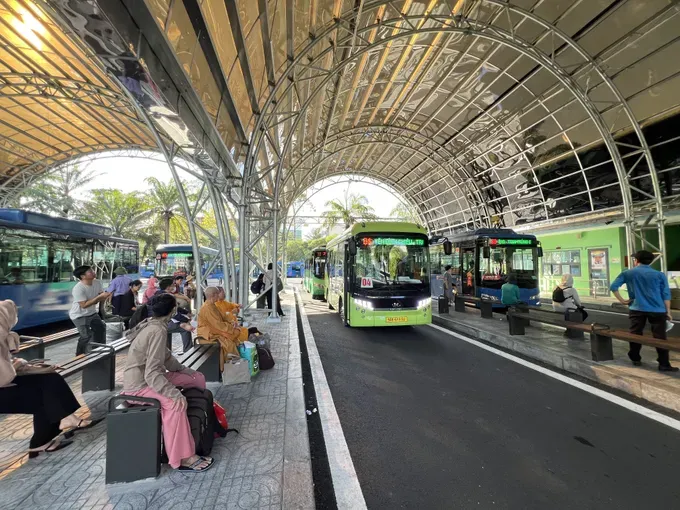
The city is also reviewing and adjusting its route network, studying new connections to Binh Duong, Ba Ria–Vung Tau, Long Thanh International Airport, and expanding night bus services.
In terms of infrastructure, Ho Chi Minh City operates 37 bus terminals, over 6,200 stops and 1,030 shelters. The city has upgraded Saigon Bus Station and invested in improved stops, modern shelters, multi-storey parking, smart parking systems and electric bus charging infrastructure.
An e-ticketing system has been deployed across 135 routes, with nearly 2,000 buses equipped with card readers linked to 14 stations of Metro Line No. 1. The MultiGo app continues to be developed, allowing route planning, real-time tracking, digital payments and integration with public transport services.
Authorities said the combined rollout of free fares, digital transformation and green transport initiatives will enhance the attractiveness of bus services, reduce travel costs and promote sustainable urban mobility in the city.

)