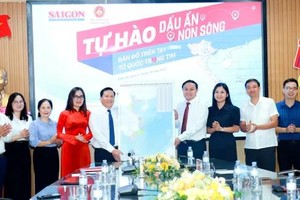
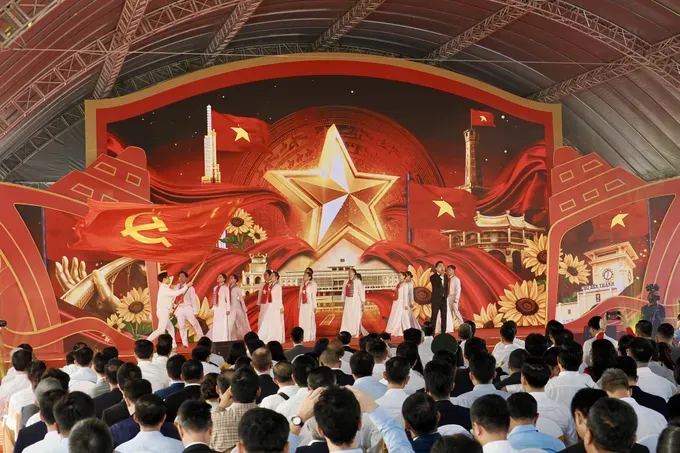
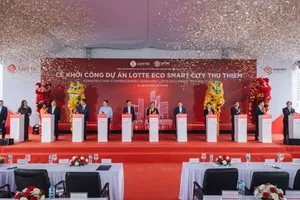
The Ho Chi Minh City People's Committee, in coordination with Sun Group, held a groundbreaking ceremony for eight key infrastructure projects in the Nha Rong Wharf area on July 1 to mark the 50th anniversary of Saigon-Gia Dinh officially being renamed after President Ho Chi Minh (July 2, 1976-2026).
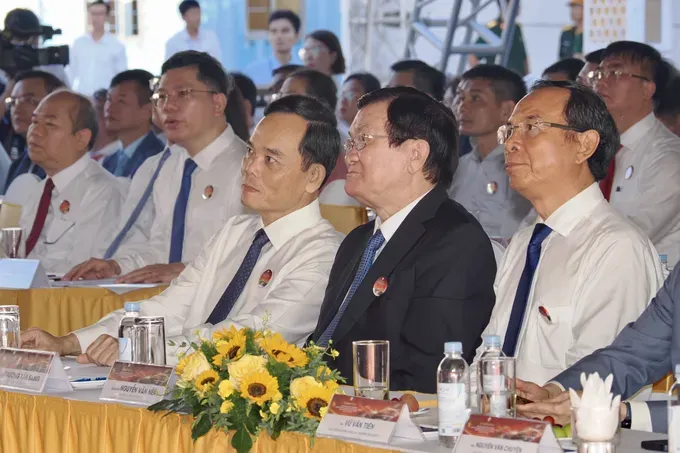
The ceremony was attended by former State President Truong Tan Sang; former Politburo member and former Standing Member of the Party Central Committee's Secretariat Le Hong Anh; former Ho Chi Minh City Party Secretary Nguyen Van Nen; Politburo member and Ho Chi Minh City Party Secretary Tran Luu Quang; Permanent Deputy Party Secretary of the HCMC Party Committee Le Quoc Phong; Chairman of the Ho Chi Minh City People's Committee Nguyen Van Duoc; Chairman of the Ho Chi Minh City People's Council Vo Van Minh; Chairman of the Ho Chi Minh City Vietnam Fatherland Front Committee Nguyen Phuoc Loc; and other city leaders.
According to the municipal government, the eight projects represent a total investment of approximately VND253.033 trillion (nearly US$9.6 billion), financed through a combination of public investment, public-private partnerships (PPP) and private-sector capital.
The projects include the Nha Rong–Khanh Hoi Cultural Park and Bach Dang Riverside Green Park; the Ho Tram–Long Thanh International Airport Urban Expressway; the Can Gio–Vung Tau coastal bridge; Phase 1 of the Cai Mep Ha General and Container Port; the Binh Tien Bridge and Road project; Phase 1 of the Ho Chi Minh City–Moc Bai Expressway; and two interchanges connecting the Ben Luc–Long Thanh Expressway with Rung Sac Road and National Highway 50.
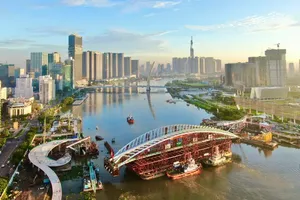
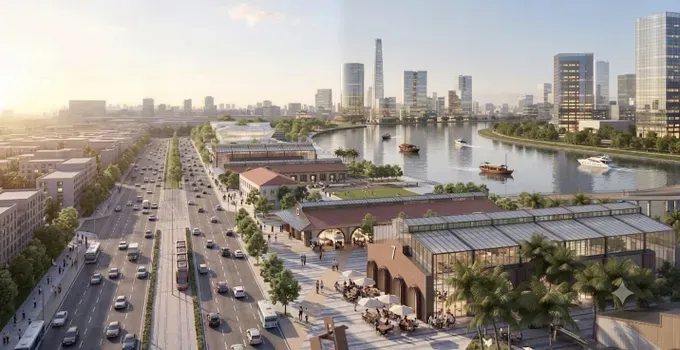
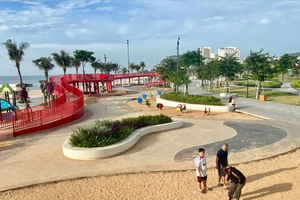
Among them, the Nha Rong–Khanh Hoi Cultural Park and Bach Dang Riverside Green Park is regarded as the project's historical and cultural centerpiece. Covering approximately 73.3 hectares and requiring an investment of more than VND29.3 trillion (US$1.1 billion) under a PPP model, the project is situated at the historic Nha Rong Wharf, where President Ho Chi Minh departed in 1911 on the journey that would eventually lead him to seek a path for Vietnam's national liberation.
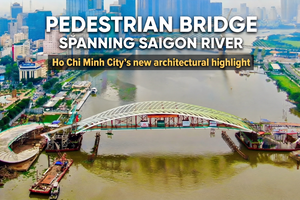
The project comprises five components, including the construction of a cultural park at Nha Rong Wharf, preservation-oriented redevelopment of the Khanh Hoi port area, expansion of Nguyen Tat Thanh Street, new riverside parks and green spaces at Bach Dang Wharf, and supporting technical infrastructure. It also includes road widening, underpasses, pedestrian bridges, underground parking facilities, an underground commercial center and enhancements to public spaces along the Saigon River.
In regional transport, the Ho Tram–Long Thanh International Airport Urban Expressway will stretch about 42 kilometers with six lanes and parallel service roads. The nearly VND46.9 trillion (US$1.8 billion) PPP project is scheduled for implementation between 2026 and 2029 and is expected to significantly reduce travel time between the Ho Tram tourism area, Long Thanh International Airport and the southern key economic region.
The Can Gio–Vung Tau coastal bridge project will extend approximately 14 kilometers, including more than eight kilometers of bridge, 3.85 kilometers of tunnels and approach roads, with six traffic lanes. With an estimated investment of VND93.2 trillion (US$3.5 billion), the project is expected to establish a direct transport link between Can Gio and Vung Tau, supporting tourism, marine services and the regional coastal economy.
In the logistics sector, the city also broke ground on Phase 1 of the Cai Mep Ha General and Container Port project. Covering more than 351 hectares and requiring an investment of approximately VND50.8 trillion (US$1.9 billion), the port will be capable of accommodating container vessels of up to 250,000 deadweight tons (DWT). Once fully completed, it is expected to handle about 10.8 million twenty-foot equivalent units (TEUs) annually, helping establish an international container transshipment hub in the Southern region.
The remaining projects include the VND6.3 trillion (US$240 million) Binh Tien Bridge and Road project, the VND23 trillion (US$874,560) Phase 1 main section of the Ho Chi Minh City–Moc Bai Expressway, the nearly VND3 trillion (US$114,002) interchange linking the Ben Luc–Long Thanh Expressway with Rung Sac Road, and the VND590 billion (US$22.4 million) interchange connecting the expressway with National Highway 50.
City officials said the projects would not only commemorate the 50th anniversary of the city's renaming but also accelerate the implementation of Ho Chi Minh City's long-term strategic infrastructure plans. Once completed, the transport, port and public space developments are expected to enhance regional connectivity, strengthen logistics and the marine economy, improve urban infrastructure and create new momentum for the city's future growth.
The projects also support the implementation of major development policies outlined in the Politburo's Resolution No. 09 and lay the infrastructure foundation for the future implementation of Vietnam's Special Urban Law, aimed at modernizing governance and reinforcing Ho Chi Minh City's role as the country's leading economic hub.


)