The ten-year journey of Ho Chi Minh City’s Book Street demonstrates that, when organized systematically with a clear cultural vision and an effective operational framework, a book space can become an attractive and sustainable destination, enriching both the city’s cultural life and urban identity. Valuable lessons from this experience can serve as a model for establishing and managing similar book streets across the country.
A distinctive urban cultural model
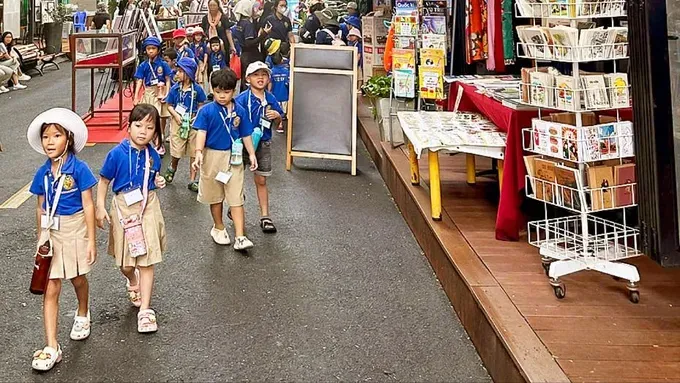
Established in 2016, Ho Chi Minh City’s Book Street became the country’s first true book street, marking an innovative step in developing urban reading spaces. Though just over 100 meters long and located in the city center, it quickly emerged as a popular gathering place for book lovers, students, researchers, artists, and both domestic and international visitors.
After a decade of operation, Ho Chi Minh City’s Book Street has evolved beyond a venue for buying and selling books into a comprehensive cultural space, hosting new book launches, author–reader exchanges, thematic exhibitions, academic forums, skills education activities, children’s programs, and artistic events.
With a steady flow of visitors and sustained revenues for publishing entities, the book street has come to be seen as a form of “soft cultural symbol” of Ho Chi Minh City. More importantly, the model has inspired many other localities to develop book streets and community reading spaces of their own.
One of the core factors behind the success of Ho Chi Minh City’s Book Street lies in its clear positioning, first and foremost as a cultural institution, and only secondarily as a commercial space. From the outset, the goal of promoting reading culture and enriching the community’s intellectual life was placed at the center. As a result, activities there have not been driven by short-term thinking or excessive commercialization. Scholarly works, children’s books, history and cultural titles, and research publications have continued to hold their rightful place alongside more entertainment-oriented offerings.
If a book street is viewed merely as a “specialized retail zone,” it is difficult to sustain long-term vitality or create a lasting social impact. A key lesson is the need to clearly understand who the audience is and what they seek. Moreover, a book street focused solely on book sales can hardly compete with e-commerce platforms.
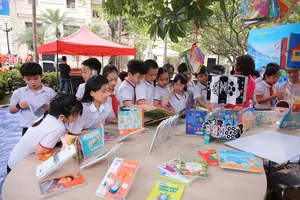
Ho Chi Minh City’s Book Street has succeeded by consistently prioritizing activities tailored to readers’ needs, including author talks, book launches, reading festivals, and programs for children, students, and senior citizens, as well as exhibitions and cultural events. These initiatives have transformed the book street into an experiential space where visitors not only purchase books but also meet, exchange ideas, learn, nurture emotions and knowledge, and cultivate aesthetic appreciation.
A strategic location and a harmonious space
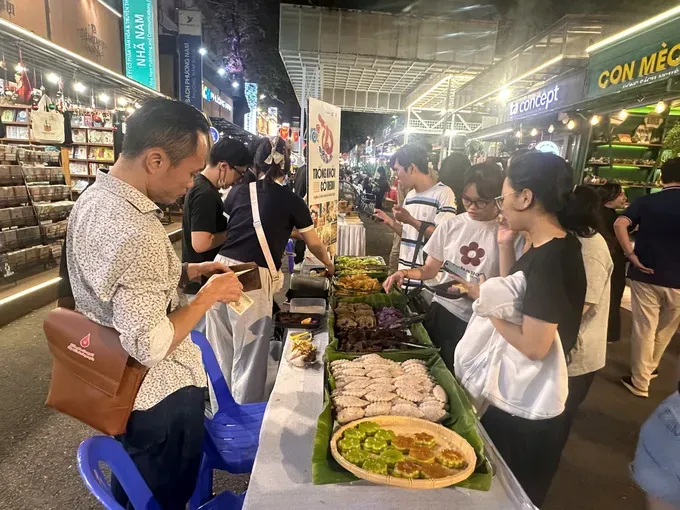
Ho Chi Minh City’s Book Street is situated amid the city’s key cultural and historical landmarks, with convenient access and a relatively quiet, dedicated space. Its overall planning places strong emphasis on landscape design, greenery, pedestrian pathways, reading areas, and spaces for community activities.
In practice, location and spatial design are decisive factors in the effectiveness of a book street. To attract the public, such a space must be easy to access, safe, welcoming, and distinctive, while also aligning with the rhythm of local urban life. Crucially, it must answer a fundamental question: after visiting the book street, where can people go next? Mechanical replication of the model without regard to local conditions often results in low visitor turnout and lackluster operations.
One of the standout strengths of Ho Chi Minh City’s Book Street is its ability to connect with schools, libraries, educational institutions, and tourism stakeholders. Numerous extracurricular programs, study visits, and reading experiences for students are organized on a regular basis. International visitors, meanwhile, view the Book Street as a distinctive cultural destination of the city.
This demonstrates that a book street should not exist in isolation but rather be integrated into the local cultural, educational, and tourism ecosystem. When embedded in such a network, the economic and social value of a book street can be significantly amplified.
A flexible management framework
Ho Chi Minh City’s Book Street is managed under a collaborative model involving state authorities, businesses, publishing houses, and social organizations. The management board serves as a coordinating body, establishing the regulatory framework, safeguarding the cultural orientation, and listening to feedback from both stall operators and readers.
Over the past decade, the book street has weathered significant challenges, particularly during the Covid-19 pandemic and amid the rapid expansion of digital technologies. The adoption of online events, social media outreach, and integrated online and offline book sales has enabled it to maintain engagement with readers. This offers an important lesson for other book street models to be bold in experimenting with new approaches and leveraging technology to broaden their reach while preserving the core values of reading culture.
The success of Ho Chi Minh City’s Book Street after a decade of operation underscores a clear reality that in any context, a reading culture can thrive if it is nurtured with sound thinking, persistence, and creative approaches.