The city’s Department of Culture and Sports is drafting a resolution on mobilizing social resources and supporting the development of cultural and sports facilities, with the State taking the lead, society joining hands, and community service effectiveness serving as the key measure.
Establishing an effective operating mechanism
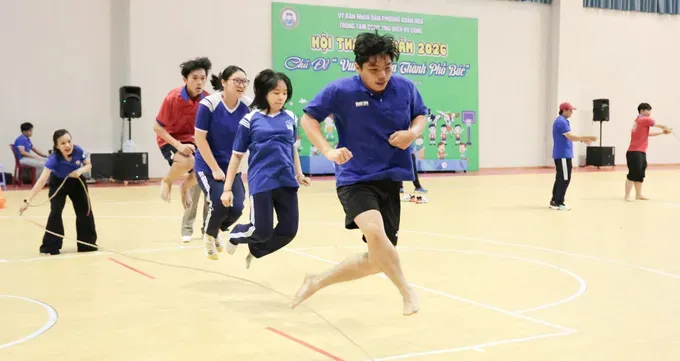
One afternoon at the Ba Ria Ward Public Service Center at 15 Huynh Ngoc Hay Street, the badminton, volleyball, and pickleball courts were bustling with people exercising. Since the center was placed under the ward’s direct management, cultural and sports activities have remained largely stable and become more accessible to residents.
However, just over a dozen kilometers away, the Dat Do Commune Public Service Center, despite covering more than 6.3 hectares and featuring a swimming pool, sports hall, football field, pickleball courts, and a well-equipped indoor stage, has faced difficulties in putting its facilities to use due to regulations governing the management and use of public assets.
The contrasting situations in the two localities show that the vitality of cultural and sports facilities at the grassroots level depends not simply on building infrastructure but more importantly on establishing appropriate operating mechanisms and mobilizing resources for reinvestment.
Against this situation, the draft resolution does not focus on increasing budget spending. Instead, it seeks to establish mechanisms under which the State budget plays a leading role while encouraging businesses, organizations, and individuals to invest in, operate, and provide cultural and sports services. The draft identifies two major policy groups: encouraging and mobilizing social resources and providing incentives and support for the development of cultural and sports facilities.
Within the expanded Ho Chi Minh City, cultural facilities must serve not only as essential cultural and social infrastructure but also as “soft institutions” that help foster creative capacity and strengthen community ties.
Dr. Phan Anh Tu from Ho Chi Minh City University of Social Sciences and Humanities
State budget leads, society joins forces
A notable feature of the draft resolution is that support policies are designed with conditions attached, linking funding to specific outputs and operational effectiveness. For non-public cultural and sports facilities in areas eligible for support, the city budget is expected to provide up to VND150 million (US$5,768) per facility per year for five years. Beneficiaries must have an operating plan, allocate at least 50 percent of their activities to serving the community, and commit to maintaining operations for at least three years.
For non-public libraries, the draft proposes one-off support of up to VND120 million for the purchase of materials, along with support covering up to 30 percent of equipment procurement costs, capped at VND100 million per library. Newly established commune-level libraries would be eligible for up to VND100 million in equipment support, while reading rooms in residential areas and hamlets could receive up to VND30 million, as well as annual support for additional library materials.
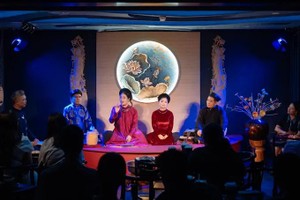
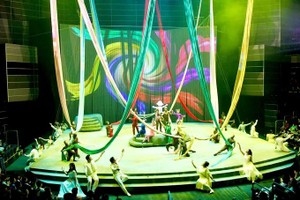
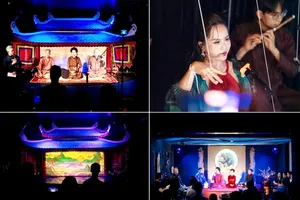
In the arts sector, the draft proposes support for up to 24 performances per year, at VND60 million per performance for programs serving 200–300 spectators and VND100 million per performance for programs with audiences of more than 300. Traditional art forms such as Hat boi (classical Vietnamese opera), Cai Luong (reformed opera), water puppetry, circus, Don ca tai tu Nam Bo (southern amateur traditional music), and traditional music and dance are identified as areas requiring support.
The policy stems from a practical reality: traditional arts are culturally valuable but often struggle to sustain themselves if they rely solely on market forces. State support can therefore help organizations maintain performance venues, increase the frequency of shows, reach wider audiences, and gradually connect cultural values with tourism and services. The dossier for the draft resolution also notes that performance activities, particularly traditional arts, continue to face difficulties in infrastructure, human resources, and market development.
The value of a cultural or sports facility does not lie in the scale of its construction or the amount of investment, but in how many people can enter and use it for learning, creativity, exercise, and community interaction. When public funding is directed where it is most needed, social resources are mobilized, and operating mechanisms are sufficiently flexible, such facilities can truly become cultural and sports infrastructure for a modern, civilized Ho Chi Minh City rich in identity.