The Ministry of Culture, Sports and Tourism recently held a consultation to gather feedback on the draft law.
Connecting resources
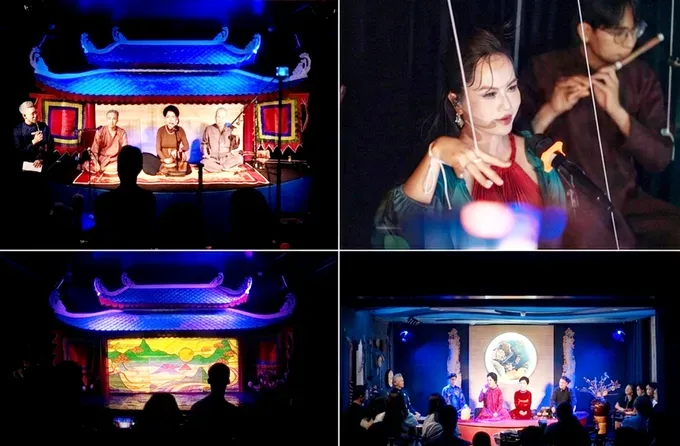
According to the drafting committee, cultural industries accounted for an estimated 4–5 percent of Vietnam’s GDP during 2018–2025, while the target is to raise the share to at least 7 percent by 2030. Vietnam boasts abundant cultural resources, a young creative workforce, a market of more than 100 million people, and rapid growth in technology and the digital economy. However, this potential has yet to be fully tapped.
Current regulations on cultural industries are scattered across various sector-specific laws, lacking a comprehensive mechanism to connect the entire value chain, from creativity and intellectual property to capital, production, distribution, commercialization, reinvestment and exports. The draft law aims to address these gaps, establish an intersectoral policy framework and unlock resources for the development of cultural industries.
Le Quoc Vinh, Chairman of Le Group of Companies, said the draft law should clarify the concept of cultural capital, shifting from an approach focused on exploiting resources to one centered on investing in, transforming and regenerating cultural capital.
He proposed making the creation of markets for cultural industries a central task, with businesses and creative actors serving as the forces directly driving development, while the State focuses on building institutions, shared infrastructure and data systems, protecting rights, providing training and promoting cultural products.
Mr. Vinh also called for shifting the focus of public investment from “building institutions” to strengthening the capacity of the ecosystem, while considering the regeneration of cultural capital a principle of sustainable development.
Chairman of the Vietnam Advertising Association, Nguyen Truong Son, affirmed that developing the draft law is necessary in the current context, but called for its scope to be expanded to meet the requirements of international integration.
Regarding the establishment and expansion of cultural creative complexes, clusters and industrial zones, he noted that regulations should be aligned with laws on land, planning and construction while ensuring efficiency and feasibility and avoiding waste.
Bringing Vietnamese culture to the world
Deputy Minister of Culture, Sports and Tourism Nguyen Huy Dung emphasized that the draft law should approach cultural industries as a strategic economic sector organized along value chains. It should not duplicate provisions already covered by sector-specific laws or create unnecessary administrative procedures.
Instead, the draft law should focus on key cross-sectoral issues capable of generating new development momentum.
Dr. Ngo Phuong Lan, currently Chairwoman of the Vietnam Association of Film Promotion and Development, said incentive policies should be targeted, with resources concentrated on selected key industries. She also called for specific policies on taxation, land, credit, investment, development funds and the mobilization of social resources.
Dr. Ngo Phuong Lan further proposed promoting internationalization and developing export markets for cultural products, building a national brand for Vietnam’s cultural industries, and giving local authorities greater autonomy to pilot new development models. She also called for improvements to the institutional framework governing the cultural economy and cultural data, digital data, artificial intelligence and new business models.
The draft law needs to establish a new development framework that unleashes creative energy and market potential while safeguarding cultural identity and values, said Deputy Director of the Department of Culture and Arts under the Central Commission for Information and Education, Le Trong Nin.
To develop five to 10 national brands in cultural industries, he proposed incorporating principles and criteria into the law and assigning the Government to provide detailed regulations. He also called for research into sufficiently strong tools to develop Vietnamese enterprises capable of leading value chains.
From the perspective of cultural diplomacy, Chu Thu Phuong of the Department of Foreign Affairs and Cultural Diplomacy under the Ministry of Foreign Affairs said greater attention should be paid to promoting distinctive Vietnamese cultural forms such as Tuong singing (Vietnamese classical opera), Cheo (Vietnamese traditional opera) and Cai Luong (reformed opera) internationally, while introducing policies to encourage artisans.
According to Chu Thu Phương, diplomacy can help expand markets, seek partners, connect Vietnamese cultural brands with international funds, resources and experts, and support their expansion overseas.
She also called for clearer regulations on copyright for derivative works, original intellectual property assets and policies aimed at enhancing international competitiveness.
The draft law is being developed under an expedited legislative procedure and is expected to be submitted to the National Assembly at its October 2026 sitting.
Deputy Minister Nguyen Huy Dung stressed that while the drafting process must stay on schedule, quality must not be compromised for the sake of meeting deadlines, with the ultimate goal of creating a tangible impact on the development of Vietnam’s cultural industries.



)