At a conference reviewing five years of the “Learning Society Development Program for 2021–2030” and two years of the emulation movement “Nationwide Promotion of Lifelong Learning for 2023–2030” held yesterday by the Ho Chi Minh City People’s Committee, the committee highlighted the city’s rapid progress in digital transformation.
As of May 2025, Ho Chi Minh City leads the country in both the speed and scale of digital education deployment. All universities in the city have adopted digital university models and developed digital learning materials; 98 percent of general education institutions, 60 percent of continuing education centers, and 100 percent of vocational education facilities have implemented online management, teaching, and learning activities.
The city has also launched various innovative learning models aligned with digital transformation goals, helping citizens access and familiarize themselves with digital tools while building foundational digital skills. Several wards and communes have piloted models such as “Community Learning Spaces,” “Digital Libraries,” and “Connected Classrooms,” expanding access to lifelong learning opportunities for all residents.
Through these initiatives, 85 percent of the city’s working-age population has been equipped with basic information literacy and technology skills. Additionally, 55 percent of residents aged 15 and older possess professional or technical qualifications, and 27 percent hold university degrees or higher.
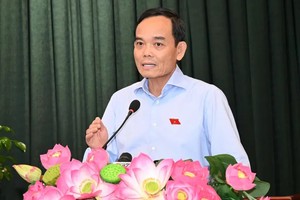
Speaking at the conference, Vice Chairwoman of the Ho Chi Minh City People’s Committee Tran Thi Dieu Thuy urged localities to strengthen their Steering Committees for Learning Society Development at all levels. She emphasized the need to train and enhance the capacity of officials responsible for implementing lifelong learning programs, adapting to new management models, and establishing special mechanisms to build networks of community learning collaborators in wards, communes, and special zones.
She also called on local governments to further decentralize and delegate authority to grassroots institutions in organizing community learning activities; accelerate digital transformation; build shared digital learning repositories; develop online learning platforms and open-access libraries for the public; and expand international cooperation within UNESCO’s Global Network of Learning Cities.
On this occasion, the Ho Chi Minh City People’s Committee presented Certificates of Merit to 55 collectives and 34 individuals for their outstanding achievements in implementing the “Learning Society Development Program for 2021–2030” and the emulation movement “Nationwide Promotion of Lifelong Learning for 2023–2030.”
The same day, at a conference on school counseling and social work in education jointly organized by the Ministry of Education and Training and UNICEF, Nguyen Xuan An Viet, Deputy Director of the Ministry’s Department of Students Affairs, announced that during the 2025–2026 academic year, school counseling and social work programs will be expanded to include students in higher and vocational education institutions, instead of being limited to general education as before.
He also revealed that in 2026, the Ministry of Education and Training will strengthen staffing for school psychology and social work positions, ensuring that these roles receive official status and policy benefits under national employment regulations.