The upcoming dialogue between Ho Chi Minh City authorities and the business community operating in cultural industries has drawn strong attention from stakeholders across the sector.
More than a listening session, the meeting is seen as an opportunity for city leaders to gather proposals and solutions while directly recognizing the strategic role of culture in urban development.
A series of policy frameworks has already laid the groundwork for this shift. These include Decision No. 4853/QD-UBND approving the city’s Cultural Industry Development Project to 2030, the Prime Minister’s Decision No. 2486/QD-TTg on the national strategy for cultural industries through 2030 with a vision to 2045, and Resolution No. 80-NQ/TW of the Politburo on the development of Vietnamese culture.
At the national level, the strategy provides financial orientations, support mechanisms, legal infrastructure and long-term development targets. At the urban level, Ho Chi Minh City serves as a testing ground where such policies can be implemented, refined and expanded. The combination of national direction and local creativity mirrors models adopted successfully in cities such as Busan in South Korea, Cannes in France, Shanghai in China and Tokyo in Japan, where culture has become a distinctive economic engine.
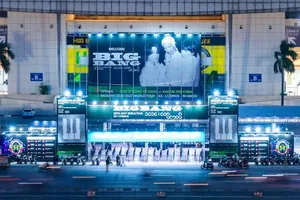
Ho Chi Minh City holds notable advantages. The city recently joined the UNESCO Creative Cities Network in the field of film and is home to major cultural brands, including the HOZO International Music Festival and the Ho Chi Minh City International Film Festival (HIFF).
Film remains a cornerstone of the city’s cultural economy. With 935 cinema-related establishments and more than 100 active production companies, the city accounts for around 40 percent of the country’s box office revenue. Policymakers view cinema as a key sector due to its wide spillover effects across art, technology, tourism, advertising, media, fashion, design and music.
From this foundation, the city can stimulate supporting industries such as design, fashion, advertising, music, digital content creation, tourism and media services, alongside other creative economy sectors. Ho Chi Minh City also leads in digital transformation, innovation, high-quality workforce development, the establishment of cultural industry hubs and international cooperation.
With these advantages, officials and experts say that, with adequate investment, the city’s cultural industries could rival leading creative centers such as Seoul, a global hub for K-pop, or Toronto, often dubbed the “Hollywood of the North.”
The forthcoming dialogue is expected to help shape concrete projects and partnerships, providing momentum for the effective implementation of the city’s Cultural Industry Development Project through 2030.
If successful, Ho Chi Minh City will not only produce acclaimed films, music and creative products, but also build a strong and competitive cultural industry ecosystem capable of bringing Vietnamese cultural values to millions of international audiences.