Children's theater in Ho Chi Minh City faces a paradox. It thrives during the summer before virtually disappearing once the new school year begins. Artists and theater operators are now searching for ways to extend the life of children's productions instead of relying solely on seasonal demand.
Children's theater still draws crowds
Despite the growing number of entertainment options for children, theater continues to attract audiences.
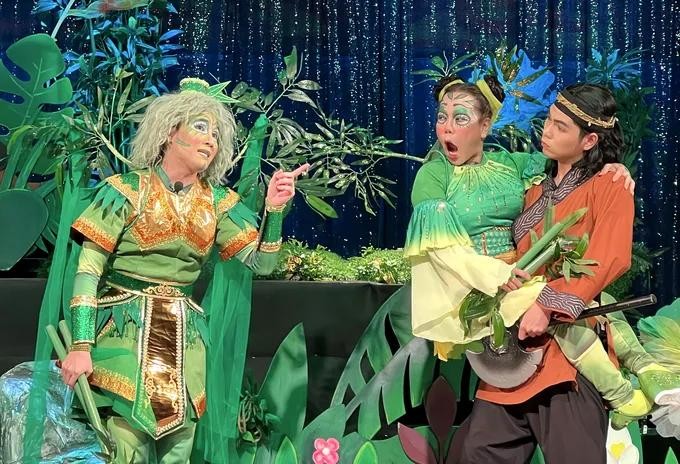
A prime example is Ngay Xua Ngay Xua (Once Upon a Time), produced by the Idecaf Drama Theater. Each summer season, the program consistently stages 40 to 50 performances, with some years exceeding 60 shows, attracting between 50,000 and 60,000 audience members.
Artist and director Dinh Toan, who has been involved with the production for many years, said one of its greatest achievements has been cultivating generations of theatergoers.
"What makes us happiest is that the program has accomplished something very difficult which is to build successive generations of audiences. Many children who once came to see the plays are now parents bringing their own children. Some families have three generations of loyal theatergoers," he said.
The large and stable audience has encouraged more than a dozen performing arts organizations to produce children's plays each summer.
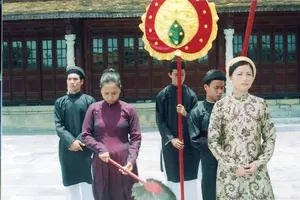
Among the best-known productions are Rago – Hanh Trinh Dau Tien (Rago - The first journey), the musical Penny – O Me Ly! (Penny - Oh, how wonderful!), and Colora – Xu So Ruc Ro (Colora - The Land of Brilliance) by Ban Mai Stage; Dai Nao Long Cung (Havoc in the Dragon Palace), Cay But Than (The Magic Pen), and Nao Dong Rung Co Tich ( Uproar in the Fairy Tale Forest) by the 5B Small Stage Drama Theater; Vuong Quoc Dieu Ky (Magical Kingdom) and Sieu Thu Tranh Tai ( Super Beasts Competition) by Quoc Thao Stage; Phi Doi K30 – Co May Thoi Gian (K30 Squadron - Time Machine) by the Ho Chi Minh City Drama Theater; and Vuong Quoc Nhoi Bong ( Stuffed Kingdom) by the Tran Huu Trang Cai Luong Theater.
Founder Bao Chu of Ban Mai Stage said the theater has produced five plays in its three years of operation, staging more than 450 performances for over 50,000 audience members.
"Because we focus on children, we are very careful with every aspect of production, performance, dialogue, and visual presentation," he said.
Curtains fall after summer theaters struggle to keep kids engaged year-round
The vibrant activity typically lasts only through the three-month summer break.
Although theater operators know demand declines when the school year begins, the fact that most stages simultaneously go dark disappoints children who enjoy live performances.
Industry observers say this seasonal interruption weakens efforts to cultivate future theater audiences.
Many theater operators say each performance requires significant investment, including payments for actors, staff, sound and lighting, as well as venue rental costs. At the same time, many parents believe children should prioritize their studies during the school year, reducing demand for entertainment.
As a result, many theaters scale back performances and leave the market largely untapped.
Even so, some artists remain committed to finding new approaches.
People's Artist My Uyen, director of the 5B Small Stage Drama Theater, said her theater's strategy is to create productions that appeal to parents as well as children.
"We produce children's plays, but they must also attract parents because parents decide whether to bring their children. After changing our marketing to target parents more directly, attendance immediately increased, and many performances sold out even during the school year," she said.
The Ho Chi Minh City Drama Theater has taken a different approach by offering school theater skills classes for children ages 8 to 15.
The courses teach voice projection, movement, and stage makeup, helping students develop personal skills while naturally fostering an appreciation for the performing arts.
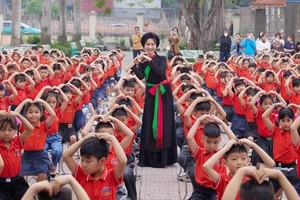
Head Pham Hong Tuan of the Aesthetics and Arts Department at the Ho Chi Minh City Children's House said encouraging children to attend theater regularly will require broader cooperation rather than isolated efforts.
"The Department of Culture and Sports, the Department of Education and Training, the Ho Chi Minh City Youth Union, and the City Children's Council could work together to develop long-term programs that bring children to the theater or bring productions directly into schools," he said. "That is the most sustainable approach."