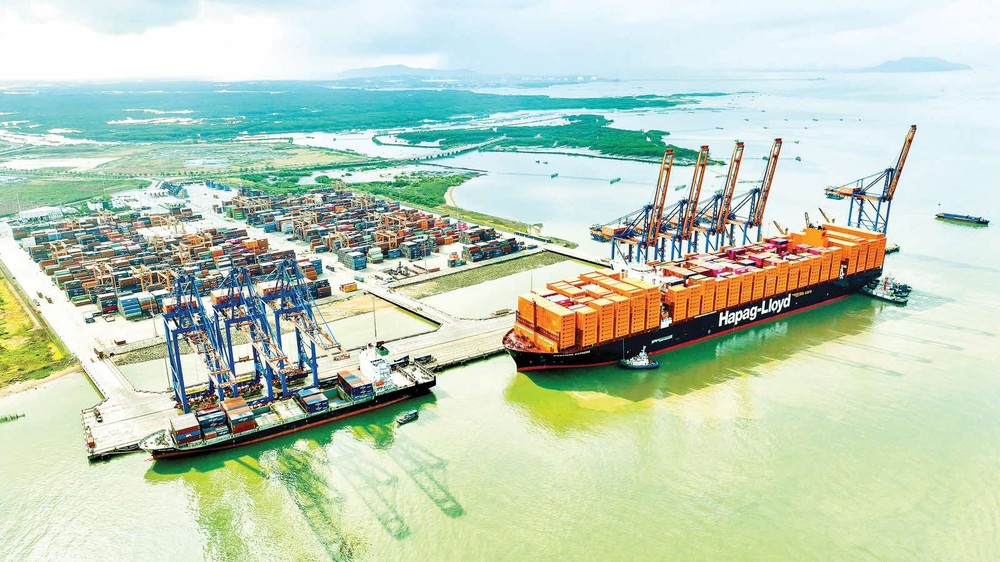
The new direction is expected to reshape the city’s position and that of the southern key economic region, turning coastal areas into a gateway to global markets. Deep-water ports, a free trade zone and eco-friendly urban development are expected to provide the foundation for a regional maritime, logistics and financial hub.
Building the infrastructure backbone
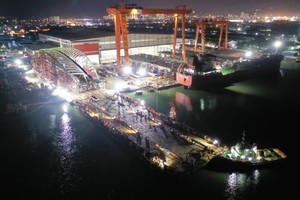
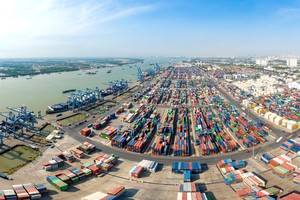
Can Gio, once largely isolated by waterways, is now poised for a major transformation. The Can Gio International Transshipment Port, with a total investment of more than VND128 trillion (US$4.86 billion), has received approval in principle, and the investor is proceeding with the next steps. The port is expected to reach a capacity of 16.9 million TEUs by 2047.
For the port to operate effectively, however, its success will depend heavily on the development of supporting infrastructure and connections linking Can Gio with the Cai Mep–Thi Vai port complex, Long Thanh International Airport and production and logistics centers across southeastern Vietnam.
Under the emerging development model, Can Gio and Cai Mep–Thi Vai would not operate as separate port systems but as complementary parts of an integrated maritime and logistics hub.
Can Gio would focus on international container transshipment, while Cai Mep–Thi Vai would leverage its role as a gateway for direct imports and exports, as well as transshipment services. A seamless multimodal transport network combining roads, waterways and railways will be essential to connecting the two areas and expanding their reach into the hinterland.
Rung Sac Road remains Can Gio’s main transport artery, but several strategic projects are expected to transform the area’s connectivity.
The Can Gio Bridge will replace the Binh Khanh Ferry, providing a direct transport link between central Ho Chi Minh City, Nha Be and Can Gio. Meanwhile, the proposed Can Gio–Vung Tau sea-crossing route, spanning more than 14km and comprising six lanes, is estimated to cost over VND93 trillion (US$3.5 billion).
The project is expected to become a key coastal link, reducing reliance on National Highway 51 and establishing a more direct connection between the two major port areas.
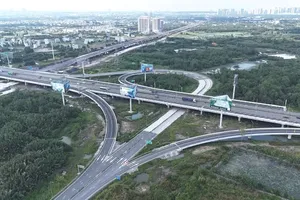
At the regional level, Phuoc An Bridge, the Ben Luc–Long Thanh Expressway, the Bien Hoa–Vung Tau Expressway and coastal roads will form an interconnected transport network stretching from the Mekong Delta through Ho Chi Minh City to Dong Nai and the southeastern port region.
Waterways will provide another major advantage. The Long Tau, Soai Rap, Go Gia and Thi Vai rivers naturally connect Can Gio with Cai Mep–Thi Vai, Hiep Phuoc and Phuoc An, creating a waterborne freight network for collecting and distributing containers.
Greater use of waterways could help lower transport costs while supporting the development of greener logistics. In the longer term, the Bien Hoa–Vung Tau railway, with a direct connection to the Cai Mep–Thi Vai port complex, would further increase freight capacity and complete the multimodal transport network.
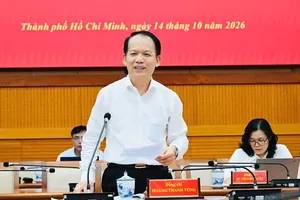
Bui Hoa An, Deputy Director of the Ho Chi Minh City Department of Construction, said that the Can Gio–Rung Sac–Can Gio Bridge–Nha Be route would provide a gateway from the city center to the port, while the Can Gio–sea-crossing route–Long Son–Cai Mep–Thi Vai corridor would create a coastal east-west axis.
From Cai Mep, Phuoc An Bridge and the Ben Luc–Long Thanh and Bien Hoa–Vung Tau expressways would carry goods deeper into the hinterland. Meanwhile, the Can Gio–Ganh Rai–Cai Mep–Thi Vai waterway network and rivers connecting Ho Chi Minh City with Dong Nai would provide an additional layer of transport capacity for transshipment and logistics activities.
According to the Deputy Director of the Ho Chi Minh City Department of Construction, an integrated transport network would fundamentally transform the roles of the two port areas.
He said Can Gio should not be viewed simply as a port at the end of Rung Sac Road, nor should Cai Mep–Thi Vai be regarded merely as a deep-water port complex. Once road, rail and waterway connections are developed in an integrated manner, the two areas could function as interconnected links within a single logistics chain.
Such a network would not only improve connectivity for the Can Gio International Transshipment Port but also strengthen the competitiveness of the Cai Mep–Thi Vai complex, expand its cargo hinterland and create a stronger foundation for Ho Chi Minh City to emerge as a regional and international maritime and logistics hub.
Cutting logistics costs through port integration
Tran Quang Thang, Director of the Ho Chi Minh City Institute for Economics and Management (IEM), said that closer coordination between Can Gio and Cai Mep–Thi Vai could create the country’s largest deep-water port and logistics complex.
The integration would help lower transport costs, improve the competitiveness of Vietnamese exports and generate additional revenue for the Southern region and the wider economy.
Under the proposed division of roles, Can Gio would specialize in international transshipment, while Cai Mep–Thi Vai would focus on direct import and export operations combined with transshipment.
Connecting the port complex with Long Thanh International Airport, industrial parks and the expressway network would further strengthen the region’s transport and logistics capacity, allowing businesses to cut costs and shorten delivery times.
The benefits could extend well beyond cargo handling.
A stronger port ecosystem could support higher-value services including maritime finance, insurance, logistics and free trade, helping strengthen Vietnam’s position in regional production, shipping and logistics chains.
Stronger and more frequent links with major markets, especially the United States and Europe, could further strengthen Vietnam’s position as a destination for multinational corporations seeking locations for manufacturing and distribution operations.
Greater connectivity would also have wider economic benefits, encouraging investment in electronics, engineering, automobile manufacturing, textiles and garments, and agricultural processing, while opening up opportunities for cold-chain logistics, bonded warehousing, distribution centers and transport insurance.
The connection with Long Thanh International Airport would further enhance the region’s competitiveness against major logistics hubs elsewhere in Asia, helping attract high-quality foreign direct investment and advanced technologies.
More importantly, an integrated port network could help address one of Vietnam’s long-standing economic challenges: high logistics costs, currently estimated at around 16–18 percent of GDP.
He said direct mainline services could eliminate the need for transshipment through third countries, reduce cargo storage times and improve businesses’ cash flow.
But expanding berth capacity alone would not be sufficient, he cautioned. What matters most is developing a complete logistics ecosystem around the ports.
Free Trade Zone offers new institutional space
Another important component of the strategy is the Free Trade Zone (FTZ) associated with the Cai Mep Ha port area.
The Ho Chi Minh City People’s Committee has issued a decision establishing the FTZ, opening up new opportunities for port-based industries, logistics, trade and services while also creating demand for a more flexible governance framework.
The Director of the IEM said the FTZ could be designed as a special institutional space capable of turning the advantages of deep-water ports into international competitive strengths.
He proposed establishing an FTZ management authority with sufficient powers to coordinate operations and adopting a “single declaration, single inspection” mechanism.
Under a “Free Port” customs model, goods entering the FTZ would not immediately be subject to tax obligations and could be stored, packaged, lightly processed and re-exported.
Other proposals include piloting a maritime financial center offering documentary credit, factoring and international insurance and reinsurance services; adopting flexible foreign-exchange rules allowing transactions in US dollars and euros; and introducing tax rulings to provide investors with greater clarity over costs.
The FTZ could also be developed as a digital platform based on shared data, with cross-border electronic bills of lading and contracts recognized and automated AEO Plus customs clearance introduced.
Commercial disputes could be resolved through an international maritime arbitration center located within the FTZ.
Flexible long-term land leases, infrastructure bonds and public-private partnership models could help mobilize investment, while the FTZ would be developed toward green-port and sustainability standards.
Unlocking the maritime economy
Urban planning expert and architect Ngo Viet Nam Son said the move from river-based to sea-oriented development would mark a major turning point for Ho Chi Minh City.
It would not only expand the city’s development space and ease pressure on the central area, but also create new opportunities to develop the maritime economy.
The new model would allow different parts of the expanded city to play to their strengths. The former Binh Duong area could concentrate on industry, innovation and high-tech agriculture, while the former Ba Ria–Vung Tau area could strengthen its position as a hub for maritime, port and energy activities. Central Ho Chi Minh City, meanwhile, would continue to serve as the city’s main center for services and finance.
From the perspective of urban living, the “15-minute city” model could allow residents to access schools, hospitals, jobs, parks and essential services close to where they live.
However, coastal development must remain closely aligned with the natural river and waterway ecosystem. As climate change intensifies, urban planning should avoid excessive construction that fragments the landscape, obstructs airflow or reduces drainage capacity.
The city needs to preserve adequate open spaces and “breathing room” to maintain a healthy and resilient urban environment.
The Can Gio–Vung Tau urban corridor has considerable potential for growth, but tapping into it will require a coordinated regional approach that goes beyond administrative boundaries.
Two strategic pillars could drive development: an international port and transshipment hub, alongside a dynamic urban and marine tourism economy.
To support both, the area will need a multimodal transport system comprising roads, expressways, railways, waterways and air links, with direct connections to Long Thanh International Airport and the regional port network.
Prioritizing waterways and railways would help bring down logistics costs while reducing the flow of trucks through environmentally sensitive areas.
For Can Gio, though, development must never come at the expense of the environment.
He said ecological governance should be the foremost priority, with strict zoning rules ensuring that port and logistics activities remain separate from the Can Gio Biosphere Reserve. Buffer zones must be safeguarded, and the core mangrove forest kept intact.
Development and conservation must go hand in hand. The vision of a “city in the forest, forest in the city” will only be truly meaningful if the biosphere reserve remains the area’s “green lungs” and a defining element of its natural landscape.
Infrastructure projects should follow the principle of replacing removed trees, restoring ecosystems alongside construction and maintaining continuous environmental monitoring to manage risks.
For the Can Gio International Transshipment Port, close integration with the Cai Mep–Thi Vai port complex will be essential, along with compliance with green-port standards on emissions reduction, renewable energy and closed-loop wastewater treatment.
These measures would also help the city adapt to changing patterns in global maritime transport.
He said that with integrated transport infrastructure, measures to raise ground levels in response to sea-level rise, and strong regional governance mechanisms to ensure equitable benefit-sharing, the coastal areas could emerge as a competitive international logistics hub while also developing into a distinctive eco-friendly coastal city.