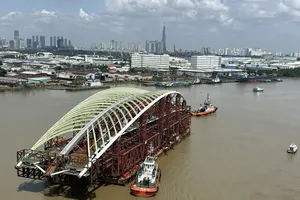
A new development space, along with special urban development mechanisms and policies, is unlocking additional resources for Ho Chi Minh City. But to create a stronger growth momentum, the decisive factors remain implementation capacity, removing bottlenecks, improving governance efficiency, and ensuring that development gains reach residents.
HCMC pushes urban renovation, links growth to accountability
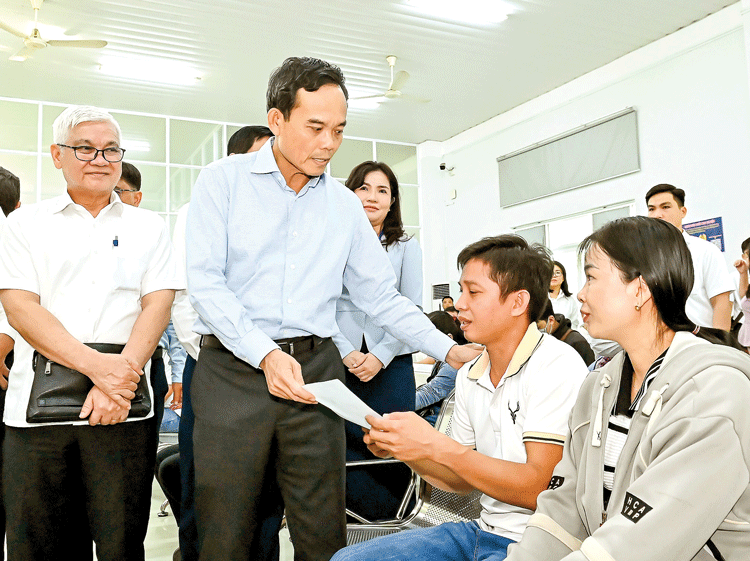
For many years, residents of the Ga-Gao Market area in Ben Thanh Ward, Ho Chi Minh City, have lived in cramped homes with inadequate infrastructure while hoping for a better living environment.
Against this backdrop, the city has promoted an urban renovation project in the Ga-Gao Market area, linked to the Ma Lang area, with a focus on upgrading the central residential area, investing comprehensively in technical and social infrastructure, and providing resettlement housing for affected households.
Although it is a specific project, it also demonstrates Ho Chi Minh City's new approach: new policies, mechanisms and resources are being transformed into projects, services, living environments and day-to-day changes that residents can experience.
Ho Chi Minh City now faces the need to restructure its development model within a larger space, bringing together industry, seaports, logistics, finance, science and technology, innovation, tourism, services and human resources. The new space creates opportunities to reorganize resources and establish new growth drivers. At the same time, special mechanisms and policies continue to provide an institutional foundation for the city to better tap its potential and pursue its goal of double-digit growth.
Statistics for the first seven months of 2026 show that many of Ho Chi Minh City's socioeconomic indicators recorded solid growth, with state budget revenue, total social investment capital and FDI attraction all showing positive momentum.
However, bottlenecks remain, particularly pressure to disburse public investment capital, the heavy workload facing many wards and communes, and human resources and data systems that have yet to match the new requirements.
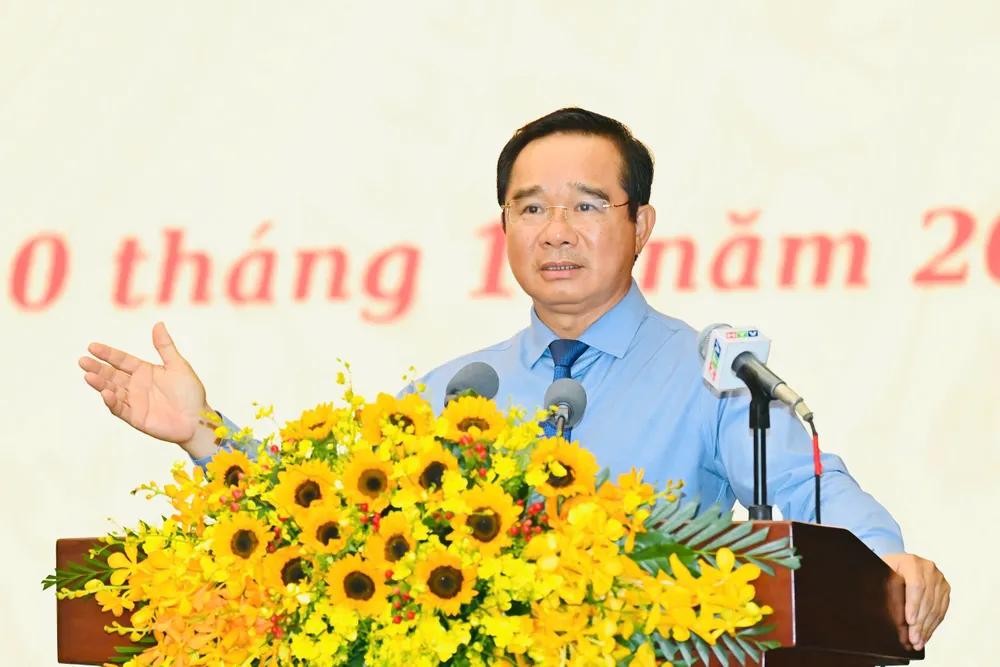
Ho Chi Minh City People's Committee Chairman Nguyen Van Duoc has repeatedly stressed the need to turn growth aspirations into concrete action, linking task performance and public investment disbursement progress to the accountability of heads of agencies when assessing officials' performance.
Directors of departments, heads of agencies, and chairpersons of people's committees in communes, wards and special administrative zones are directly responsible for the progress, quality and results of their assigned work.
Projects and works that meet all requirements must be implemented immediately. If obstacles remain, the bottleneck must be correctly identified and addressed. When work is delayed, responsibility must be clearly established, preventing a mindset of avoidance or buck-passing from affecting overall work.
At a conference reviewing one year of Ho Chi Minh City’s political system and two-tier local government model on May 28, HCMC Party Committee Secretary Tran Luu Quang urged officials to embrace reform and accountability.
“With the city’s scale, stature, resources and development needs, our cadres, civil servants and public employees must push beyond their limits, renew their thinking, act decisively and cooperate effectively," Secretary Tran Luu Quang said.
He called for a shift from quantity to quality, from administrative management to development-oriented governance, and from a request-and-grant mindset to one of autonomy and accountability, coupled with effective oversight.
The city Party Committee Secretary emphasized that agency leaders must take responsibility while fostering initiative, creativity and the courage to act.
HCMC speeds up land clearance, targets 98 percent disbursement by year-end
Driven by the demand for more decisive implementation, many long-standing bottlenecks have begun to ease, most notably in land clearance for project implementation.
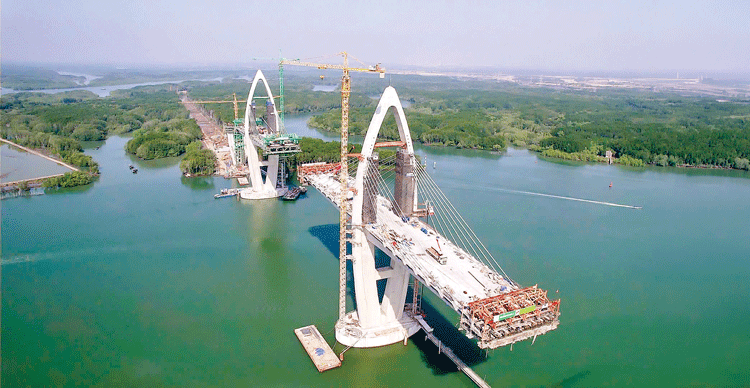
According to Director Nguyen Toan Thang of the Ho Chi Minh City Department of Agriculture and Environment, by early July 2026, the city had disbursed nearly 65 percent of funds allocated for compensation and land clearance. The figure exceeded 73 percent for 26 key projects, with the city targeting 98 percent disbursement of the total allocation by year-end.
The Department of Agriculture and Environment has also introduced a “yellow card” and “red card” mechanism to warn investors of delays, while clearly delineating responsibilities between compensation and construction, helping accelerate public investment progress.
It can be affirmed that after more than a year of operating the two-tier local government model, the city has made strong progress in administrative reform, digital transformation, organizational restructuring, decentralization and delegation of authority. The rapidly increasing workload, coupled with staffing difficulties in some areas, has required officials to change their approach, improve their capacity to handle work and enhance the quality of services for residents.
At a May 28 conference reviewing Ho Chi Minh City’s political system and two-tier local government model, Party Committee Secretary Tran Luu Quang urged officials to push beyond their limits, rethink their methods, and shift from an administrative mindset to development-oriented governance.
The goal of double-digit growth cannot be separated from social welfare, administrative reform, digital transformation and the quality of urban governance. From the Ga-Gao Market area renovation project and free social welfare programs to strategic infrastructure projects, the common thread is putting development resources back at the service of residents' daily lives.
A rapidly developing city needs major projects, large flows of capital and new growth drivers. Ultimately, the value of development lies in its ability to create a more livable city, where residents benefit from the results of the city's own changes in the way it operates.
The city remains steadfast in its goal of achieving GRDP growth of more than 10 percent. This is a political mandate and the city’s responsibility to its people and the country. The city government will act with the utmost determination, efficiency and sense of responsibility.
Chairman Nguyen Van Duoc of the Ho Chi Minh City People’s Committee, speaks at the third session of the 11th Ho Chi Minh City People’s Council on June 19.



)