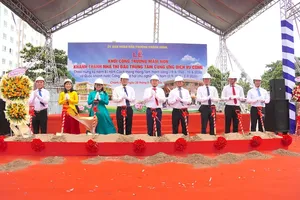
From nationwide health checkups and tuition support at various levels of education to free bus services, a growing range of free public services is becoming a strong source of support for vulnerable groups, helping ease their burdens and improve the quality of life in a civilized, modern, and compassionate Ho Chi Minh City.
Healthcare closer to the people, for the people
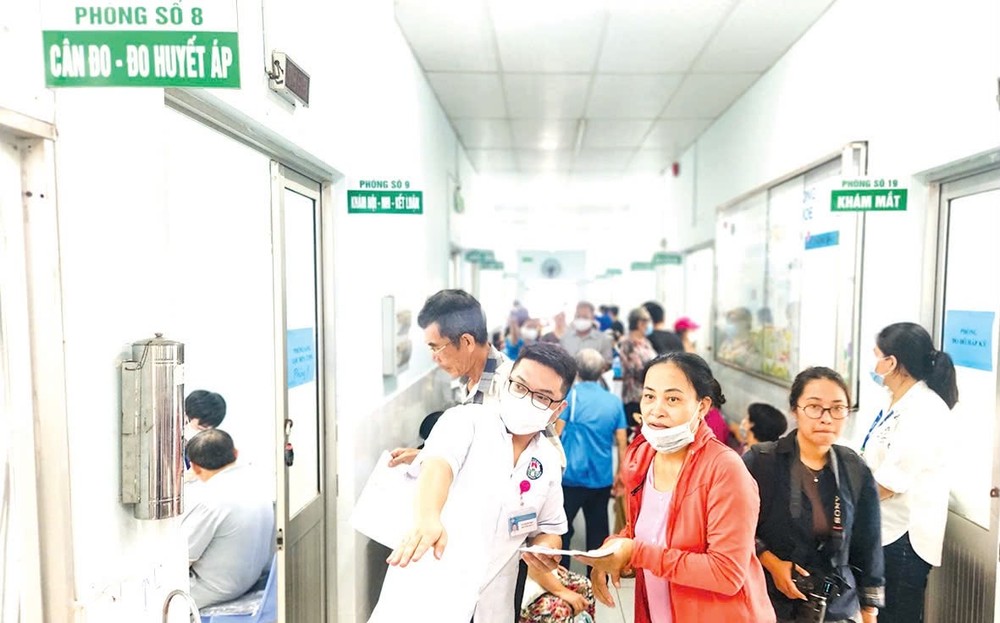
One day in early April 2026, 69-year-old Le Thi Hong and her 78-year-old husband, Pham Van Day, arrived early at the Tang Nhon Phu Ward Health Station after receiving an invitation from local authorities.
Mr. Day is blind in both eyes and relies on his wife to accompany him wherever he goes. Whenever he falls ill, Mrs. Hong has to give up a day of collecting recyclables to take her husband to the hospital. She herself had never had a health checkup.
“I sometimes get headaches, so I just buy some medicine and take it. Going to the hospital would only cost money. Today was the first time I learned that free medical checkups were available. After the examination, I found out that I had high blood pressure,” Mrs. Hong said, proudly showing off a gift bag containing porridge, milk, and medicine.
For people struggling to make ends meet, physical pain can sometimes be less burdensome than the daily struggle to put food on the table. In 2026, the universal health checkup program is being rolled out across Ho Chi Minh City, making healthcare services more accessible and convenient for residents while enabling diseases to be detected at an early stage, including in areas far from the city center.
Hiep Phuoc Commune, about 25km from the city center, is home to health station doctors who persistently make their way every day along slippery dirt roads and rough canal embankments to reach even the most remote households.
When they arrived at the home of 94-year-old Nguyen Thi Vien in Hamlet 3, the doctors were deeply concerned to find that a wound on her back had developed severe ulcers and become seriously infected.
Mrs. Vien has been living with diabetes for more than 10 years and has required daily insulin injections. Over the past two years, as she became bedridden and lost awareness, her treatment was interrupted.
“Our family was complacent because she still seemed healthy after we stopped the injections. She hasn’t been to the hospital for a very long time, and I didn’t know how to take her there. Thankfully, the doctors came to our home and explained her condition. Only then did I understand how serious her illness was. I will arrange to take her to the hospital immediately,” Nguyen Thi Kim Anh, Mrs. Vien’s daughter, said with regret.
According to Nguyen Van Gam, a Level II specialist doctor and Director of the Hiep Phuoc Commune Health Station, it is only by visiting households in the most remote areas that healthcare workers can truly understand the disadvantages faced by isolated and elderly patients in urgent need of medical care.
Things have changed as healthcare teams have begun reaching people in their homes, providing dedicated medical examinations and free medicines. The social safety net has been strengthened through the compassion of healthcare workers and breakthrough initiatives in the health sector.
As of August 2026, Ho Chi Minh City had provided free health checkups and established electronic health records for 1,996,410 residents, equivalent to 15 percent of the target. The universal health checkup program is now gathering considerable momentum. From around 30,000-40,000 people examined per week in the initial phase, the figure has risen to 300,000-400,000 per week over the past three weeks.
Supporting dreams
Also in 2026, the Tu Tam Clinic model has mobilized social resources to provide free health checkup cards to people in need.
At 61, Mrs. Nguyen Thi Sang of Binh Trung Ward should have been enjoying a more restful life, but instead, she is raising three young grandchildren on her own. Every penny she earns goes toward milk and diapers, while her musculoskeletal condition continues to worsen. For Mrs. Sang, seeing a doctor had once seemed like a distant wish until she received a free medical checkup voucher from the Tu Tam Clinic.
The clinic is a social welfare partnership between Le Van Thinh Hospital, the Vietnam Fatherland Front Committee of Binh Trung Ward, and the Binh Trung Ward Business Association. It provides free healthcare services to elderly people living alone, people with disabilities, and disadvantaged families without health insurance cards.
Lottery ticket sellers, construction workers, masons, and other low-income workers have their circumstances verified by local authorities to ensure that assistance reaches the right people at the right time, easing the anxiety of those who fall ill but cannot afford to seek treatment.
Ho Chi Minh City is not only focusing on improving residents’ health but is also taking the lead in rolling out a range of free policies to support children throughout their educational journey.
For 43-year-old Tran Thi Ngoc of Phu My Ward, life seemed to have become unbearably difficult. Her husband is suffering from end-stage lung cancer, while their two children are still of school age. She took over her husband’s small motorbike repair shop to help cover his medical expenses, which exceed VND10 million (US$383) a month.
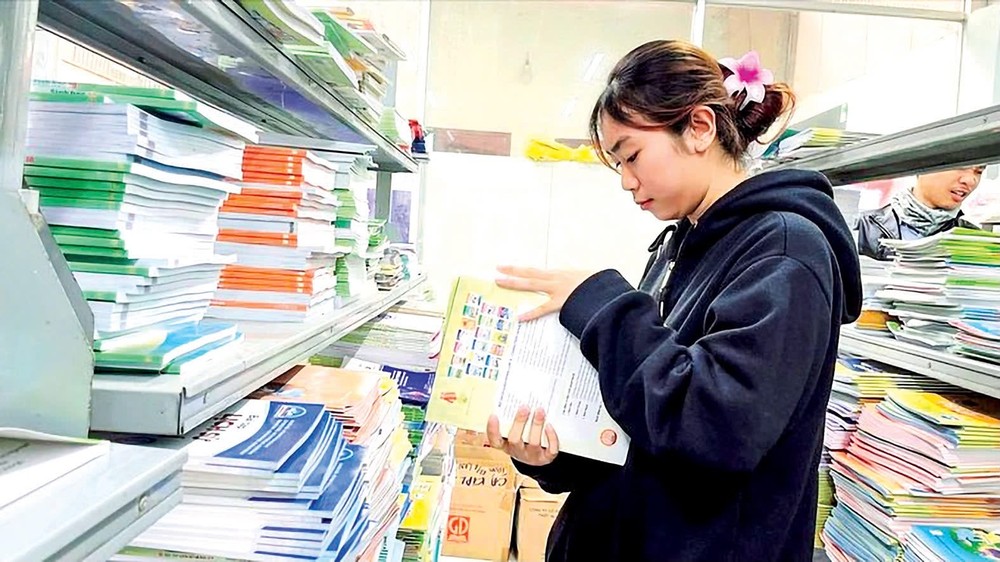
The burden on her shoulders became even heavier as the new school year approached, with her daughter entering Grade 12 and her son Grade 7. Fortunately, tuition support and free textbook loans have given the family a chance to keep going.
“Textbooks alone cost nearly VND1 million, while tuition is around VND1.6 million. The city has helped shoulder a major part of our expenses. More importantly, this support ensures that my children do not have to give up their education because of our family’s circumstances,” Mrs. Ngoc said.
From doctors navigating dirt roads and canal paths to reach residents in remote areas to free clinics opening their doors to vulnerable people, textbooks helping children stay in school, and zero-fare buses carrying passengers across the city, social welfare policies have become a simple yet tangible part of everyday life.
A civilized city is measured not only by the scale of its economy, major infrastructure projects, or pace of development, but also by how it cares for its most vulnerable residents. When policies address people’s concrete and pressing needs, the spirit of compassion is no longer an abstract concept but something vividly reflected in practical support for each individual and family.
This is also part of what defines a dynamic, creative, and compassionate Ho Chi Minh City. Preserving the spirit of compassion in every social welfare policy means preserving the city’s identity: pursuing development while ensuring that vulnerable people are not left behind.
Free bus tickets make a difference
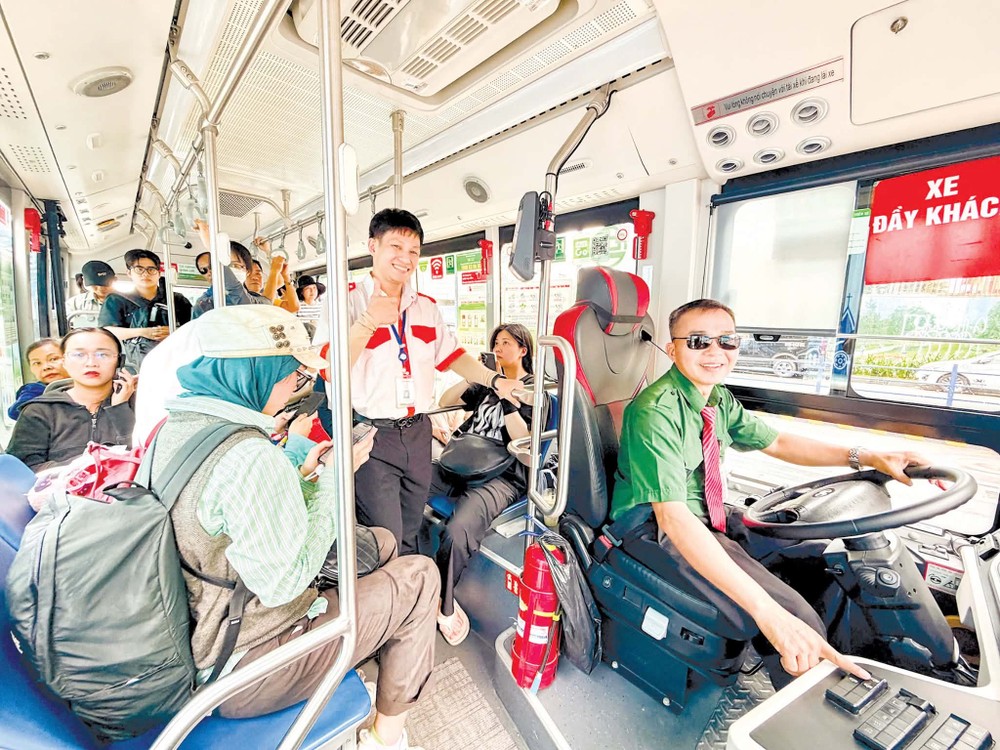
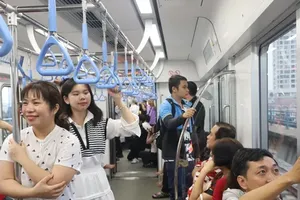
For more than a month, 58-year-old Tran Thi Ninh, who lives in Ba Diem Commune, Ho Chi Minh City, has become a regular passenger on Bus Route 65 (Ben Thanh – Cach Mang Thang Tam – An Suong).
Mrs. Ninh works as a domestic helper and normally rides her motorbike to the city center every day. She used to spend several hundred thousand dong a month on fuel alone.
“Since the buses became free, I can catch a quick nap on the way and get some rest. I don’t have to worry about the rain, heat, or flooded streets. In July alone, I saved a considerable amount on fuel, which I used to buy rice and help pay for my husband’s medicine,” Mrs. Ninh said.
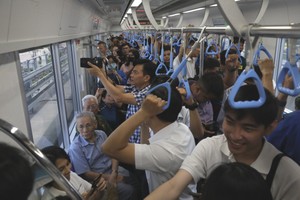
Since Ho Chi Minh City introduced free bus fares, the number of passengers using public transport has increased noticeably. In addition to students, low-income earners, informal workers, and office employees are also turning to buses as a way to reduce their daily expenses.
Deputy Director of the Ho Chi Minh City Center for Public Transport Management, Le Hoan, said that since the free-fare policy was introduced on August 7, bus routes have served more than 10.5 million passenger trips, up 42 percent year on year.
Demand for bus services has been rising day by day and week by week. “People in informal employment, who previously made limited use of buses, are now gradually turning to this form of transport,” Mr. Le Hoan said, forecasting that passenger numbers would continue to surge after the summer holiday.
In the coming period, the Ho Chi Minh City Public Transport Management Center will implement a coordinated range of measures to gradually foster sustainable public transport habits among residents.
Dr. Huynh Thanh Dien, a lecturer at Nguyen Tat Thanh University, said the introduction of free bus fares in Ho Chi Minh City is not simply a budgetary measure to support residents but also has far-reaching spillover effects on the economy.
From a macroeconomic perspective, a society that is less dependent on private vehicles can reduce pollution and hidden costs, thereby enhancing the city’s competitiveness in attracting experts and high-quality workers.
From a financial perspective, workers can save hundreds of thousands to several million dong each month on fuel and parking costs. This money can then be spent on other needs, stimulating aggregate demand and supporting sustainable economic growth.
At the same time, as bus ridership increases, commercial activity around bus stops is likely to become more vibrant, generating additional tax revenues that can help offset the cost of fare subsidies.
Free bus fares should be viewed only as an initial breakthrough in terms of public outreach. Once residents have developed the habit of using buses, reintroducing fares would remain entirely feasible.
Ms. Nguyen Thi Thuy, principal of Huu Nghi School for Visually Impaired Children in Phu My Ward, hopes the free textbook policy will also be extended to Braille textbooks.
In reality, a complete set of Braille textbooks costs nearly VND20 million, an excessive expense that the school and parents can hardly afford on their own. Visually impaired students also face considerable difficulties in preserving the books, which can easily become damaged through regular use.
Therefore, a mechanism to provide Braille textbooks free of charge on a loan basis would help ease the financial burden on these students and make their journey to school less difficult.
Dr. Huynh Thanh Dien said that to encourage more residents to use buses, the city needs to implement a comprehensive package of policies alongside investment in transport infrastructure and roads.
First, urban bus routes should be reorganized in a rational manner to ensure convenience and efficient travel times. Second, service quality must be significantly improved, meeting standards of civility, cleanliness, and passenger friendliness. Third, supporting amenities should be developed to make travel more convenient for pedestrians and bus passengers.