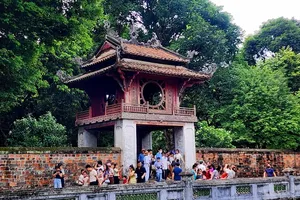
In addition to the wear caused by time and harsh weather, heritage towns in Central Vietnam, including Hoi An, Gia Hoi, Bao Vinh, and the ancient villages of Phuoc Tich and Loc Yen, are facing growing pressure from tourism and urbanization.
Ancient town hollowed out
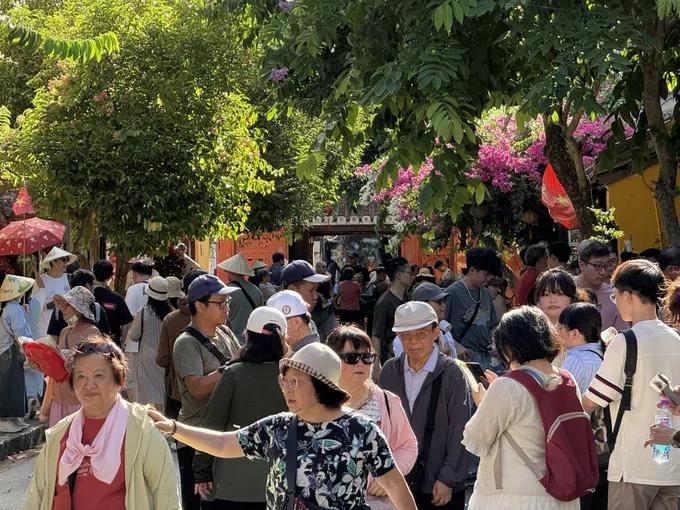
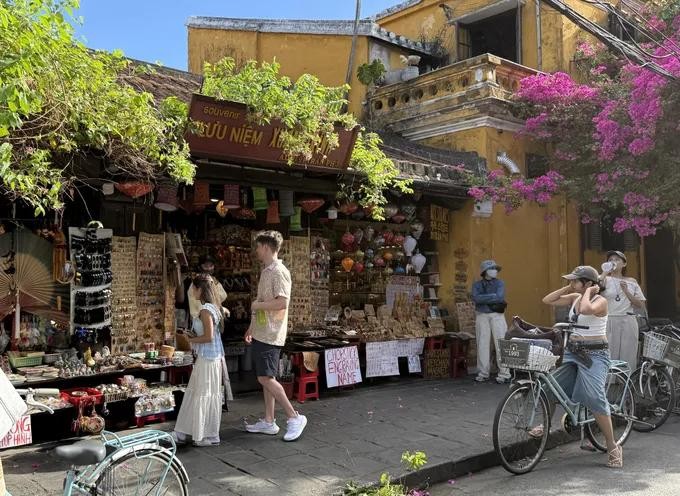
On weekends and public holidays, Hoi An Ancient Town is packed with visitors. Along Bach Dang, Tran Phu, and Nguyen Thai Hoc streets, as well as around the Japanese Covered Bridge and the Guangdong Assembly Hall, crowds stream through the area from afternoon until evening.
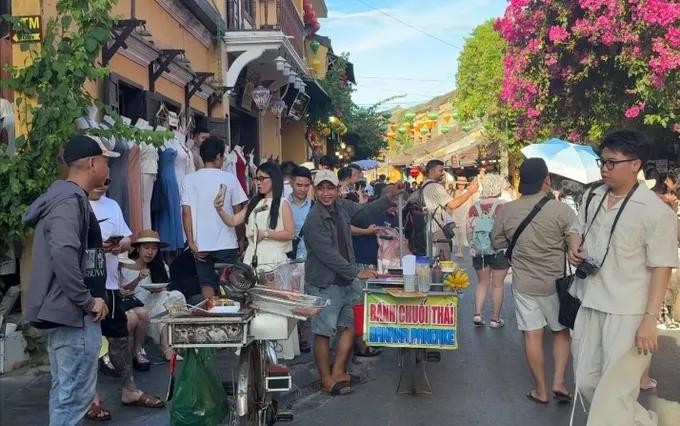
Many tourists have to wait a long time to take photos at popular "check-in" spots. Roads leading to the ancient town, along with the Nguyen Thi Minh Khai, Phan Chu Trinh, and Hai Ba Trung pedestrian areas, are frequently congested as tour vehicles stop to pick up and drop off passengers. Sidewalks are often occupied by street vendors, souvenir stalls, advertising signs, and other business equipment.
Huynh Tan Huy, a visitor from Hanoi, said that alongside its outstanding cultural and architectural value, Hoi An should address several shortcomings. He noted that the facades of many ancient houses are used to hang clothing or display souvenirs for sale, obscuring the buildings' architectural beauty. Encroachment on sidewalks, disorderly street vending, and aggressive solicitation of tourists in some sections of Bach Dang Street also detract from the visitor experience.
Cultural researcher Phung Tan Dong said the more troubling issue is that the ancient town is being "hollowed out" from within. While tourism has improved residents' living standards, economic pressures have prompted many owners of historic houses to sell or lease their properties and move elsewhere. The new owners or tenants, many from Hanoi and Ho Chi Minh City, use the heritage buildings for tourism-related businesses.
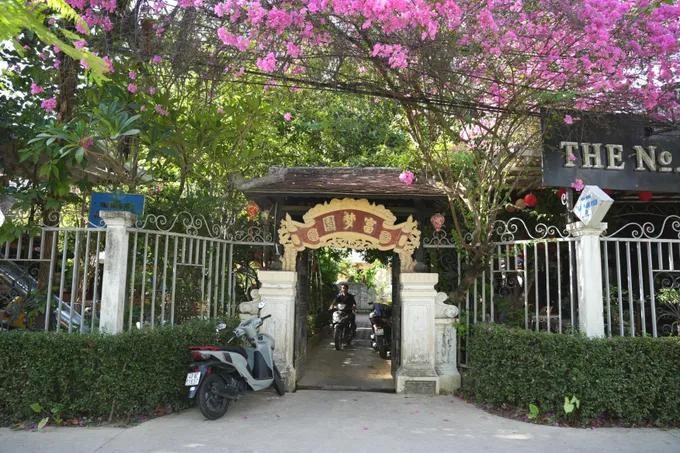
As a result, spaces once associated with family life, ancestor worship, and traditional cultural activities are gradually being replaced by commercial operations. The intangible cultural values that have long given the ancient town its character are steadily fading. Many religious practices and community activities are no longer maintained as they once were.
The locality is implementing a campaign to restore order on sidewalks, beautify the urban area, and require that advertising and displaying goods in ancient houses strictly comply with the Regulations on the Protection of the Hoi An Ancient Town World Cultural Heritage Site. Violations will be forced to be dismantled; signs and displays must be consistent in color to ensure the landscape and preserve the heritage value.
Vice Chairman Tong Quoc Hung of the People's Committee of Hoi An Ward, Da Nang City
Deterioration and transformation
While Hoi An faces the risk of being hollowed out by tourism, several historic neighborhoods in Hue City are gradually losing their identity under the pressure of urbanization. Once among the busiest commercial districts of the former imperial capital, Gia Hoi and Bao Vinh are steadily losing their historic appearance.
Mansions, pagodas, communal houses, assembly halls, and centuries-old architectural landmarks that once defined these historic neighborhoods are now surrounded by rows of multi-story concrete buildings, with some demolished to make way for modern construction.
Inside his family's historic house at 61 Bao Vinh in Hoa Chau Ward, Hue City, 72-year-old Nguyen Ngoc Nguyen quietly watches people pass along the narrow street outside.
After nearly 200 years, the family's approximately 70-square-meter wooden house has undergone repeated patchwork repairs. Some walls have been replaced with brick and cement, but the wooden columns and beams show clear signs of deterioration, while the roof is covered with makeshift materials to prevent leaks.
Gia Hoi Ancient Quarter is also gradually disappearing, despite the efforts of heritage homeowners and conservation advocates. The neighborhood now has only about 80 historic buildings remaining, most of them in poor condition and dwarfed by surrounding high-rise buildings.
Nguyen Xuan Hoa, former director of the Hue City Department of Culture and Sports, said that during the late Minh Mang era, Gia Hoi was upgraded to improve fire prevention and developed into a major commercial district of the imperial capital, featuring three commercial streets with more than 600 houses.
Gia Hoi is a distinctive heritage urban area that brings together a wide range of architectural styles, including noble residences, assembly halls, pagodas, communal houses, traditional homes, and ancestral temples. It is also home to many well-known historic sites, including Dieu De National Pagoda, the communal house and temple honoring the founders of Lai Thuong Village, Chinese assembly halls, and numerous residences of royal princes and princesses. In addition, the area preserves a rich collection of intangible cultural heritage, including traditional festivals, family crafts, and a distinctive culinary tradition.
However, mounting urbanization and the lack of a clear conservation strategy are gradually transforming the historic neighborhood, threatening its architectural and cultural landscape while putting valuable cultural and tourism resources at risk.
Gloomy Hue traditional house tour
Launched during the Hue Festival in 2002, the Phu Mong – Kim Long garden house tour quickly became a highlight for visitors. Its appeal lay in the timeless charm of traditional houses nestled among the lush fruit gardens of Kim Long, a region celebrated for generations.
Yet, the tour’s promise was short-lived. Over time, several garden house owners shifted their focus to commercial ventures such as restaurants and karaoke bars. This transformation disrupted the tranquil atmosphere and eroded the cultural value of the traditional garden house space, leaving the once-unique tour in decline.











)