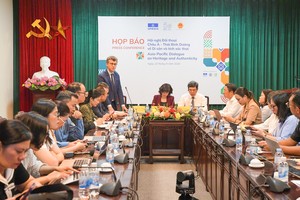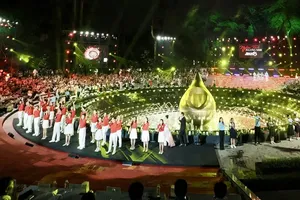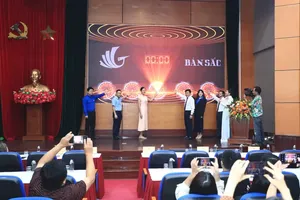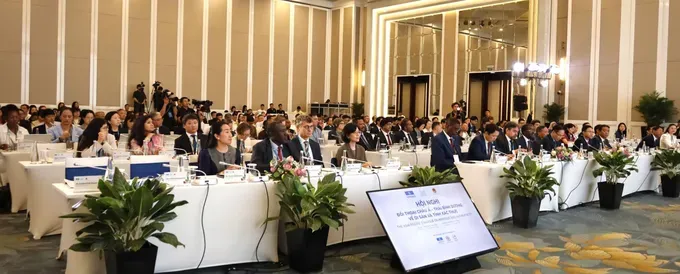
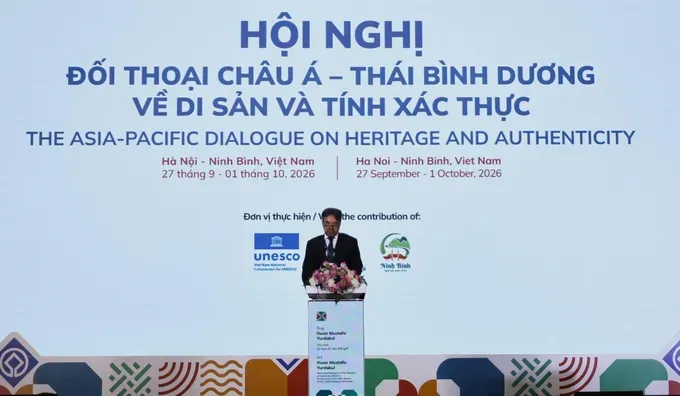
The Asia-Pacific Dialogue on Heritage and Authenticity opened in Hanoi on September 28. Nearly 250 domestic and international delegates and experts gathered to discuss ways to interpret, assess, and protect authenticity within the World Heritage system.
The event, running from September 27 to October 1 across Hanoi and Ninh Binh Province, is co-organized by the Vietnam National Commission for UNESCO, UNESCO, the Hanoi People’s Committee, and the Ninh Binh People’s Committee.
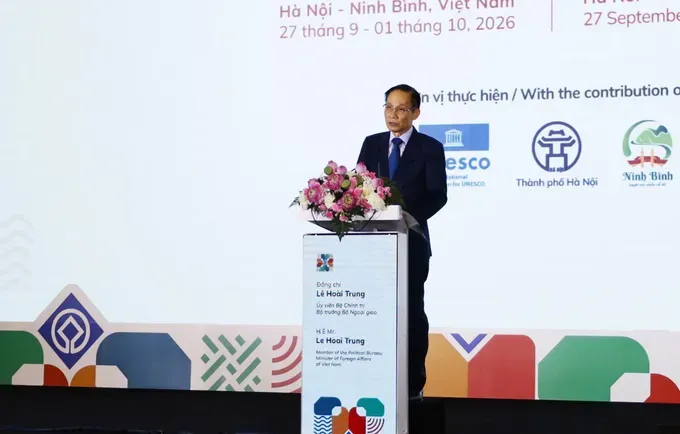
Welcoming attendees on behalf of the host country, Le Hoai Trung, Politburo member and Minister of Foreign Affairs, noted that the Asia-Pacific region has become a dynamic hub of development and a key driver of global growth. However, he pointed out that this rapid growth is placing immense pressure on the region's heritage due to urbanization, infrastructure development, and climate change.
Consequently, if the Asia-Pacific region can strike a balance between preservation and development, it will not only achieve regional success but also offer valuable insights for the rest of the world.
He proposed that delegates view authenticity through the lens of respect for cultural diversity, a high sense of responsibility toward history and future generations, and a people-centered approach that positions local communities as the core subjects. He also called for strengthening solidarity and cooperation, as well as translating awareness into action.
The Foreign Minister affirmed that the Vietnamese Government will direct ministries, agencies, and localities to rigorously implement the conference's outcomes and integrate the recommendations of the upcoming Hanoi Document into the process of refining institutions, policies, and heritage management practices. He stressed that heritage preservation must be prioritized right from the planning and project-design stages, ensuring short-term gains are not pursued at the expense of heritage values.
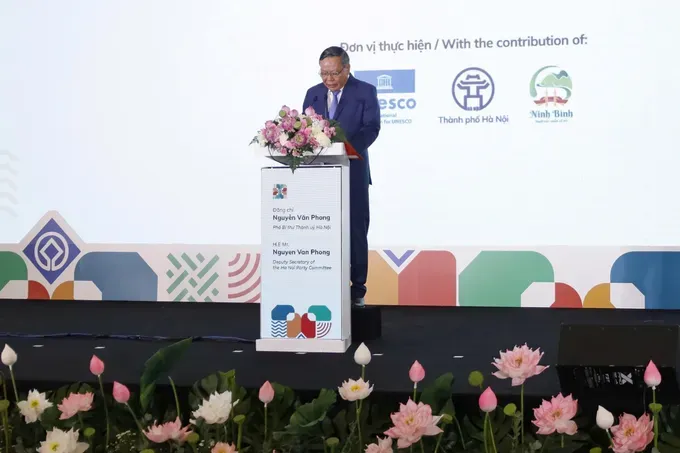
Vice Secretary of the Hanoi Municipal Party Committee Nguyen Van Phong emphasized that the dialogue offers Vietnam an opportunity to proactively participate in and contribute to global discussions on heritage and authenticity. He added that the event serves as a forum for experts, scholars, policymakers, and international organizations to exchange ideas and share experiences on emerging challenges in preserving and promoting heritage values in the new context.
Mr. Nguyen Van Phong noted that under the Master Plan for Hanoi with a 100-year vision, "culture, identity, and creativity" are defined as core values, endogenous resources, and the capital city’s soft power. On this foundation, Hanoi remains steadfast in its approach to "preservation for development, development for preservation," striking a balance between heritage conservation and building a modern, civilized, creative, and integrated capital.
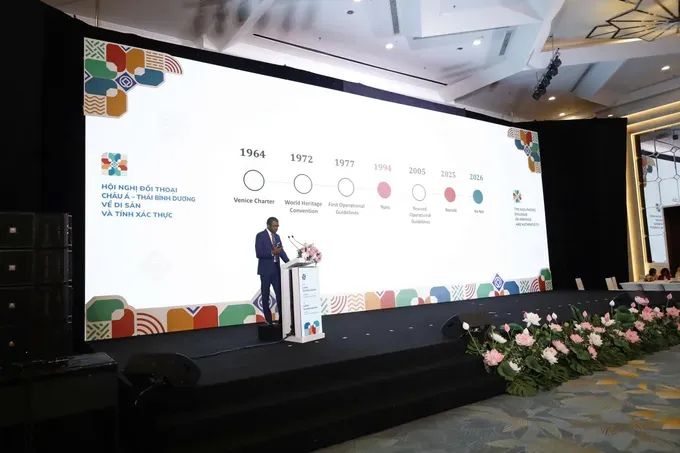
Speaking at the conference, Director of the UNESCO World Heritage Center Lazare Eloundou Assomo evaluated that over the past several decades, since ratifying the Convention in 1987, Vietnam has consistently been an active and constructive member of the World Heritage Committee. From the ancient citadel walls of the Imperial Citadel of Thang Long to the karst landscape of Trang An, as well as Hoi An, Hue, Ha Long Bay, and the Yen Tu Monuments and Landscapes complex, Vietnam's perspective on its nine World Heritage sites offers valuable insights for the conference discussions.
Mr. Lazare Eloundou Assomo also recalled a recent demonstration of Vietnam's global leadership in the cultural sector, the UN General Assembly's adoption of a resolution proclaiming the International Decade of Culture for Sustainable Development (2027–2036), an initiative proposed by Vietnam.
On September 29, the conference schedule includes exhibitions and activities at the Imperial Citadel of Thang Long, highlighted by a groundbreaking ceremony for the conservation, restoration, and rehabilitation project of the Kinh Thien Palace.
The closing session will take place on September 30, with delegates expected to adopt the Hanoi Document on Heritage and Authenticity.
On October 1, delegates will undertake a field survey of the Trang An Landscape Complex and the Tam Chuc area in Ninh Binh province.