The city currently has about 17,670 enterprises operating in the cultural sector, employing more than 97,000 workers. The sector’s contribution to the city’s GRDP rose from 3.54 percent in 2020 to 5.7 percent at the end of 2025, with average annual growth of 14 percent.
Behind these figures is a shift in the way businesses approach cultural production. Some have moved beyond creating individual products to developing content across multiple platforms.
In 2025, VNG Corporation recorded VND10.894 trillion in revenue, while DatVietVAC Group Holding, a Vietnamese media, entertainment, and technology group, posted VND3.235 trillion (US$124.3 million). The film industry has also generated significant box-office revenue. Five films directed by Tran Thanh, an actor, comedian, television host, and filmmaker, in recent years have collectively grossed more than VND2.1 trillion (US$80.7 million) at the box office.
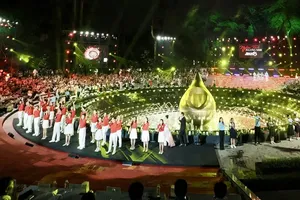
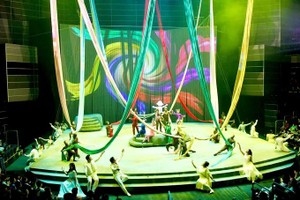
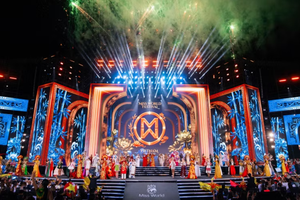
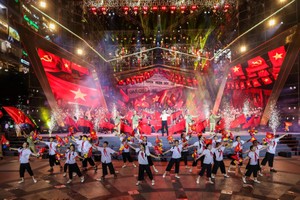
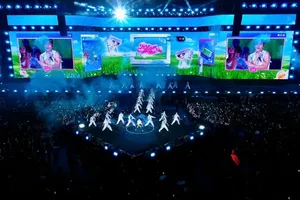
In 2025, Ho Chi Minh City hosted more than 50 events, including the HOZO International Music Festival and concerts such as “Anh Trai Say Hi,” which attracted large numbers of audiences and tourists. UNESCO’s recognition of Ho Chi Minh City as a Creative City of Film has opened up greater opportunities to connect the film industry with other cultural industries. The decentralization of authority for film licensing has also helped streamline administrative procedures and facilitate investment.
A cultural product—whether a film, an arts program, or a festival—can generate value far beyond direct revenue. A film not only creates jobs but also drives demand for a wide range of supporting services, from production logistics to accommodation, transportation, and food services. Festivals, meanwhile, connect culture with tourism, consumer spending, and destination promotion.
Therefore, the key to turning culture into a driver of economic development lies in whether the supporting sectors and services behind cultural products are well connected and can grow together. This is an area where Ho Chi Minh City is working to make further improvements.
")
Ho Chi Minh City aims to have its cultural industries account for 7.2 percent of GRDP by 2030, with average annual growth of 12 percent and at least five nationally recognized brands established. Six sectors have been identified as priorities: film, performing arts, cultural tourism, advertising, creative design, and publishing. The first three are expected to build brands and generate broad appeal, while the remaining three are seen as having strong growth potential and opportunities for export.
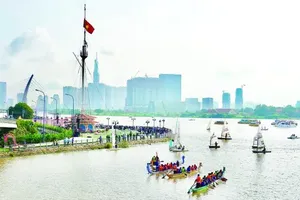
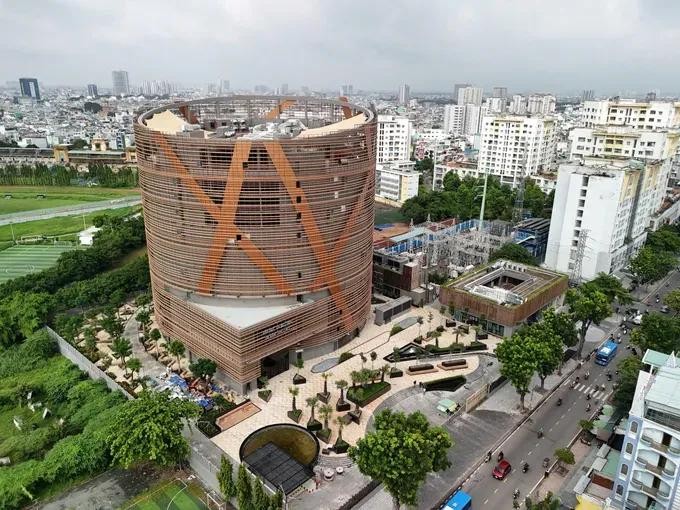
To achieve these goals, the city needs spaces and projects capable of attracting the public, businesses, and creative activities. Ho Chi Minh City is currently reviewing land resources in the Bau Bang area with a view to developing a film, culture, and entertainment complex. It also plans to transform the Cultural and Historical Park of Ethnic Groups in Long Binh Ward into a cultural, creative, and experiential space, while studying the approximately 350-hectare Go Ong Sam area in Phuoc Thang Ward to develop a cultural industry ecosystem linked to the river and coastal landscape.
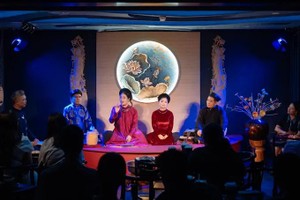
The city is also focusing on three performing arts ecosystem projects, including the Phu Tho Circus and Multipurpose Performing Arts Center in Pho Tho Ward, the “Ho Chi Minh City Light Festival,” and the “Ho Chi Minh City – International Music and Events Center.” These projects are expected to provide platforms for cultural products to connect with audiences, businesses, and the market.
However, projects alone are not enough. A functioning market also requires appropriate mechanisms to operate it. In 2026, Ho Chi Minh City is expected to issue 15 resolutions and three decisions to concretize Article 26 of the Urban Development Law No. 18/2026/QH16, which sets out mechanisms and powers for the People’s Council of a special urban municipality such as Ho Chi Minh City in developing culture, sports, and tourism.
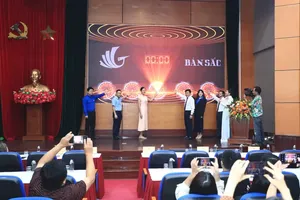
The city is also studying the establishment of a Culture and Arts Fund operating on a venture capital model to provide grants and seed funding for creative projects, as well as the establishment of a Cultural Industry Development Center to serve as a hub connecting stakeholders. Ho Chi Minh City has also proposed the early development and promulgation of a Law on Cultural Industry Development, the completion of a system of statistical indicators and an integrated digital database, and regulations governing the use of artificial intelligence for analysis and forecasting. It has also called for criteria and mechanisms to support the development of cultural industry centers, clusters, and zones.
From Ho Chi Minh City’s perspective, the question is no longer whether culture has potential. The market has emerged, businesses are already operating, and many cultural products are generating substantial revenue. What is still lacking are the connections between these resources. Once those links are established, cultural products will not only meet people’s spiritual needs but also gain greater access to the market, while the economic value of culture will become increasingly visible through concrete figures.