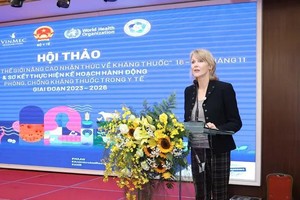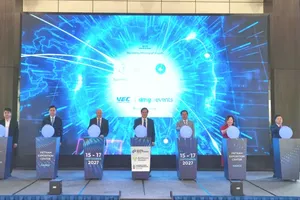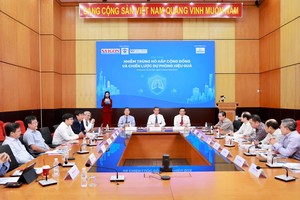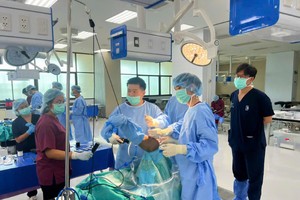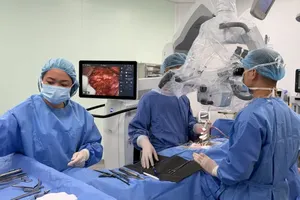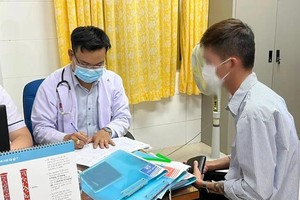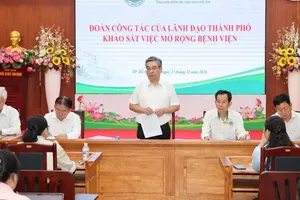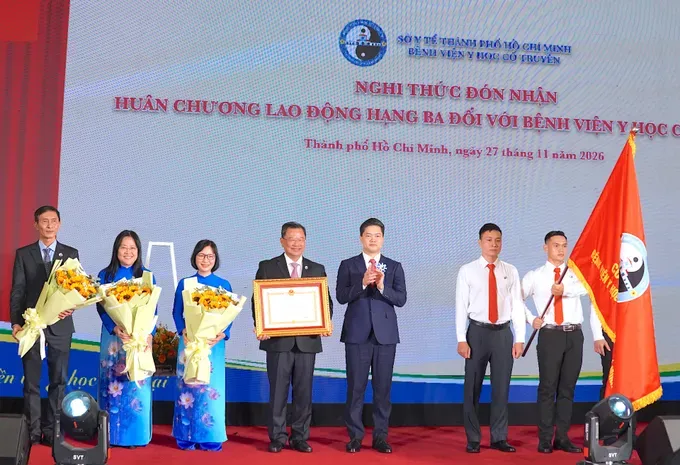
The ceremony was held alongside an international scientific conference entitled “Traditional Medicine Tourism for Health Promotion and Connecting Southern Region’s Cultural Spaces.”
The ceremony was attended by officials including Permanent Deputy Minister of Health Vu Manh Ha; Hoang Nguyen Dinh, Vice Chairman of the Ho Chi Minh City People’s Committee; and Bui Thanh Nhan, Head of the Ho Chi Minh City Party Committee’s Commission for Information and Education, as well as representatives of departments and agencies and more than 500 domestic and international delegates.
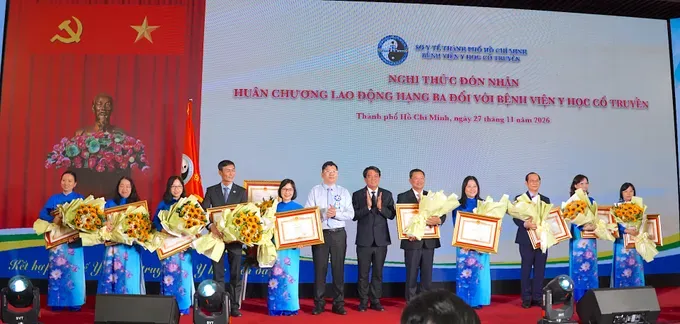
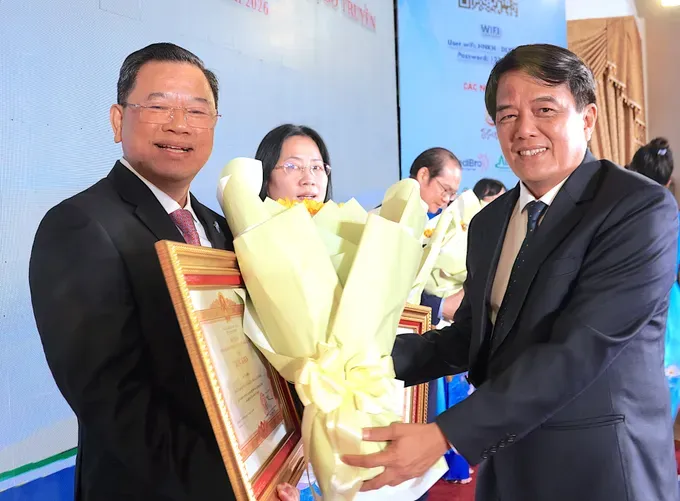
Receiving the prestigious awards, Meritorious Physician and Level-II Specialist Doctor Do Tan Khoa, Director of Ho Chi Minh City Traditional Medicine Hospital, expressed his emotion, saying the achievements reflected the dedication, expertise, and commitment of generations of physicians, as well as the trust of patients and city residents.
Building on more than 4,000 years of Vietnamese traditional medicine, the philosophy of “Vietnamese medicinal herbs for Vietnamese people” championed by renowned physician Tue Tinh, and the legacy of Great Physician Hai Thuong Lan Ong Le Huu Trac, the hospital’s staff regard preserving and promoting the invaluable heritage handed down by their predecessors as a mission rooted in their hearts.
Under the city’s orientation toward a multi-tiered, multi-polar, and multi-center healthcare system, the hospital remains committed to upholding medical ethics and its motto of “Friendly reception, dedicated care, and effective treatment,” encouraging people to take a proactive approach to disease prevention and maintain “a healthy body, a peaceful mind, and a clear intellect.”
The hospital is also implementing four key projects, including developing traditional medicine tourism linked to the Southern region’s cultural spaces; commercializing high-quality pharmaceutical products meeting WHO-GMP standards; digital transformation toward a smart hospital applying artificial intelligence (AI) in traditional medicine; and developing a “Green Home – Green Energy – Circular Energy” initiative.
Speaking at the ceremony, Permanent Deputy Minister of Health Vu Manh Ha said the convergence of the central government’s strategic policies on developing traditional medicine (Notice No. 68-TB/VPTW and Decision No. 1976/QD-TTg) and making tourism a spearhead economic sector (Resolution No. 26-NQ/TW) was opening up new opportunities for health and wellness tourism. As the healthcare sector shifts from treating illnesses to proactive prevention, including early intervention and preventive care at the community level, traditional medicine, with its humanistic values and deep roots in national culture, offers a distinctive competitive advantage for developing high-quality tourism products.
As one of the four core traditional medicine hospitals nationwide, Ho Chi Minh City Traditional Medicine Hospital needs to standardize protocols combining traditional and modern medicine, accelerate digital transformation, and transfer technical expertise to lower-level healthcare facilities, Permanent Deputy Minister of Health Vu Manh Ha stressed.
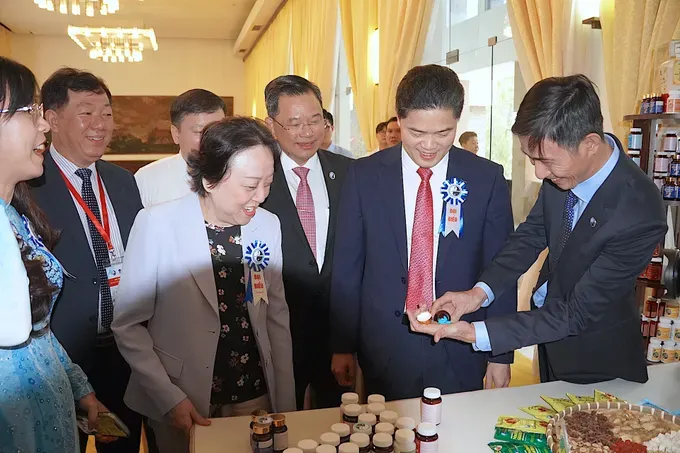
From the perspective of medical tourism development, Meritorious Physician and Level-II Specialist Doctor Do Tan Khoa said that, leveraging its new infrastructure, including buildings N5 and N6 and pharmaceutical manufacturing facilities meeting three international standards—WHO-GMP, GLP, and GSP—the hospital was designing an integrated visitor experience engaging all five senses and providing comprehensive care for the “body, mind, and intellect."
The model combines evidence-based medical treatments, including cosmetic thread embedding, laser acupuncture, and music therapy, with rehabilitation therapies such as massage, acupressure, and herbal hydrotherapy, as well as personalized medicinal diets tailored to individual constitutions.
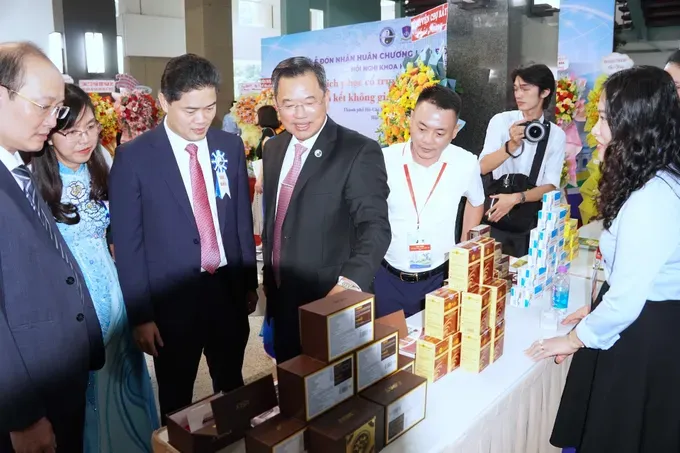
Visitors will also have opportunities to prepare herbal teas themselves, explore the Vietnamese Ginseng exhibition space, the digital traditional medicine library, five Southern region’s cultural spaces, and a memorial dedicated to two renowned physicians. The project aims to establish the hospital as a “Traditional Medicine Tourism Discovery Center of Ho Chi Minh City,” connecting with domestic and international travel companies and accommodation providers.
At the scientific conference, domestic and international experts examined Vietnam’s traditional medicine strengths amid the global rise of healing tourism. The perspectives were explored through presentations including “Development Orientations for Traditional Medicine and Pharmaceutical Products for Medical Tourism in 2026–2030,” by Professor and Doctor Trinh Thi Dieu Thuong, Director of the Department of Traditional Medicine Administration under the Ministry of Health; “Experiencing Don Ca Tai Tu (Southern Amateur Music) in Music Therapy,” by MSc and Doctor Vo Thanh Phong of the University of Medicine and Pharmacy in Ho Chi Minh City; and “Herbal Baths for Health Restoration,” by Doctor Bui Pham Minh Man of the University of Health Sciences, Vietnam National University, Ho Chi Minh City.
Scholars from Beijing University of Chinese Medicine and Anhui University of Chinese Medicine in China, among others, also shared their experience in applying medicinal herbs in beauty treatments and operating medical tourism services effectively.

)