The Ho Chi Minh City People’s Committee has submitted a proposal to the municipal People’s Council for approval of the investment policy for the urban renewal projects in the Ma Lang and Cho Ga–Gao areas, located in Cau Ong Lanh and Ben Thanh wards.
The projects are not intended for commercial purposes but focus on improving residents’ quality of life, upgrading housing conditions, and enhancing urban landscape and architecture.
In the Ma Lang area, bounded by Nguyen Trai, Tran Dinh Xu and Nguyen Cu Trinh streets, the project covers about 37,740 square meters. It includes synchronized investment in technical and social infrastructure, an integrated primary and secondary school, and resettlement housing.
The housing component includes a 38-storey social housing complex with around 1,400 apartments, along with 93 low-rise houses.
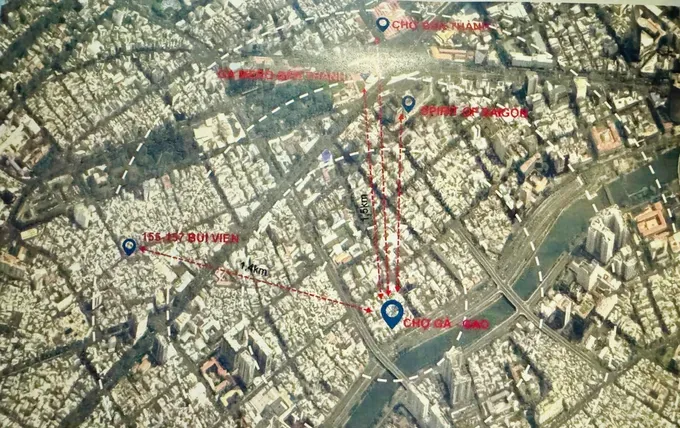
In the Cho Ga–Gao area, bounded by Nguyen Thai Hoc, Vo Van Kiet, Yersin streets and Alley 3 Yersin, the project spans about 4,350 square meters. It will feature a 35-storey social housing building with around 760 resettlement apartments, along with supporting infrastructure and social facilities.
The project will be implemented under a BT contract, with payment made through land funds combined with the city budget. Khang Dien House Trading and Investment Joint Stock Company is the project proposer.
Construction is expected to take place from 2026 to 2029, with groundbreaking planned for the third quarter of 2026, completion in the fourth quarter of 2028, and operation starting in 2029. The total estimated investment is nearly VND16.37 trillion (US$622 million).
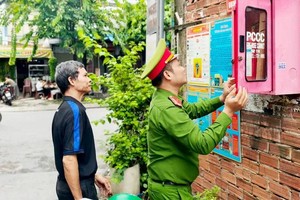
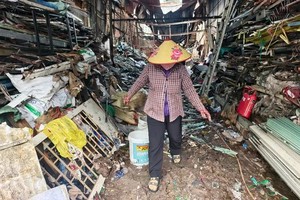
According to city authorities, Ma Lang is a densely populated central-area neighborhood with aging, small-scale housing and inadequate infrastructure. Narrow alleyways also hinder fire prevention and emergency response. The project is expected to affect around 1,070 properties, involving 1,459 households and 4,693 residents.
Similarly, the Cho Ga–Gao area is an old residential zone with deteriorating housing and constrained transport infrastructure, posing safety risks. It will affect around 252 houses, involving 192 households and 744 residents.
The city said the projects aim to modernize urban areas, develop synchronized infrastructure and resettlement housing, and meet urgent relocation needs. They are also expected to improve living standards, enhance urban aesthetics, and support Ho Chi Minh City’s social welfare policies.




)