To attract investors, the city has pledged to take the lead in land clearance, share risks, streamline procedures, and expand financing channels.
Proactive land clearance, risk-sharing mechanisms
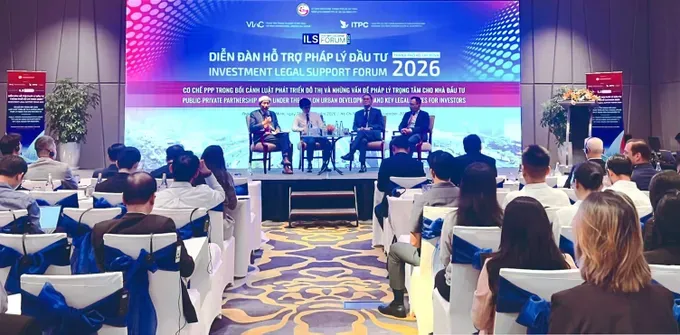
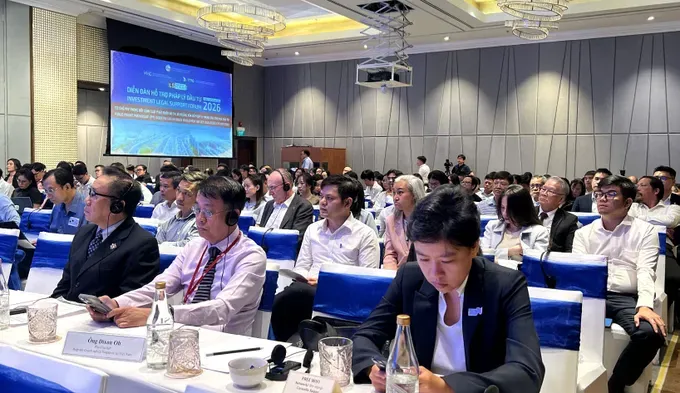
On November 25, the Ho Chi Minh City Investment and Trade Promotion Center (ITPC), in coordination with the Vietnam International Arbitration Center (VIAC), held the 2026 Ho Chi Minh City Investment Legal Support Forum, attended by more than 300 delegates, investors, and experts from Vietnam and abroad.
Addressing the forum, Pham Quang Nhat, a member of the Ho Chi Minh City Party Committee and director of ITPC, said the city aims to achieve average GRDP growth of 10-11 percent annually in the 2026-2030 period, with total social investment equivalent to 35-40 percent of GRDP.
Given the demand for large-scale infrastructure development, the city has identified PPPs as a strategic solution to combine the State's leading role in mobilizing resources with the private sector's financial capacity, technology, management expertise, and operational capabilities.
Of the 250 investment-attraction projects across nine sectors, ITPC, in coordination with the Department of Finance, has selected 83 large-scale projects for focused investment promotion, including 23 PPP projects. Investment data has been compiled for 21 of the 23 PPP projects, with their estimated total investment nearing VND970 trillion.
According to Ngo Hoang Minh, deputy director of the Ho Chi Minh City Department of Finance, the city's public investment needs for the 2026-2030 period are estimated at around VND3.1 quadrillion, while the budget is expected to cover only about one-third of that amount.
To mobilize private-sector resources, the city has earmarked approximately VND89.408 trillion in State capital to participate in and support 39 PPP projects. In 2026 alone, around VND14.611 trillion will be allocated, with a focus on land clearance for key transport projects.
Three investment financing channels
Mr. Le Hoang Minh also said that, based on the new legal framework under Law No. 18/2026/QH16 on Urban Development, the city has made three commitments to investors: taking the lead in land clearance and clearly defining payment arrangements; sharing risks in accordance with the law; and streamlining procedures while ensuring transparency.
Ho Chi Minh City is currently proposing three investment approaches for investors to consider:
First, direct investment in priority sectors, including urban railways integrated with transit-oriented development (TOD), expressways, logistics, waste treatment, science and technology, and healthcare.
Second, indirect investment through the Vietnam International Financial Center in Ho Chi Minh City. The city plans to issue municipal bonds and project bonds starting in 2027. Investors may also purchase bonds issued by PPP project companies, acquire shares, or obtain operating rights to projects that are already in operation.
Third, forming joint ventures with domestic enterprises to leverage complementary strengths in capital, technology, and implementation experience while distributing risks among partners.
Alongside diversifying financing channels, ensuring legal certainty is also a key factor in attracting investors. Assoc. Prof. Pham Duy Nghia, vice chairman of VIAC, noted that PPP projects have long lifecycles and are exposed to various risks related to public finance, policy changes, and legal developments. Therefore, mechanisms for risk allocation and management need to be strengthened, policy predictability improved, and reliable dispute-resolution mechanisms established.
To facilitate investors' access to projects and their implementation, the Department of Finance, in coordination with ITPC, will launch a multilingual PPP project portfolio tracking platform in the first quarter of 2027. The platform will provide monthly updates on project progress, readiness levels, and contact points responsible for each project.
Through this initiative, the city aims to gradually shift from simply presenting investment opportunities to working alongside investors in project preparation, implementation, and throughout the entire contract lifecycle.