Art and light revive Vung Tau’s colonial-era revolutionary villa
The Vung Tau Revolutionary Traditional House at 1 Ba Cu Street, Vung Tau Ward, Ho Chi Minh City, formerly the headquarters of the Viet Minh Committee in Vung Tau, is a grand villa built in the French architectural style across a 6,580-square-meter estate. In 1991, the Ministry of Culture, Information, Sports, and Tourism designated the site as a National Revolutionary Historical Relic.
Recently, the site breathed new life during the "Maison de Lumière" (House of Light) art exhibition. Nearly 100 life-sized (1:1 scale) reproductions of masterpieces by global legends such as Leonardo da Vinci, Michelangelo, Rembrandt, Vincent van Gogh, Claude Monet, and Pablo Picasso alongside Vietnamese Indochinese masters like Mai Trung Thu, Nguyen Tuong Lan, Le Pho, and To Ngoc Van, were displayed within the historic seaside villa, injecting a fresh energy into the heritage space.
"Visiting Vung Tau for a vacation, I had the opportunity to see the exhibition and was truly amazed by the French architecture of the Revolutionary Traditional House," said Dinh My Linh, a tourist from Hanoi. "Despite being over a century old, the structure remains solid, exuding a timeless, classic beauty."
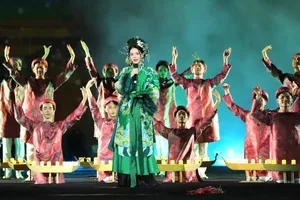
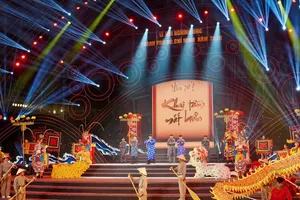
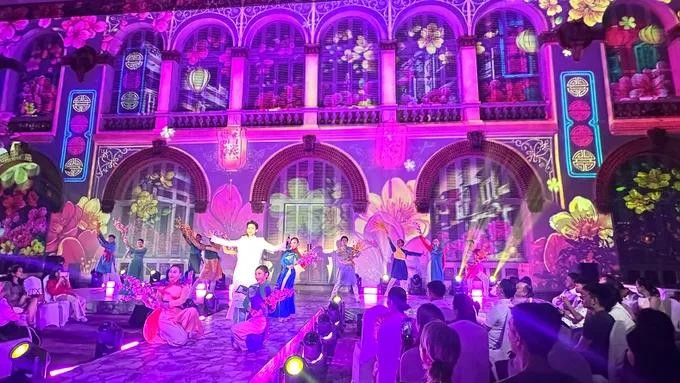
Nearby, the Bach Dinh (White Palace) historical site which was previously only open during daylight hours, has undergone a transformation. The Ho Chi Minh City Department of Culture and Sports, in collaboration with the Ba Ria-Vung Tau Museum and Library, recently launched an artistic light performance program. Instead of its usual quietude after dark, the palace is now illuminated at night, inviting visitors to sit on its veranda to enjoy ao dai fashion shows, musical performances, and 3D mapping technology projected onto the mossy walls and historic wooden doors.
"Light and music have awakened this ancient space, allowing the heritage to live in the present and turning Bach Dinh into an attractive tourism destination for the Ho Chi Minh City coastal region," said Do Phuoc Trung, Deputy Director of the Ho Chi Minh City Department of Culture and Sports. "We plan to further strengthen tourism connectivity associated with this site."
In addition to the Vung Tau Revolutionary Traditional House and Bach Dinh, a series of other sites in the eastern part of the city including the ancient artillery positions on Lon Mountain, the Long Son Big House, the Thang Tam communal temple, and the Con Dao prison and public house are enhancing their value through new cultural and tourism products, bringing history closer to modern travelers.
Ho Chi Minh City’s eastern relics fuel new cultural tourism experiences
Statistics indicate that the eastern region of Ho Chi Minh City houses 48 classified historical and cultural relics, including two special national monuments (Con Dao prison and the Ho Chi Minh Trail), 28 national relics, and 19 relics citywide.
These sites are increasingly being integrated into general tourism circuits across Ho Chi Minh City and its surrounding areas, effectively balancing the preservation of historical education with economic development.
Tran Thi Bich Van, Vice Chairwoman of the People's Committee of Vung Tau Ward, noted that art exhibitions at these sites allow visitors to engage with history and art more intimately. These events represent a significant step in diversifying tourism products, enhancing the visitor experience, and ensuring a sustainable harmony between culture and the economy.
From a management perspective, Tran Thi Thu Hien, Deputy Director of the Ho Chi Minh City Department of Culture and Sports, views this development as a modern approach to cultural resource management. She said that moving forward, the sector will continue to link heritage values with tourism to create compelling routes for visitors. Monuments should be more than just sightseeing stops but they must become part of a seamless, purpose-driven experiential journey.