Ho Chi Minh City Party Secretary Tran Luu Quang has directed Party committees, agencies, local administrations, and public institutions across the city to continue reviewing and restructuring their workforce, ensuring that officials, civil servants, and public employees are assigned in line with operational demands, workload requirements, and the specific characteristics of each locality.
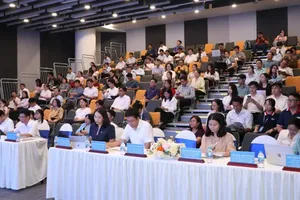
The directive was outlined in a conclusion notice released by the HCMC Party Committee Office on June 1, following a conference reviewing one year of the operation of the city's integrated political system model and the two-tier local government structure.
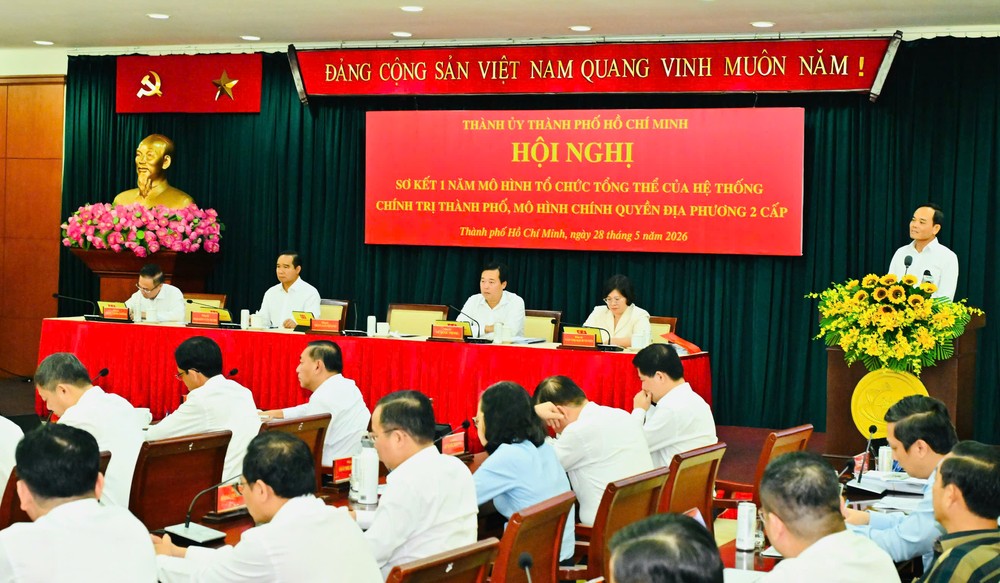
According to the notice, the two-tier local government model has proven to be a sound reform, aligned with efforts to streamline the political system and build a leaner, more effective and efficient administration. After one year of operation, the model has produced positive results, helping improve services for residents and businesses despite challenges during implementation.
The city leadership emphasized the need to accelerate administrative reform and further improve service quality. Relevant agencies have been instructed to continue reviewing and reducing unnecessary administrative procedures and paperwork while maximizing the effectiveness of shared databases, the VNeID digital identity platform, and other digital tools in the processing of administrative procedures.
The city will also speed up investment, procurement, installation, and deployment of information technology equipment and network infrastructure to ensure synchronization, quality, and operational efficiency. Authorities were instructed to avoid overlapping investments and prevent wasteful spending.
A key performance indicator for the two-tier local government system will remain citizen and business satisfaction. Local administrations are expected to place service quality at the center of governance and continuously improve responsiveness to public needs.
The conclusion notice highlighted the importance of strengthening training and capacity-building programs for officials and civil servants, particularly at the grassroots level. Localities and agencies were instructed to organize practical training courses closely linked to job requirements, with greater emphasis on hands-on instruction and real-world problem-solving skills.
Training priorities include enhancing State management capabilities, leadership and administrative skills, administrative procedure handling, digital transformation competencies, data utilization, and the effective use of digital platforms and software supporting local governance.
The city will also study and develop specialized programs to improve digital transformation leadership among commune-level leaders. These programs will focus on practical application and regular updates to ensure local authorities remain equipped to implement increasingly complex digital governance initiatives. In addition, mechanisms for annual knowledge updates and professional development are being considered to help officials adapt to evolving digital transformation requirements.
Authorities were encouraged to foster a culture of continuous learning and knowledge-sharing across localities and agencies. The city hopes to promote the exchange of successful governance models and effective practices that can be replicated throughout the administrative system.
The notice further stressed the responsibility of Party committees, agencies, and public institutions to improve accountability in public service delivery. Authorities at all levels were instructed to proactively address matters within their jurisdiction and prevent delays that could create additional obstacles during implementation.
The city leadership called for the timely identification and rectification of shortcomings, including cases where officials shirk responsibility, lack coordination, provide unclear or inconsistent guidance, or create obstacles in the implementation of assigned tasks. Agencies were also urged to strengthen unity, coordination, and mutual support, while overcoming localism and fragmented approaches that could hinder the city's overall effectiveness.
Local administrations were also tasked with addressing long-standing issues related to land management, complaints and denunciations, social welfare policies, and other pressing livelihood concerns. Officials were instructed to monitor developments closely and resolve emerging problems at an early stage and at the grassroots level to prevent the formation of social hotspots or prolonged, complex disputes.
Regarding personnel affected by organizational restructuring, the city will continue studying and proposing appropriate mechanisms to ensure fair and balanced treatment of officials, civil servants, and public employees. Policies must reflect HCMC's unique conditions and practical realities while safeguarding the legitimate interests of affected personnel.
The city will simultaneously review staffing allocations and resource distribution to ensure they correspond with population size, workload, and local conditions. The conclusion explicitly stated that staffing and resources should not be allocated uniformly across districts and localities but instead tailored to actual needs.
Agencies and local administrations have also been instructed to maximize the effective use of assigned personnel and resources, ensuring that staff are deployed according to their professional expertise, strengths, and job requirements.




)