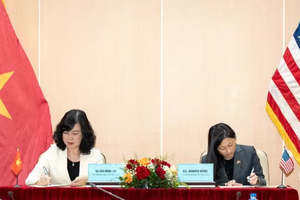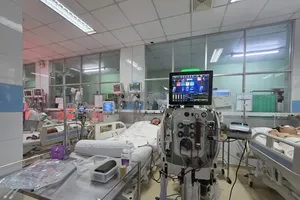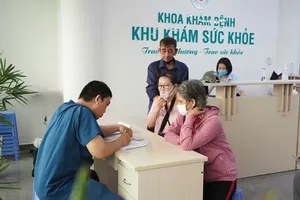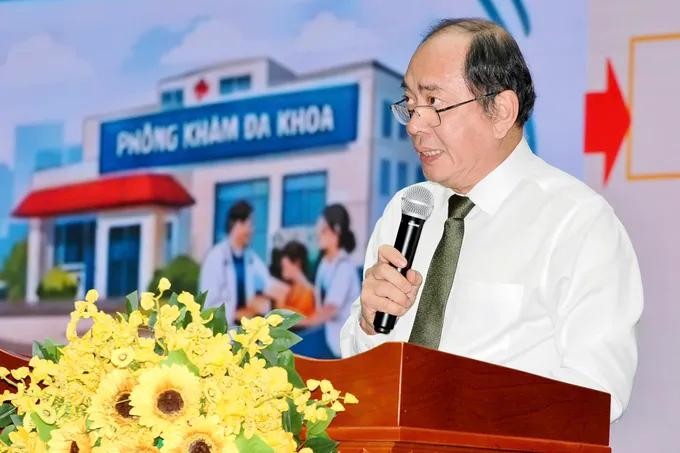
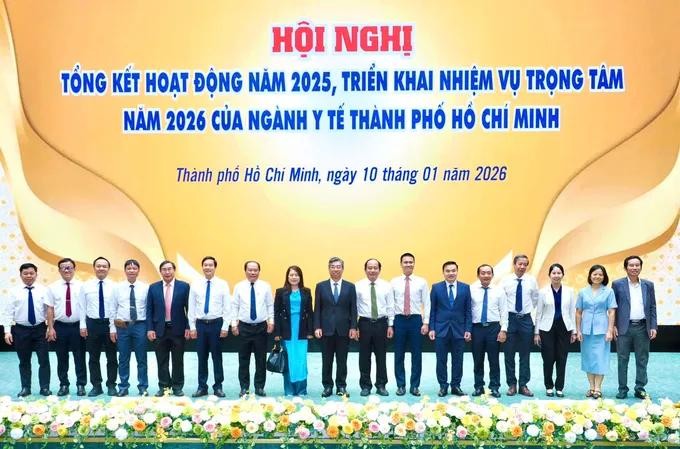
The Ho Chi Minh City Department of Health held a conference yesterday to review its activities in 2025 and set key tasks for 2026. Attending the event were Nguyen Phuoc Loc, Deputy Secretary of the HCMC Party Committee and Chairman of the Vietnam Fatherland Front Committee of HCMC, and Deputy Head of the Propaganda and Mass Mobilization Commission of the Ho Chi Minh City Party Committee Nguyen Viet Long.
Speaking at the conference, Assoc. Prof. Dr. Tang Chi Thuong, Director of the HCMC Department of Health, said that 2025 was a year of unprecedented challenges for the city’s health sector. The department had to expand the healthcare system following a structural merger while simultaneously reorganizing it toward greater efficiency. Despite these pressures, the sector successfully completed numerous demanding and unprecedented tasks.
For 2026, the department plans to develop and operate the healthcare system under a multi-level and multi-center model to meet the needs of an expanding urban environment.
Under the multi-level approach, each tier of healthcare from primary care to basic and specialized levels will have clearly defined roles. The goal is to strengthen coordination, reduce unnecessary referrals, and ensure more effective patient management. Primary healthcare will serve as the foundation for disease prevention and initial health management; the basic level will handle most treatment needs; and the specialized level will focus on high-tech interventions and capacity building for grassroots medical facilities.
The multi-pole development model will establish gateway hospitals as “strategic checkpoints” to provide early treatment, streamline patient flow, and reduce the burden on big hospitals, helping residents in outlying areas access medical services faster and at lower cost.
The multi-center direction will involve building specialized medical centers that integrate treatment, training, research, and technology transfer. The department aims to develop “medical campuses” that foster cross-hospital and inter-specialty collaboration, promoting uniform quality of care citywide.
Chairman Nguyen Phuoc Loc stated that Ho Chi Minh City is striving to become a modern, humane, and livable urban center — a smart city where citizens enjoy high-quality public services, with healthcare as one of its key pillars.
“If the healthcare sector continues to grow strongly, the city’s livability will markedly improve,” Chairman Nguyen Phuoc Loc emphasized. “In this context, healthcare not only fulfills professional duties but also carries a broader mission: ensuring social welfare, strengthening public health, enhancing labor productivity, improving urban competitiveness, and directly contributing to the city’s development goals through 2030, with a vision toward 2045.”
He urged the healthcare sector to thoroughly implement the guidance of Party General Secretary To Lam, who stressed that “health is the most precious asset of every citizen and society as a whole — the foundation for people’s happiness and national development. Investing in healthcare is investing in the nation’s growth. We must continuously improve both physical and mental health, stature, longevity, and quality of life; build an equitable, high-quality, and internationally integrated health system; and ensure universal access to healthcare services.”
According to Chairman Nguyen Phuoc Loc, in 2025 the city’s health sector made great efforts to simultaneously carry out multiple tasks, including epidemic prevention and control — being the first locality nationwide to announce and end a measles outbreak — improving the quality of medical examination and treatment, strengthening primary healthcare, investing in infrastructure and specialized techniques, and especially shaping new organizational models in a modern way.