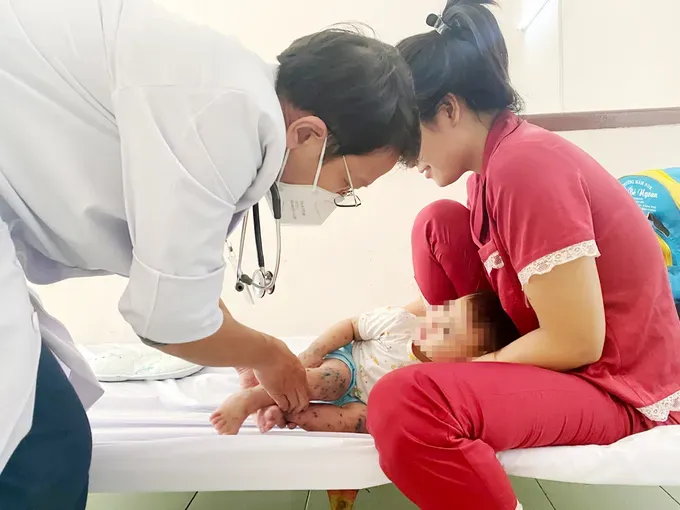
In recent weeks, the number of hand, foot, and mouth disease (HFMD) cases in Ho Chi Minh City has been rapidly increasing. Medical facilities have recorded numerous hospitalizations due to severe complications, raising concerns about the risk of an outbreak if not properly controlled.
The number of HFMD cases is increasing in 117 wards and communes
According to data from the Ho Chi Minh City Center for Disease Control (HCDC), the city reported 837 cases of HFMD in the past week, representing a concerning increase of 97.1 percent compared to the average of the preceding four weeks (424 cases). This marks a rise of 241.3 percent in comparison to the same timeframe in 2025 (2,137 cases) and surpasses the warning threshold (5-year average), with two fatalities attributed to HFMD.
Since the start of the year, the city has recorded three deaths due to HFMD. Importantly, among 25 surveillance samples, 6 cases tested positive for Enterovirus 71 (EV71) – the most perilous strain of the virus responsible for hand, foot, and mouth disease in children, which frequently results in severe complications.
According to the HCDC, last week 117 out of 168 wards, communes, and special zones saw an increase in cases compared to the average of the previous four weeks, with 36 wards and communes experiencing an alarming increase in cases, including Tan Hung, Hoa Hung, Phu Tho, An Hoi Dong, An Hoi Tay, Bay Hien, Tan Binh, Tan Hoa, Binh Quoi, Binh Thanh, Phu Hoa Dong, Xuan Thoi Son, An Khanh, Hiep Binh, Linh Xuan, Tang Nhon Phu, An Phu Dong, Tan Thoi Hiep, Thoi An, Tan Son Nhi, Binh Tri Dong, An Lac, Phu Loi, Ben Cat, Hoa Loi, Tan Khanh, An Phu, Thuan Giao, Rach Dua, Hoc Mon, Tan An Hoi, Binh Hung, Thuong Tan, Binh Gia, Long Dien, and Phuoc Hai.
Hospitals in Ho Chi Minh City have admitted 138 hand, foot, and mouth disease cases transferred from other provinces, accounting for 20.6 percent of the city’s total. Of the eight severe cases recorded, six originated outside the city, representing 75 percent of the most critical patients.
The Ho Chi Minh City Center for Disease Control (HCDC) noted that the city is currently treating a large influx of infectious disease patients from other provinces, many of them severe cases. This surge, the agency warned, is placing heavy strain on the healthcare system, particularly at tertiary hospitals.
During the same week, Ho Chi Minh City reported 30 school outbreaks and 49 community outbreaks of hand, foot, and mouth disease. The cumulative total has now reached 286 outbreaks, including 160 in schools, with 50 still under monitoring and 110 already contained, and 126 in communities, with 25 currently under surveillance and 101 resolved.
Early detection and proper treatment
According to Dr. Du Tuan Quy, Head of the Infectious Diseases and Neurology Department at Children's Hospital 1, HFMD is a common infectious disease in young children, especially spreading rapidly in daycare and preschool environments. Early detection of suspected symptoms and timely treatment at school play a crucial role in limiting spread and protecting the health of children and the community.
The most typical sign of the disease is a blister-like rash on the palms, soles, knees, buttocks, and elbows. Children often experience mouth ulcers causing pain and loss of appetite.
Dr. Du Tuan Quy advises that parents and teachers need to carefully check the edges of the fingers, toes, and buttocks. In fact, many cases show no obvious rash on the hands and feet or mouth ulcers, but instead develop a rash on the buttocks – a discreet location easily overlooked during hygiene or diaper changes.
If a child is diagnosed with HFMD, they should stay home from school for treatment, and the school should record the case to implement monitoring measures in the affected classroom. As the condition improves, the rash will gradually fade and disappear, the child will no longer have a fever, and their eating and daily activities will return to normal. Usually, after about 7 days, when the child has recovered and is no longer in isolation, the doctor may allow them to return to school.
Upon detecting a HFMD case, teachers must immediately report it to the school's health department for monitoring.
The school needs to strengthen hygiene and disinfection of the classroom environment, especially items that children frequently come into contact with, such as toys, floors, TV remotes, stair railings, stair treads, and other surfaces children often touch while crawling, scooting, or playing. Thorough and comprehensive cleaning is necessary to reduce the risk of spread.
At the same time, children in the class need to be monitored for health for at least 7 days, paying attention to signs such as fever, drooling due to mouth ulcers, rashes on the palms, soles, knees, buttocks, elbows, or edges of fingers and toes. If any suspicious signs are detected, parents should be notified immediately so that the child can be taken to the doctor promptly.
)