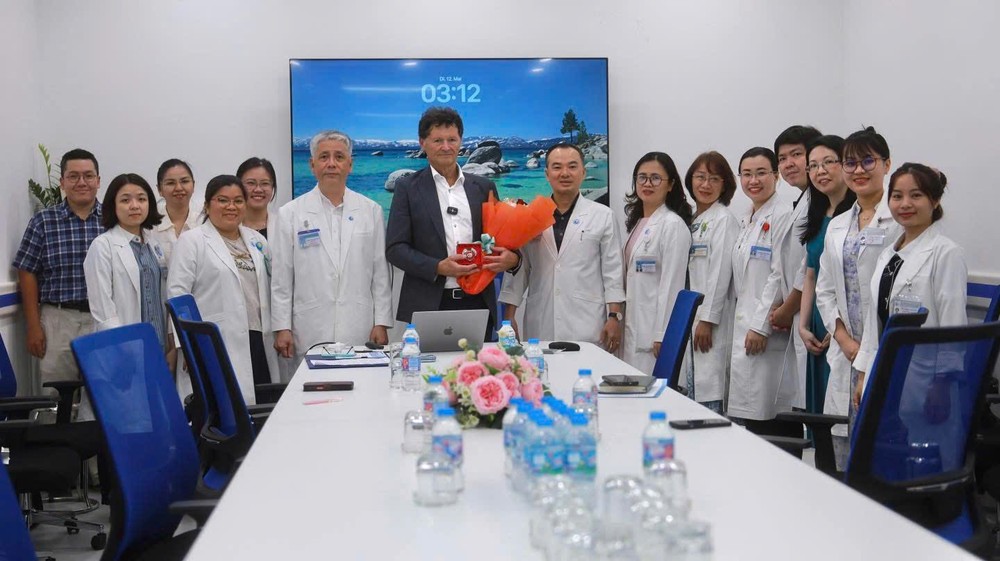
Visiting Vietnam for the first time, Prof. Gerald Tulzer said he was impressed by both the large volume of patients and the ability of doctors from Tu Du Hospital and Children's Hospital 1 to master some of the world’s most complex procedures within a short period.
During the workshop, the Austrian expert shared experience in fetal cardiac intervention and proposed future professional cooperation, including a specialized training partnership between Tu Du Hospital and the Linz Children’s Heart Center in Austria.
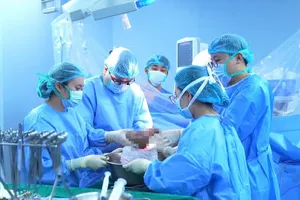
Vietnam began performing fetal cardiac interventions in early 2024, marking a major medical breakthrough that has since helped many babies with congenital heart defects survive safely. The highly specialized technique requires advanced expertise and multidisciplinary coordination, and is currently available at only a handful of centers worldwide.
According to Dr. Tran Ngoc Hai, Director of Tu Du Hospital, the hospital spent a decade preparing for the program and, after two years of official implementation, achieved results exceeding expectations. To date, doctors have successfully treated 13 out of 14 severe congenital heart defect cases, including aortic valve stenosis, pulmonary valve stenosis, and hypoplastic left and right ventricles. Prof. Gerald Tulzer reportedly assessed Vietnam’s success rate as comparable to, or even surpassing, some European centers.

Dr. Tran Ngoc Hai added that the achievement also offers hope to international patients seeking affordable treatment. Recently, a 37-year-old New Zealand citizen originally from Tay Ninh traveled thousands of kilometers to Tu Du Hospital for treatment after her unborn child was diagnosed at 19 weeks with severe pulmonary valve stenosis.
While a fetal cardiac intervention can cost up to US$140,000 in developed countries, patients pay less than VND20 million at Tu Du Hospital.




)