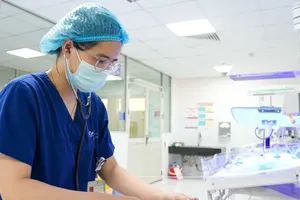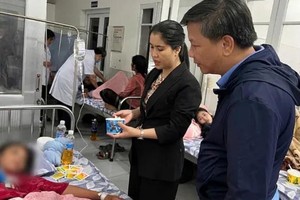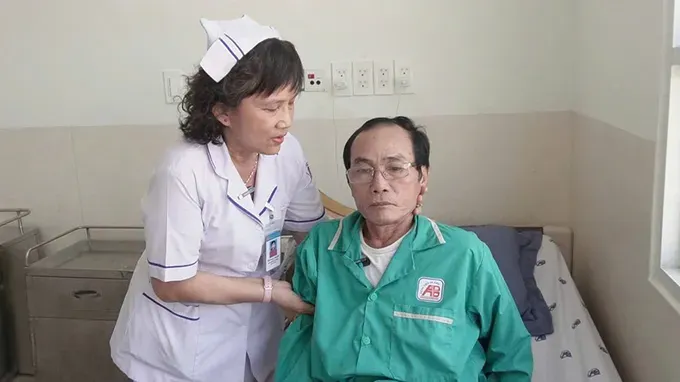
Nearing midnight at Le Van Thinh Hospital in HCMC, the lights in the Intensive Care Unit corridor remain illuminated. The rhythmic beeping of monitors echoes through a space thick with the scent of antiseptic. Nurses are bustling about checking intravenous lines, changing dressings, measuring blood pressure, and offering vital encouragement to patients enduring prolonged pain.
Here, nurses scarcely possess a concept of time. A shift spanning 8 to 12 hours, or even enduring entirely through the night, translates to dozens of consecutive patient care rounds. There are demanding days when they stand far more than they sit, hastily consuming a cold lunchbox right in the hospital corridor before immediately resuming their duties.
Nurse Cao Thi Kim Nhung, thirty-three years old, has over six years of experience at Le Van Thinh Hospital. She and her colleagues are accustomed to the relentless hustle, sleepless night shifts, and holidays away from family. Due to the inherent nature of the nursing profession, they must carefully balance their demanding jobs with their personal lives.
“I have three children; the youngest is barely two, and the other two are in primary school. There’re times when my child is sick, yet I still have to go to work and entrust their care to my neighbors. After duty at the hospital, I return home the next day only to find the children have already left for school,” Ms. Kim Nhung shared.
Reflecting on twenty years in nursing, Nguyen Thi Minh Ngoc, Nursing Block Manager at City International Hospital, articulated that nursing is a profound mission of love and sharing. Her path originated from childhood memories of her frequently hospitalized father. Witnessing him battle disease left a deep yearning. After his sad passing, she comprehended the value of caregiving and aspired to become a nurse to safeguard others.
Throughout her career, numerous patients left indelible marks. One profound memory involved an elderly colon tumor patient. 78-year-old T.H.Y.. Upon admission, she was in agony, eating poorly, and despairing. Despite encouragement, she remained withdrawn.
“Every single day, I’d approach her bedside, inquire about her well-being, converse with her, and patiently listen to her everyday confidences. As the days elapsed, she gradually opened up, cooperated more effectively with the treatment, and her health exhibited a positive recovery. On the day of her discharge, she emotionally grasped my hands, incessantly expressing her gratitude to the dedicated nursing staff for instilling in her the unwavering faith to overcome her illness,” Minh Ngoc recounted.
Currently, the nursing workforce is enduring immense pressure due to an escalating workload besides a widespread shortage of personnel in multiple facilities. The ratio of nurses to the population and to the number of hospital beds in Vietnam still exhibits a stark discrepancy compared to practical demand. A considerable number of nurses are routinely compelled to shoulder workloads that far exceed their capacity across consecutive shifts.
Nurse Cao Thi Kim Nhung noted that a persistent trauma for nurses and medical personnel is the looming threat of verbal or physical assault and abuse. “We’ve been yelled at and scolded by patients on numerous occasions, yet we inherently understand that they are impatient, in agony, or perhaps under the influence of alcohol. Many colleagues have endured serious physical assaults as well as severe damages to their honor. It’s our fervent hope that legal regulations will protect medical personnel more equitably and stringently. Consequently, we’d be empowered to operate in a safe and highly effective manner,” Kim Nhung expressed.
Director of Thong Nhat Hospital Assoc Prof Le Dinh Thanh, MD PhD, stated nursing is the backbone of patient care. Despite their vital role, nurses confront profound pressures like overwhelming workloads, psychological duress, and constant exposure to suffering, making young people hesitant to commit fully. He emphasized that improving remuneration, working environments, and professional status is absolutely necessary to retain them.
“Nurses don’t merely care for patients; they’re profoundly instrumental in determining treatment efficacy, patient satisfaction, and overall hospital quality. Investing in nursing fundamentally translates to investing in the entire healthcare system,” shared the Director.
According to Director of the HCMC Department of Health Assoc Prof Tang Chi Thuong, MD PhD, in numerous nations globally such as the US, Canada, Australia, the UK, France, Germany, Sweden, Denmark, the Netherlands, Japan, the Republic of Korea, and China, a category of healthcare personnel known as “nursing assistants” is highly prevalent. They actively assist in enhancing the quality of patient care, significantly contributing to alleviating pressure and amplifying the operational efficiency of nurses in wards housing critically ill patients.
Confronted with the current landscape and the prevailing trend of laborious nursing recruitment across hospitals in HCMC, the healthcare sector is actively deliberating the incorporation of this role into patient care positions within inpatient clinical departments, particularly in critical care units (such as emergency and resuscitation). This strategic move aims to facilitate nurses in feeling profoundly secure and stable within their demanding roles.