In an interview with Sai Gon Giai Phong (SGGP) Newspaper, Mr. Vo Khac Thai, Standing Vice President of the Ho Chi Minh City Federation of Labor, shared insights into the implementation of the large-scale social housing development program.
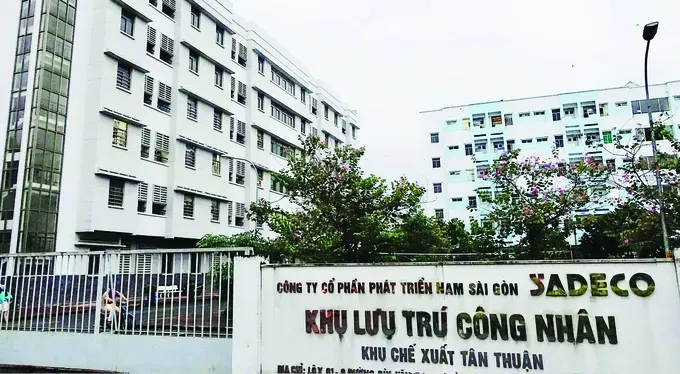
Standing Vice President of the Ho Chi Minh City Federation of Labor, Vo Khac Thai, said that in recent years, the Ho Chi Minh City Federation of Labor has signed strategic memoranda of understanding with three enterprises to develop 80,000 social housing units by 2030. The program is designed in close alignment with the actual income levels and housing demands of workers and laborers. Accordingly, the proposed allocation structure prioritizes rental and lease-to-own models, accounting for approximately 80 percent of the total, thereby enabling workers to access housing options that are commensurate with their financial capacity.
In addition, the municipal Federation of Labor has coordinated efforts to encourage employers to introduce financial support schemes for rental costs and to implement product off-take arrangements. These measures are intended to facilitate easier access to social housing for workers with rental or lease-to-own needs. The remaining portion will be allocated to outright purchases of social housing units, supported by preferential credit policies, low interest rates, and flexible repayment terms.
The Federation will collaborate with enterprises and relevant authorities to establish appropriate eligibility criteria while maintaining oversight of rental, lease-to-own, and purchase prices at reasonable levels, thereby ensuring that the policy is effectively targeted at the rightful beneficiaries, he added.
According to Mr. Vo Khac Thai, the first major bottleneck lies in the limited availability of land designated for social housing development, particularly in areas adjacent to industrial parks and export processing zones. Second, investment mechanisms and administrative procedures remain time-consuming, thereby dampening the motivation of enterprises to participate. Third, financial constraints persist, including the insufficiency of preferential credit sources and the limited affordability of a segment of the workforce.
Additionally, the linkage between housing supply and demand has at times proven ineffective, as project locations may not align with workers’ places of employment, or access to information remains inadequate. Therefore, in the coming period, the city will continue to refine institutional frameworks and policies, expand land reserves, streamline administrative procedures, and broaden preferential credit packages. These measures are aimed at progressively addressing existing bottlenecks and bringing social housing closer to workers.
This is also a matter of great concern for the municipal authorities. The federation is accelerating the digitalization of the registration process and developing an online platform that enables workers to easily access information, submit applications, and track their dossiers, thereby minimizing information gaps and reducing the need for repeated travel. At the same time, eligibility criteria will be made public and transparent, accompanied by clear guidelines to help workers effectively cross-check requirements and prepare their applications.

The Ho Chi Minh City Federation of Labor will also leverage the role of grassroots trade unions within enterprises to provide direct support and guidance, verify information, and accompany workers throughout the registration process. This approach is expected to reduce the incidence of rejected applications or cases where applicants are unable to complete the process midway.
The federation has identified the need for stringent control throughout the entire process—from beneficiary identification and appraisal to post-allocation management. First and foremost, eligibility criteria will be clearly defined, publicly disclosed, and transparently implemented, closely aligned with data on workers’ income, housing conditions, and employment status. The appraisal process will involve the participation of grassroots trade unions, enterprises, and competent authorities to ensure objectivity and accurate targeting of beneficiaries. The city will step up the application of technology and the digitalization of data, moving toward integrated information systems among relevant agencies to curb dishonest declarations and minimize policy abuse.
Regular and ad hoc inspections will be conducted for cases that have already been allocated social housing. The overarching objective is to establish a comprehensive, transparent, and accountable control mechanism, ensuring that social housing policies are delivered to the right beneficiaries for the right purposes, thereby contributing to the stabilization and improvement of workers’ living conditions.



)