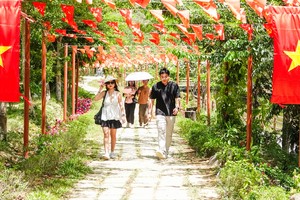
A gathering to honor heritage
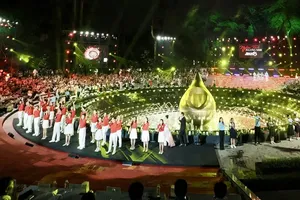
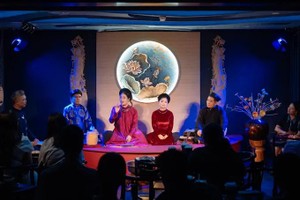
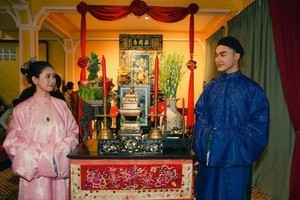
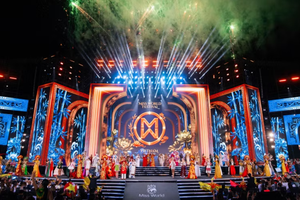
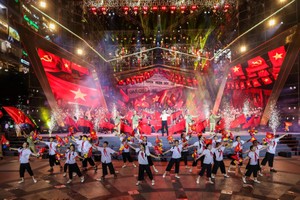
Throughout the city, tens of thousands of people dressed in Ao dai (Vietnamese traditional dress) to participate in mass folk dance performances and parade at iconic locations, including the President Ho Chi Minh Statue Park, Nguyen Hue Walking Street, the Tam Thang Tower area, the Becamex Administrative Center and numerous historical and cultural sites. The activities created a memorable impression on both residents and visitors, domestic and international alike.
This year’s festival truly became a gathering of pride, unity and aspiration for growth as dozens of impressive collections by leading designers, along with a wide range of programs, competitions and Ao dai-related initiatives that created a lively, colorful and meaningful atmosphere, said Ms. Hoang Doan Trang, a member of the Women’s Union in Cau Ong Lanh Ward.
Simon, a visitor from New Zealand, shared his excitement that he has worn Ao dai several times before, but this is the first time he join such a large and spectacular parade. The Vietnamese Ao dai has a unique charm, and the foreign tourist believed it serves as a cultural ambassador, connecting Vietnam with international friends and bringing new vitality in the era of global integration.
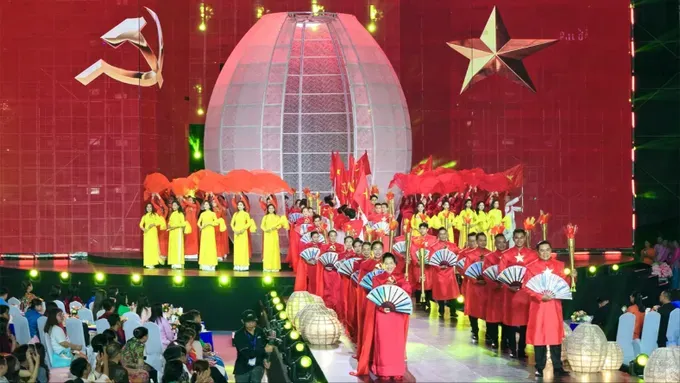
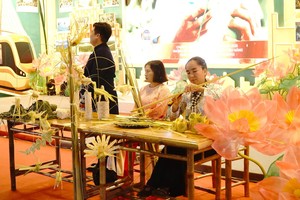
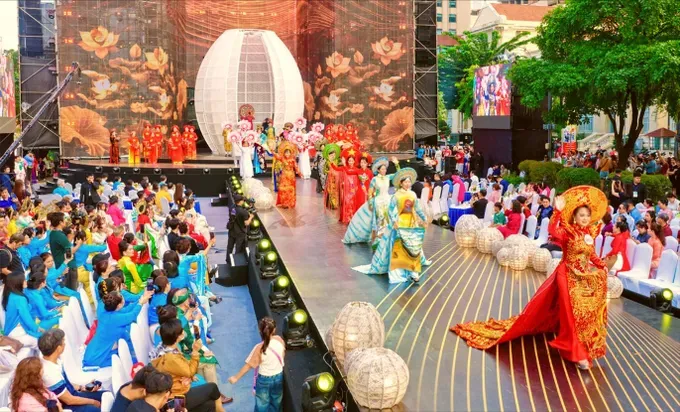
Held throughout March, this year’s festival featured 17 main activities, drawing tens of thousands of participants, including 36 designers, 600 performers and models, and 37 cultural ambassadors from various fields. In addition to performances and parades, the festival offered exhibition and interactive spaces at Nguyen Hue Walking Street, Ben Thanh Metro Station and the Saigon Opera House Metro Station.
According to Mr. Nguyen Tran Hai An, a photographer and travel blogger as well as a festival ambassador, everyone can contribute to promoting the Ao dai, whether at events, at work, or in everyday settings. Seeing it in contemporary contexts allows young people to connect more closely with traditional culture.
Challenges in the flow of global integration
After 12 editions, the festival has played a significant role in preserving and promoting the cultural value of Ao dai, while also contributing to socio-economic development, boosting tourism, and supporting the growth of creative industries. Experts believe Ao dai holds strong potential within the fashion, tourism and commerce value chain, particularly when integrated into tourism and creative sectors.
According to Ms. Vo Ngoc Thanh Truc, Chairwoman of the Ho Chi Minh City Women’s Union, amid the pace of modern life, the Ao dai festival has become a distinctive “cultural touchpoint” where the past, present and future converge in Vietnam’s traditional attire. The highlight of the festival lies not only in its scale, but also in its message of identity and pride, portraying an image of a modern, confident and globally integrated Vietnam.
Ms. Huynh Ngoc Van, Director of the Ao Dai Museum, emphasized the need for stronger linkages among designers, traditional craft villages, tourism enterprises, hotels, and media platforms to build a comprehensive value chain.
Designer Tran Phuong Hoa echoed this view, stressing that preserving and promoting Ao dai is a shared responsibility across generations.
To further integrate Ao dai into modern creative industries, designers have proposed developing a comprehensive ecosystem based on collaboration, standardization and digitalization. While efforts to modernize Ao dai aim to engage younger generations, preserving its cultural essence remains essential. Designer Viet Hung pointed to the importance of innovation that respects tradition while embracing modern design.
A driving force for the city’s tourism
Ms. Tran Thi Dieu Thuy, Vice Chairwoman of the Ho Chi Minh City People’s Committee, stated that entering a new phase of development, the festival is expected to continue serving as a key driver of sustainable tourism, enhancing visitor experiences and strengthening the city’s competitiveness. More than just an annual cultural event, it represents a strategic effort to transform cultural values into soft power and economic resources, contributing to the positioning of Ho Chi Minh City as a dynamic and culturally rich destination. Through this year’s festival, the city aims to see collections inspired by seas and islands, seaports, renewable energy, green industry, digital transformation and smart urban development, while promoting Ao dai as a signature feature in themed tourism products, MICE events and international exchanges.