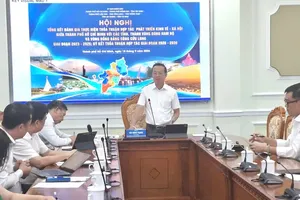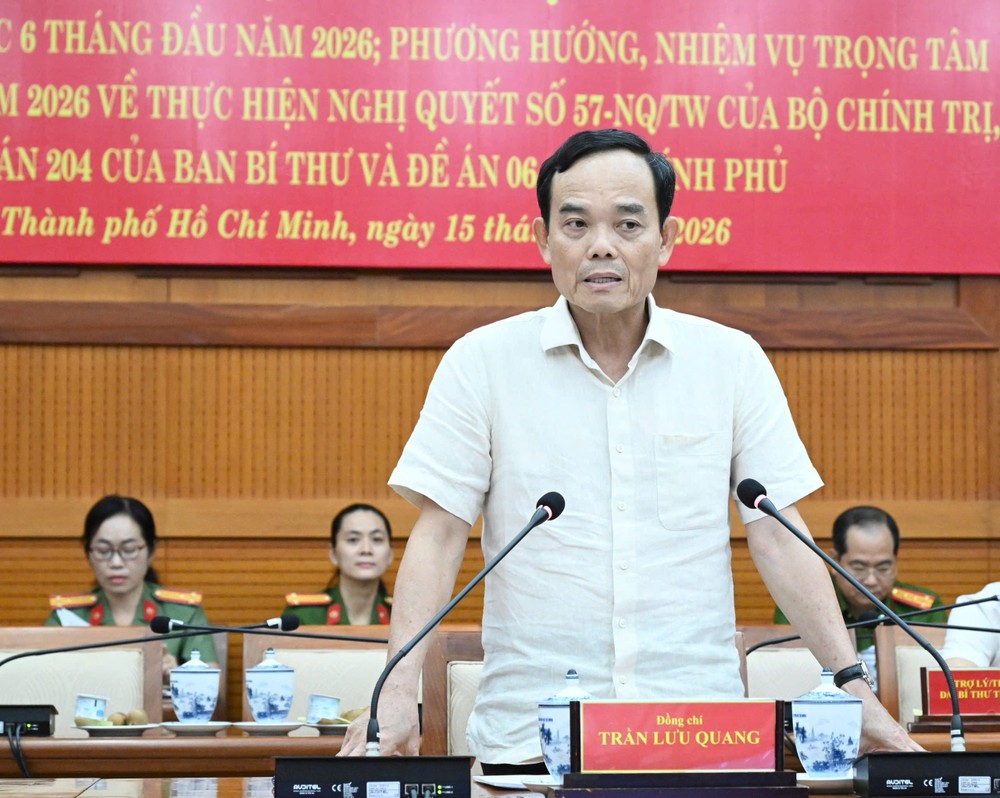
The city's Steering Committee for Science, Technology, Innovation, and Digital Transformation held a six-month review conference and outlined priorities for the remainder of 2026 in implementing Politburo Resolution No.57, Secretariat Project 204, and the Government's Project 06 on July 15.
The hybrid meeting was chaired by Mr. Tran Luu Quang, Politburo Member, Secretary of the HCMC Party Committee, and Head of the city's Steering Committee for Science, Technology, Innovation, and Digital Transformation.
Attendees included Mr. Vo Van Minh, Member of the Party Central Committee, Deputy Secretary of the HCMC Party Committee, and Chairman of the HCMC People's Council; Mr. Nguyen Manh Cuong, Alternate Member of the Party Central Committee, Member of the Standing Committee of the HCMC Party Committee, and Vice Chairman of the HCMC People's Committee, along with members of the Standing Committee, the steering committee, and leaders of the city's departments and agencies.
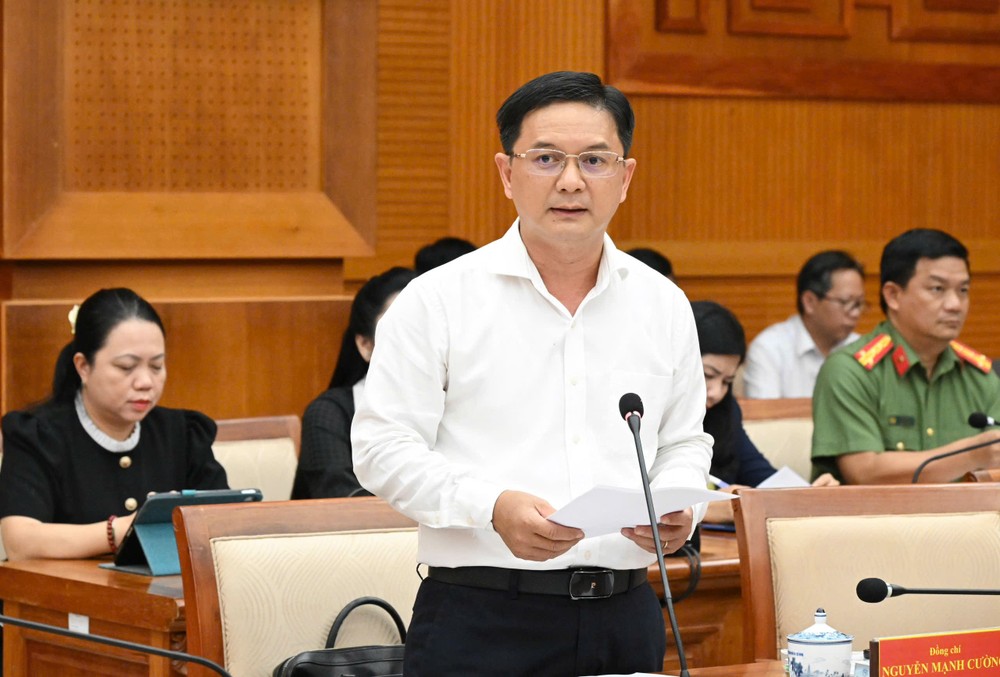
Vice Chairman of the HCMC People's Committee Nguyen Manh Cuong said the city completed 183 of 290 tasks assigned by the central government and the municipal steering committee during the first half of the year, with no overdue assignments.
All commune-level administrations have completed procurement of information technology infrastructure and equipment, providing a unified digital foundation for local government operations.
HCMC has earmarked VND12.705 trillion for science, technology, innovation, and digital transformation in 2026, equivalent to 4.16 percent of total municipal budget expenditure. The allocation includes more than VND9.538 trillion in recurrent spending and over VND3.166 trillion for development investment.
To date, the city has allocated VND4.88 trillion, while projects worth VND3.098 trillion have been identified but are awaiting capital disbursement. Another VND4.726 trillion is under review for allocation.
Beyond existing measures already within its authority, HCMC is preparing a comprehensive package of new policies aligned with the draft Urban Development Law, expected to be implemented after National Assembly approval.
The policy package will focus on establishing a science, technology, and innovation urban zone, expanding support for innovative startups, and introducing tax incentives for businesses, scientists, and technology experts. It also aims to accelerate smart city development and the data economy, promote the commercialization of research outcomes and intellectual property, support enterprise innovation and technology adoption, attract and develop high-quality talent, and complete the legal framework governing venture capital investment funds.
According to the municipal government, these policies are expected to remove institutional bottlenecks, mobilize public and private resources, and create new momentum for long-term economic growth.
The city ranked second nationwide in the Provincial Innovation Index and entered the world's top 100 startup ecosystems for the first time, climbing 12 places from 2025 and achieving its target four years ahead of schedule.
Its startup and innovation ecosystem is now valued at approximately US$7.5 billion, the largest in Vietnam.
The HCMC Innovation Startup Center has supported the incubation of 195 projects with total funding of around VND30 billion. The city also recorded more than 8,500 intellectual property applications, ranking second nationwide.
HCMC has launched a strategic technology development plan covering nine technology sectors and 26 priority product groups. Authorities have compiled 34 proposals for strategic technologies and products while identifying a network of 80 leading scientists and experts in priority fields.
Initial results include the establishment of a comprehensive database covering research capabilities, technology application demand and high-quality human resources in strategic sectors such as artificial intelligence, semiconductors, robotics, cloud computing, biotechnology, biomedicine, and cybersecurity.
The city has established a venture capital fund structured as a joint-stock company with initial charter capital of VND500 billion and a long-term target of VND5 trillion.
Its upgraded technology exchange platform has facilitated 38 successful technology transfer agreements worth nearly VND29 billion.
HCMC has also attracted more than US$1.4 billion in international investment for high-tech industries, including hyperscale data center projects by Starmason, Evolution, and Viettel.
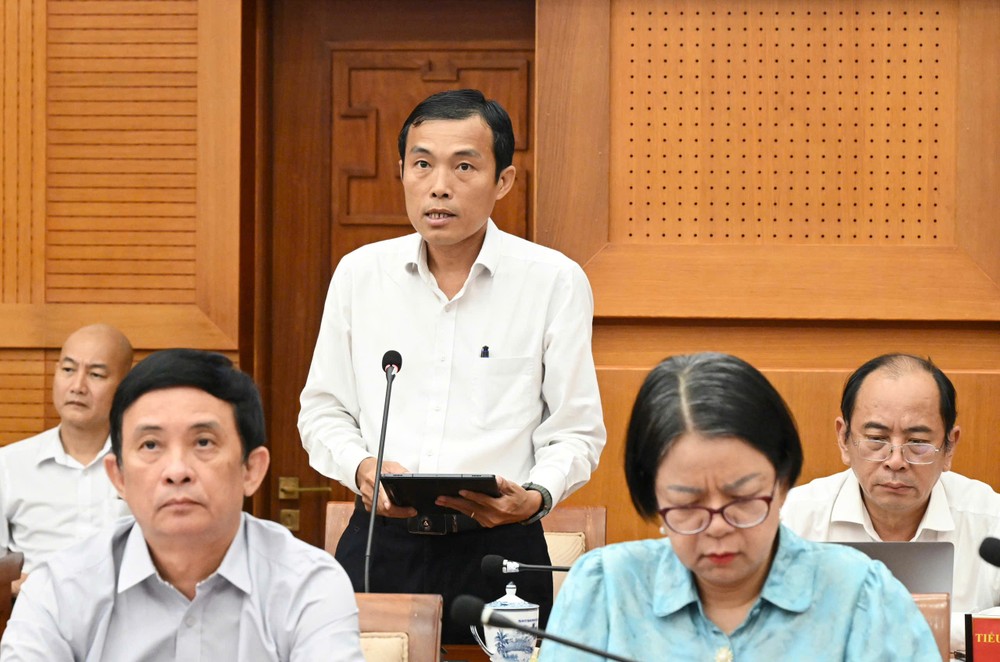
Digital infrastructure development continues to accelerate. The city now operates 8,523 5G base stations, accounting for 22.48 percent of Vietnam's total and providing coverage to more than 95 percent of the population, exceeding its original target.
Vietnam's first dedicated private 5G network has been piloted at Quang Trung Software Park to support Internet of Things applications, research activities, and smart city development.
Authorities are also preparing a master plan for an integrated camera platform serving public administration, public security, traffic management, and urban operations.
Meanwhile, the city plans to invest approximately VND3.017 trillion in upgrading core digital infrastructure, including data centers, network systems, shared digital platforms, intelligent operations centers, cybersecurity monitoring facilities, and major government databases.
Under Projects 06 and 204, HCMC has issued more than 8 million citizen identification cards, accounting for 98.24 percent of eligible residents, while activating more than 7 million electronic identity accounts.
Six of the city's 13 priority databases have been completed, including those covering land administration, civil registration, education, and finance.
Within Party organizations, more than 91 percent of Party members now use the Digital Party Member Handbook. The AI-powered leadership support platform iCPV-Ho Chi Minh is nearing completion.
HCMC is expanding its "three-party partnership" model, promoting closer collaboration among government, universities, and businesses to strengthen research, workforce development, technology commercialization, and industrial application.
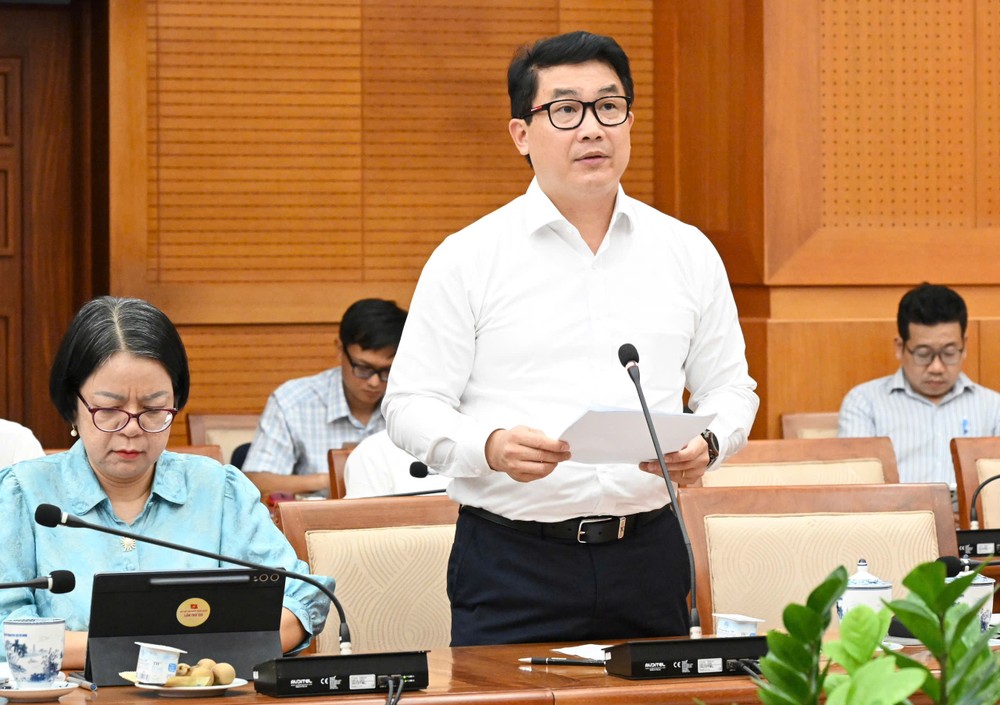
During the first six months of 2026, more than 10,400 civil servants and public employees received training in digital transformation and digital skills. The city also organized nine in-person artificial intelligence training courses attended by more than 2,500 participants.
Another 3,499 people completed basic digital literacy training through the "Digital Literacy for All" platform.
At the grassroots level, HCMC maintains a network of 5,947 community digital technology teams with roughly 29,000 members. More than 6,100 members have received specialized training in AI, cybersecurity, and digital competencies.
To strengthen local implementation capacity, the city has allocated 408 personnel positions dedicated to science, technology, innovation and digital transformation across 168 wards, communes, and special administrative units.