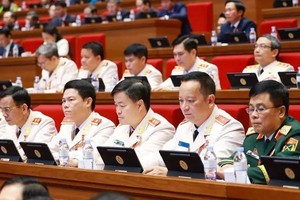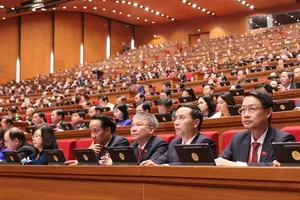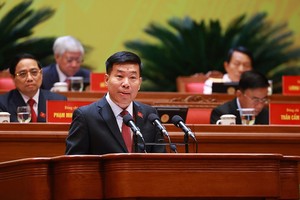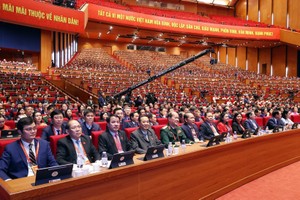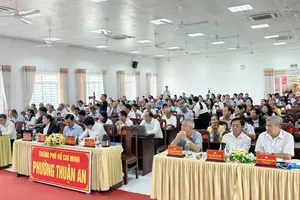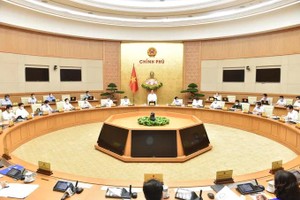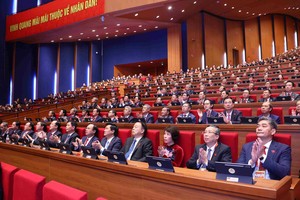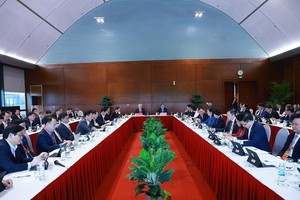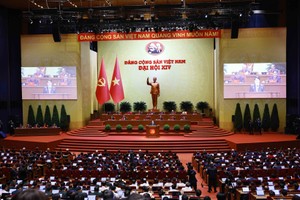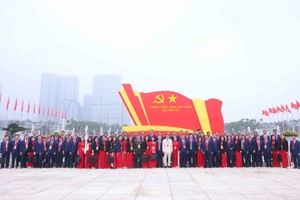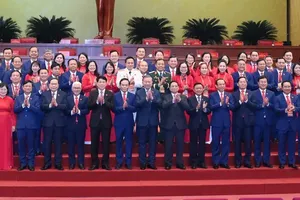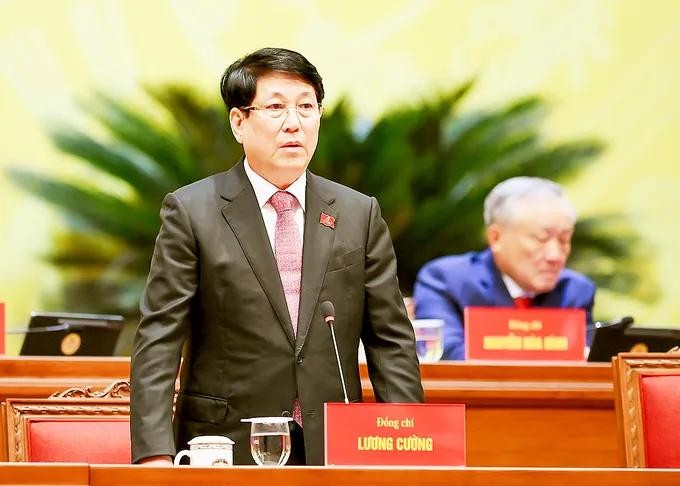
Continuing the working agenda of the 14th National Party Congress, delegates on January 21 discussed the draft documents in the assembly hall. President Luong Cuong chaired the morning discussion session. Standing Member of the Party Central Committee’s Secretariat Tran Cam Tu presided over the afternoon session.
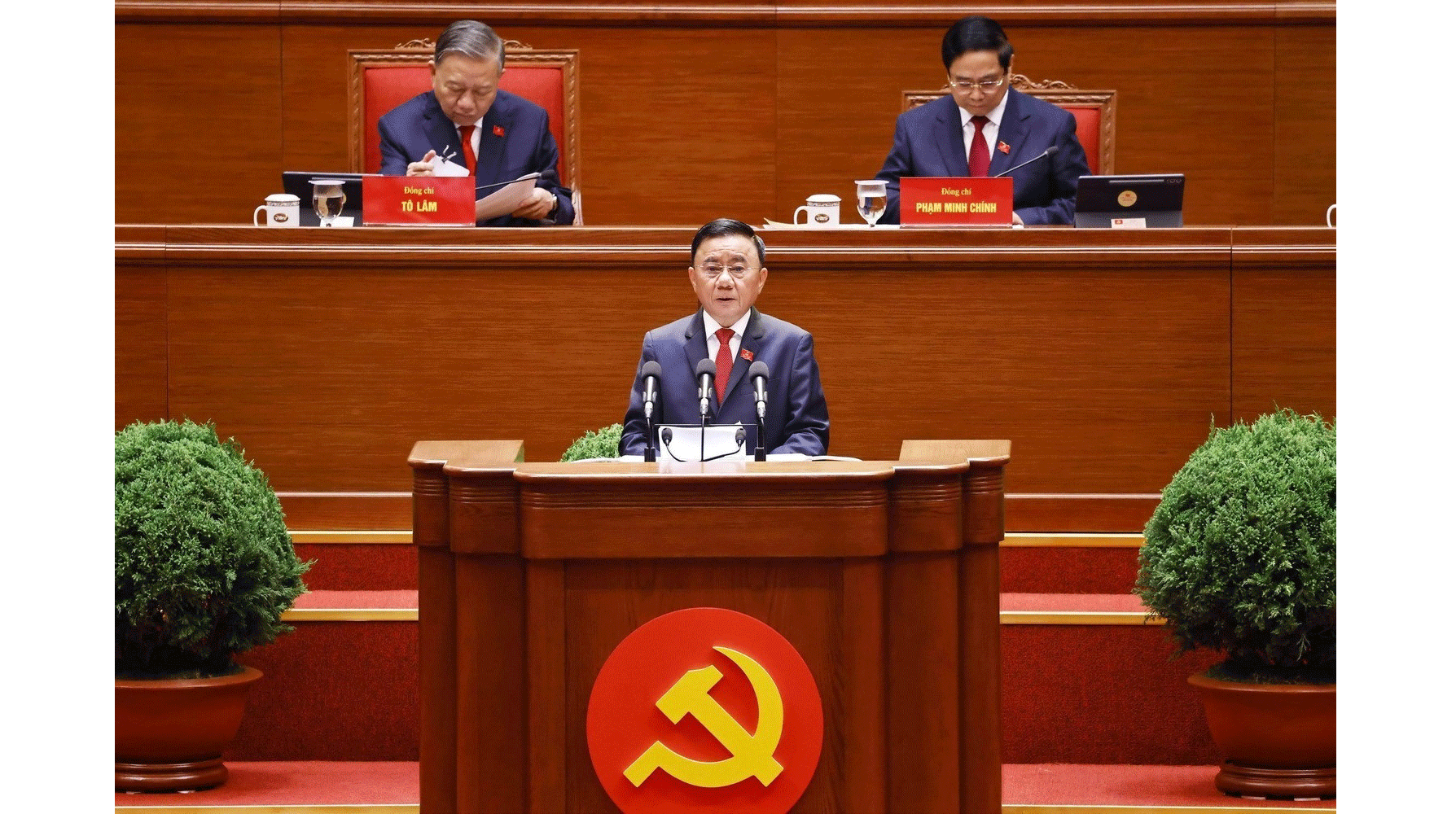
During the discussion session, Tran Van Ron, Permanent Deputy Chairman of the Central Inspection Commission, presented a paper titled “Innovating Inspection and Supervision Work to Strengthen Discipline, Enhance Leadership Capacity, and Meet New Demands.”
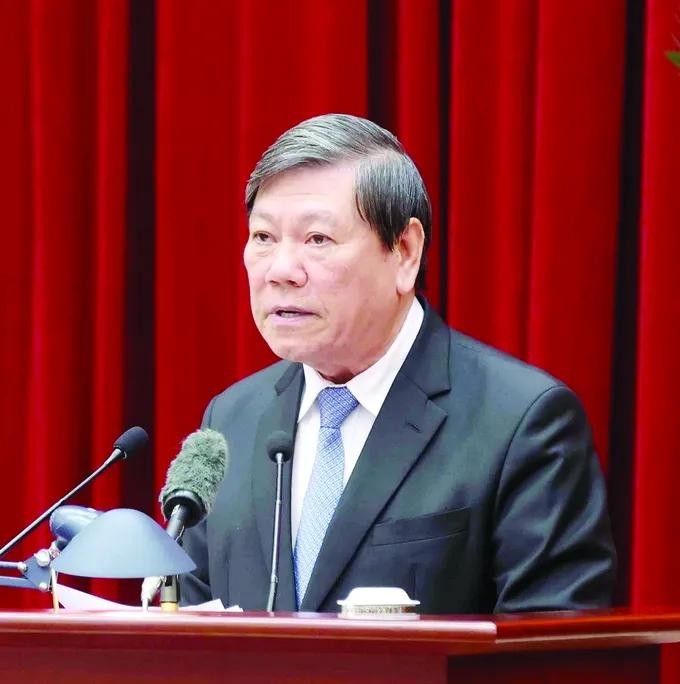
Tran Van Ron, Permanent Deputy Chairman of the Central Inspection Commission.
He reported that during the 13th term, the Central Inspection Commission and local inspection bodies examined over 13,600 Party organizations and 38,000 Party members showing signs of violations. They also supervised nearly 124,000 Party organizations and more than 174,000 Party members. Functional agencies imposed or recommended disciplinary measures for more than 2,280 Party organizations and 97,000 Party members, including high-ranking officials and key local leaders. He emphasized that the Central Inspection Commission will continue to implement the Resolution of the 14th National Congress through concrete action plans to ensure inspection, supervision, and discipline are carried out effectively and with high quality.
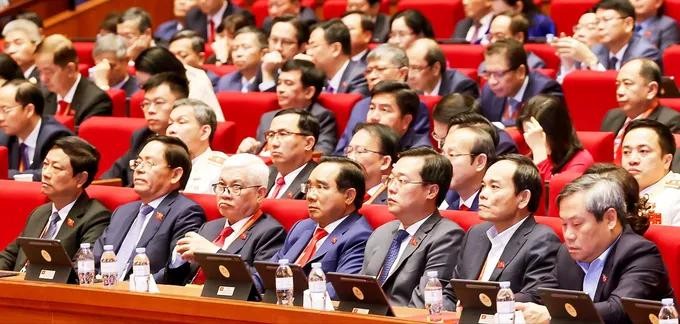
Dang Van Dung, Deputy Head of the Central Commission for Internal Affairs, presented a paper titled “Continuing the Strong and Resolute Fight Against Corruption, Waste, and Negative Phenomena.” He proposed enhancing anti-corruption efforts by shifting from traditional management to digital governance using technology and data, including artificial intelligence (AI), to monitor, prevent, and detect violations. He also called for stronger supervision from the outset, greater transparency and accountability, and more effective control over assets and income. According to him, openness and accountability are key to eliminating loopholes and preventing corruption and abuse of power.
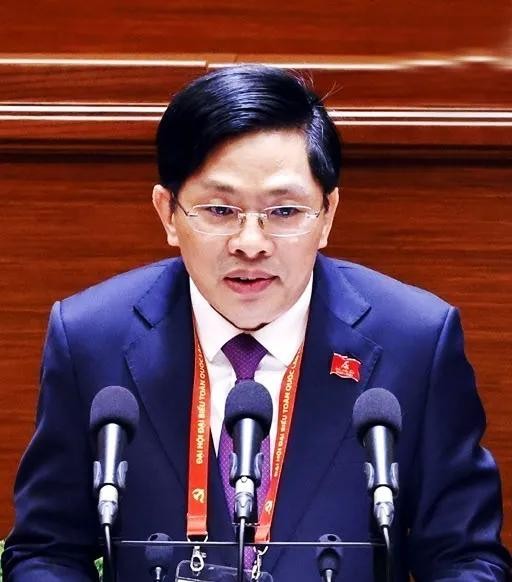
Lai Xuan Mon, Standing Vice Chairman of the Central Commission for Propaganda and Mass Mobilisation, delivered a presentation on the topic of "Political and Ideological Work in the New Era." He emphasized that political and ideological work is a crucial component of all Party activities which are fundamental to reinforcing the Party's ideological base and ensuring the political stability of the regime.
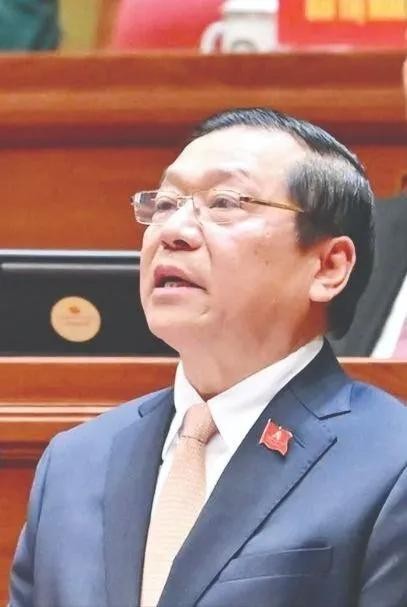
According to him, globalization and the explosion of science and technology, especially digital technology, social media, and digital communication platforms, have made the political and ideological struggle more intense, fierce, complex, borderless, difficult to control, and constantly impacting the thoughts and psychology of public opinion both domestically and internationally. In the new era, political and ideological work plays an even more crucial role and must meet very high requirements. The draft Political Report presented to the Party Congress clearly and profoundly demonstrates the special importance and key tasks of political and ideological work in the new period.
He emphasized that ideological work must be closely aligned with the vigorous efforts to build and advance the new era. Ideological and political work needs to lead the way, guide, and play a leading role in building and fostering the highest political determination, the highest ideological unity, the most persistent efforts, and the most decisive actions of the Party, the people, and the armed forces.
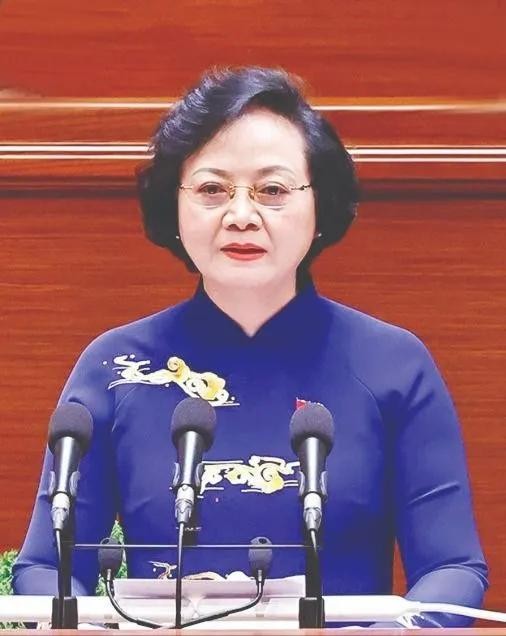
Presenting the Government Party Committee’s report on “Building a development-enabling, integrity-based government that acts decisively and serves the people,” Deputy Prime Minister Pham Thi Thanh Tra said that the Government will focus on six key priorities in the new development phase.
First, it will continue to make breakthroughs in building and improving institutions, regarded as the “breakthrough of breakthroughs” and a core national competitive advantage. The institutional framework will shift decisively toward a development-enabling and service-oriented approach, reducing compliance costs for citizens and businesses, unlocking resources for growth, and fostering aspiration, confidence, and social dynamism. Priority will be given to institutionalising the Resolution of the 14th National Party Congress and key resolutions of the Politburo, while ensuring a stable, transparent, and predictable legal environment to support rapid and sustainable growth, macroeconomic stability, and inflation control.
She emphasised that the 2021–2025 term was an exceptionally challenging period, unprecedented in many respects. Yet amid severe challenges, under the Party’s leadership, the Government steadfastly upheld a consistent governing philosophy: development facilitation to shape strategic vision, build institutions, lead the way, and mobilise all social resources for national development; integrity to establish a solid value foundation and sustain public trust; decisive action to translate the Party’s guidelines and the State’s policies into tangible outcomes that people can clearly perceive and benefit from; and service to the people as the supreme objective, ensuring harmony between the Party’s will and the people’s aspirations for a prosperous and happy life.
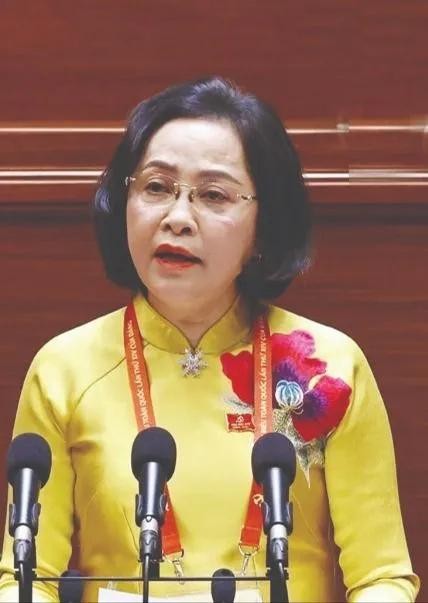
On behalf of the National Assembly (NA) Party Committee, NA Vice Chairwoman Nguyen Thi Thanh delivered a report titled “Enhancing Party spirit and the people-centered nature of National Assembly activities to meet the requirements of improving institutions for the country development in the new era.”
NA Vice Chairwoman Nguyen Thi Thanh said that the Party characteristics can be understood as steadfast loyalty to the Party’s ideological foundation, strict observance of discipline and organisational principles, and exemplary conduct by Party members.
In the presentation, she said that implementing the Party’s guidelines and Party General Secretary To Lam’s direction on renewing legislative mindset, and with close coordination with the Government and relevant agencies, the 15th NA has focused its energies on institutionalising the Party’s strategic and goundbreaking decisions.
This has helped remove bottlenecks, gradually shape a development-oriented institutional framework, and serve key priorities such as streamlining the organisational apparatus, improving the socialist-oriented market economy, promoting science, technology and innovation, and accelerating digital transformation.
As a result, the NA completed an unprecedented constitutional and legislative workload. Its supervision activities have concentrated on pressing issues of public concern, reflecting the aspirations of the people, promoting the implementation of the Constitution and laws, and strengthening the socialist rule-of-law system. Decisions on major national issues have continued to be renewed to better meet the requirements of industrialisation and modernisation.
In the legislative process, the NA has attached special importance to public consultation and social feedback. Parliamentary debates have paid close attention to the impact of laws on human rights and citizens’ rights, as well as the feasibility and vitality of each legal provision. The spirit that “the NA will convene meetings whenever the country and the people need,” together with early and proactive preparations, has marked clear progress in both Party characteristics and the people-centered approach of the 15th legislature.