Based on the reality of national development, many scientists, experts, and retired officials assess that the 14th Party Congress marks the establishment of a new mindset, one of confidence, proactiveness, and strong aspiration for a nation entering a new era of development.

Former Deputy Head of the Central Economic Commission and former Chairman of the HCMC People’s Council Pham Chanh Truc commented that the 14th Party Congress occurs in a special context.
After 40 years of renovation, despite many accumulated achievements, Vietnam faces serious, major era-defining challenges. This milestone requires long-term strategic thinking to navigate complex global factors like climate change, the profound impact of AI, and unpredictable geopolitical fluctuations.
Currently, Vietnam hasn’t escaped the middle-income trap. High-tech industry remains small, mainly dependent on Foreign Direct Investment, while domestic enterprises mostly perform traditional processing and assembly, lacking true economic autonomy.
Therefore, the Congress must resolve two major tasks:
- effectively implementing the 2045 goal of becoming an industrialized nation with per capita income of US$15,000-$20,000;
- setting a further vision, clearly defining the development path post-2045 since without this long-term view, going far is impossible.
To achieve sustainable growth, he believes Vietnam must effectively exploit development room by investing correctly in domestic industry to ensure autonomy. Agricultural restructuring towards large-scale, high-tech, and green models is crucial.
Furthermore, the State must reorganize small-scale production and build a strong ecosystem for science, technology, and innovative startups under clear state guidance. Another vital task involves key infrastructure breakthroughs that avoid spread-out, wasteful investment.
Above all, success depends on personnel work and unity within the Party. Promoting the Party’s core leadership role, maintaining socialist orientation, and preventing factionalism or localism are critical, absolute prerequisites. Only by ensuring strict internal solidarity can the 14th Party Congress create the necessary momentum to propel the country to new heights in this new development era.
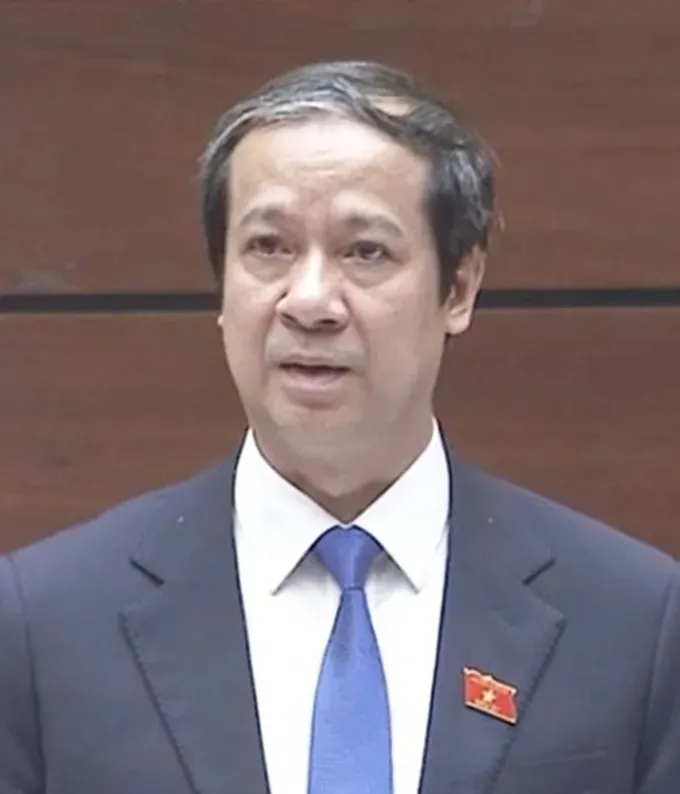
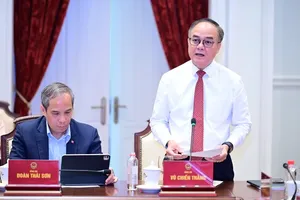
Minister of Education and Training Nguyen Kim Son emphasized the necessity to recognize the crucial role of education for sustainable development. In reports of the 13th Party Central Committee presented by General Secretary To Lam, breakthrough development in education and training is identified as a vital and extremely important task.
In the coming time, the sector faces much work for breakthrough developments, deploying with a new spirit, determination, and high will. The foundational task involves innovating thinking and awareness about high-quality human resources. Consequently, the Ministry has implemented specific solutions.
- General education aims at comprehensive capacity development, especially digital capacity, critical thinking, creativity, and problem-solving.
- The Ministry promotes the “3-Sides” cooperation model among State, School, and Enterprise.
- The Ministry focuses on developing the contingent of lecturers and scientists by raising qualifications, encouraging international publication, and attracting talented overseas Vietnamese intellectuals to participate in teaching and research.
It can be affirmed that all solutions regarding institutions, financial mechanisms, and governance innovation, when deployed synchronously, will create substantive breakthroughs. This opens a new acceleration rhythm for development in the coming period, effectively serving the country’s key sustainable development goals.

President Nguyen Dinh Khang of the Vietnam General Confederation of Labor proposed 5 main contents to the Party Central Committee and the Congress to build a modern, strong Vietnamese working class:
- Issuing a strategy to build the working class linked with the socio-economic development strategy;
- Concretizing the orientation of building a modern, strong Vietnamese working class linked with scientific-technological development and innovation;
- Raising educational levels, professional expertise, vocational skills, industrial work style, and labor discipline so the Vietnamese working class can adapt, develop, master knowledge and technology, integrate internationally, and promote initiatives and innovation in the new development era;
- Ensuring harmonious distribution of benefits between workers, employers, and society, based on issuing regulations on minimum living standards instead of minimum wages. It is necessary to expand the welfare and social security system, caring for social insurance, housing, nurseries, kindergartens, healthcare, education, and the spiritual cultural life of workers;
- Promoting corporate social responsibility, encouraging fair benefit sharing, creating sustainable jobs and living wages, investing in human development by reducing working hours, improving workers’ quality of life, linked with raising productivity and national competitiveness.
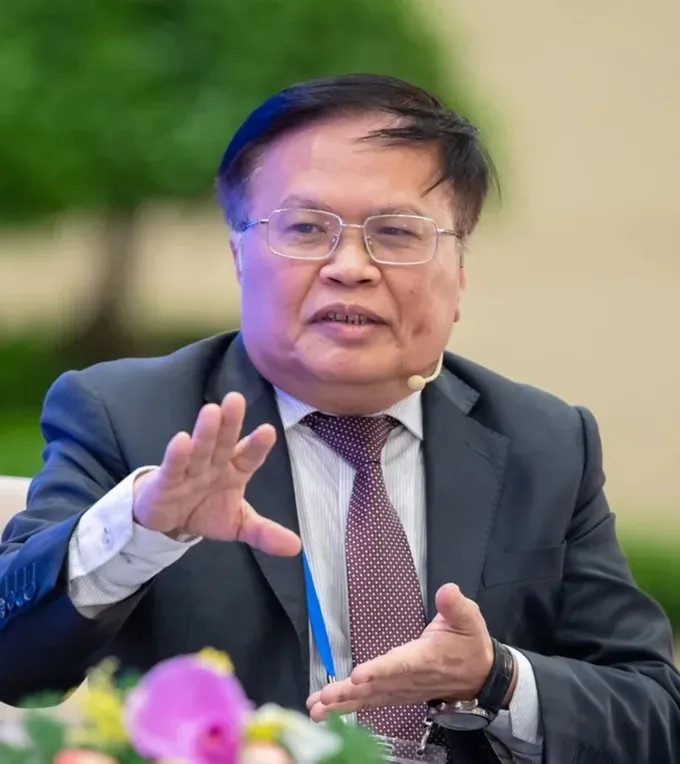
Former Director of the Central Institute for Economic Management Nguyen Dinh Cung praised the 14th Party Congress documents for their clearly defining goals, tasks, and solutions that link responsibility with results, breakthroughs with sustainability, and enforcement discipline with people’s satisfaction.
These documents clearly demonstrate a strong innovation in development thinking. Besides identifying science, technology, innovation, and digital transformation as central drivers, the reports especially emphasize organization of implementation, focusing on designing action programs as well as mechanisms for inspection, supervision, and result evaluation.
He’s also very impressed with the strategic breakthroughs in the report presented by the General Secretary. These are organically related factors where institutions pave the way, human resources determine speed and quality of development, and infrastructure creates space and leverage.
If done synchronously, Vietnam will create new “momentum” and new “posture”; yet if done half-heartedly, the country will lose the opportunity. He therefore strongly hopes the important orientations in the report are implemented thoroughly in reality. Accordingly, data and results should be used as the basis for evaluation, resolutely preventing negativity, and enhancing transparency and accountability.