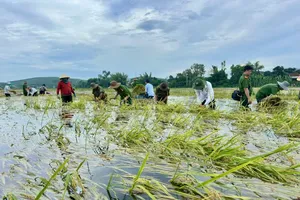
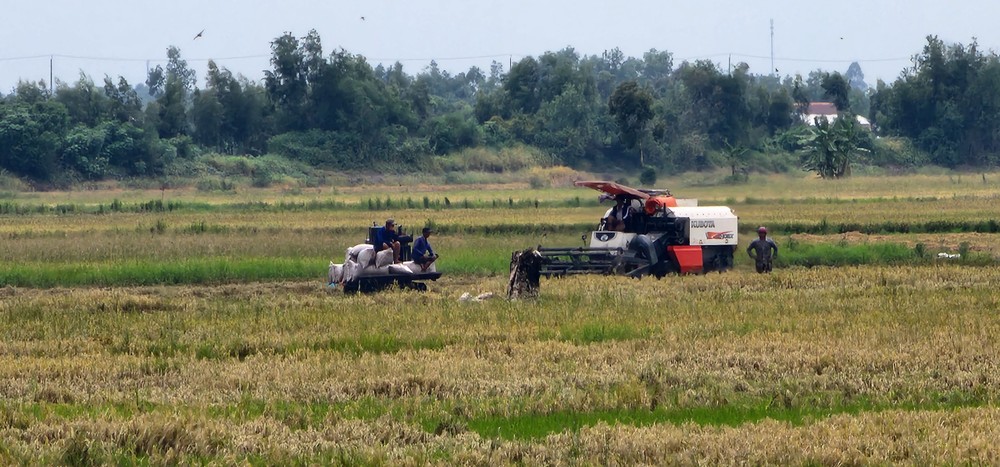
Across expansive fields in Thap Muoi, My Quy, Doc Binh Kieu, Phuong Thinh communes, and My Tra Ward, farmers are racing to bring in the early winter–spring harvest. Dozens of combine harvesters are operating at full capacity, and traders are purchasing freshly harvested paddy directly at the field on the same day.
Favorable weather conditions and effective disease control have pushed yields this year to between 6 and 6.6 tons per hectare. High-quality varieties such as OM18 are fetching VND6,200–6,500 per kilogram, generating widespread optimism among growers.
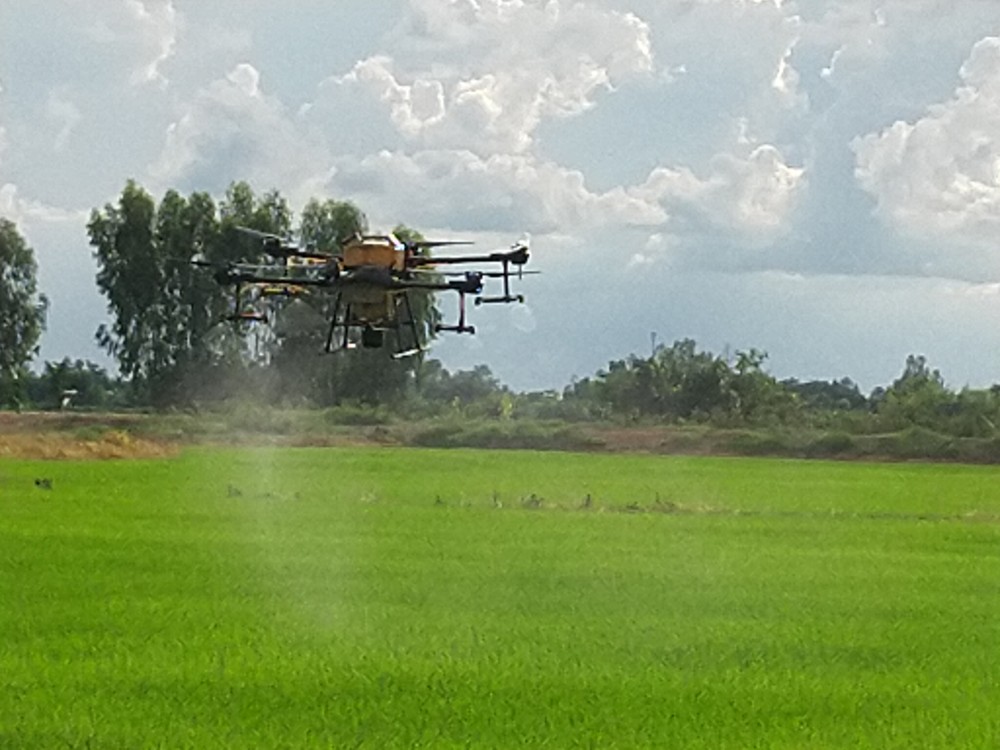
The standout feature of this crop is the measurable impact of the One Million Hectares of High-Quality, Low-Emission Rice Project. The adoption of modern techniques has sharply reduced seed rates, fertilizer inputs, and pesticide use, driving down production costs and improving efficiency.
Tran Nhan, a farmer in Phuong Thinh Commune, said he had never experienced a crop as profitable, or as easy to manage, as this one. By following low-emission protocols, costs dropped while grain quality improved, and traders purchased directly in the field without depressing prices. “After deducting expenses, I earn around VND35 million per hectare. This year, my family will celebrate a really good Tet,” he said with delight.
For the 2025–2026 winter–spring crop, Dong Thap farmers planted more than 227,800 hectares, including over 13,000 hectares of early-planted rice now being harvested. The province aims to expand participation in the One Million Hectares Project to 128,000 hectares by the end of 2026.
The provincial agriculture sector is prioritizing the deployment of smart technologies, accelerating mechanization, and piloting new farming models to reduce greenhouse gas emissions while safeguarding yields — thereby boosting the value of Dong Thap’s rice and shrinking its carbon footprint.
Mr. Le Chi Thien, Deputy Director of the Department of Agriculture and Environment of Dong Thap Province, said that to achieve the objectives of the One Million Hectares Project, provincial agricultural authorities will work with local governments to build pilot farming models demonstrating both environmental and economic benefits. “When farmers see the gains for themselves, they will participate voluntarily,” he said.
Agencies will also coordinate with localities to review, reinforce and operate irrigation infrastructure, ensure synchronized sowing schedules, manage pests more effectively, optimize water use, and safeguard production.