That prompts authorities and residents to strengthen prevention efforts and promote on-site response measures.
In early April, intense heat in Ho Chi Minh City drove up fire risks.
One notable case occurred in the early hours of April 12 in Tan Thoi Hiep Ward, where a fire that started in a ground-floor parking area quickly spread in a confined space, killing two people, injuring five others and destroying significant property.
Earlier, another fire at a wood dust production workshop in Vinh Tan Ward injured three people.
In the first quarter of 2026, the city recorded 105 fires. Firefighting forces deployed more than 512 fire engines and over 3,100 officers and soldiers for firefighting and rescue operations. In addition, local security forces and residents handled six fire incidents at an early stage.
Quick response helped rescue 19 people and guide 198 others to safety. About 46,000 square meters of buildings and assets worth tens of billions of Vietnamese dong were saved, but fire-related casualties still show how complex fire incidents can be during the hot season.
Fires are caused by various factors, mainly carelessness in using fire and heat sources, electrical incidents and extreme weather conditions.
According to Major Hoang Duy Nam, Head of Firefighting and Rescue Team No. 30 under the Ho Chi Minh City Police Fire and Rescue Division, the “golden time” for fire suppression is measured in minutes.
When equipped with proper skills and basic firefighting tools, residents can control fires before professional forces arrive. Regular training is essential to ensure people are knowledgeable and do not panic when incidents occur.
Across Ho Chi Minh City, many wards have effectively implemented “fire safety residential groups,” which function as strong grassroots networks for fire prevention and response.
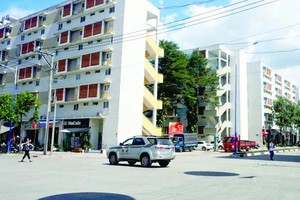
At Viet–Sing residential area in An Phu Ward, several small fires were extinguished within minutes thanks to rapid coordination among households. At Becamex social housing in the same area, residents have removed illegal “tube houses,” installed portable fire extinguishers, and created additional escape routes following fire safety campaigns.
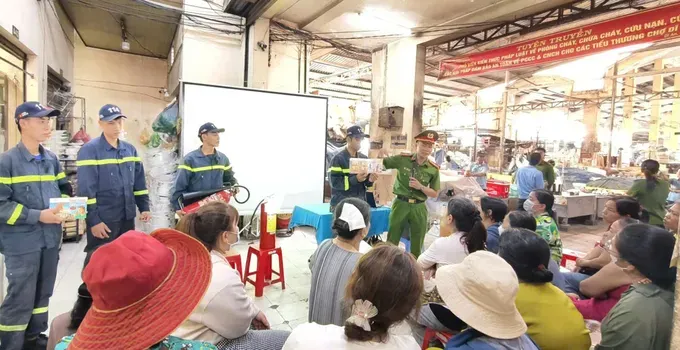
At traditional markets such as Thu Dau Mot, Lai Thieu, Di An and Tan Uyen, traders have been encouraged to join fire safety groups and equip themselves with extinguishers, demolition tools and interconnected alarm systems.
In Quarter 24, Xuan Hoa Ward, residents joined drills on using cutting tools to remove “tube house” structures and coordinating in fire safety groups to put out fires early, along with simulated fire exercises.
According to local leaders and residents, densely packed housing and narrow alleys increase fire spread risks, making awareness and preparedness essential.
Authorities emphasize that rising temperatures increase electricity consumption in homes and businesses, further raising fire risks. Improper arrangement of electrical devices and flammable materials also contributes to incidents.
Ho Chi Minh City currently has 10,448 fire safety residential groups and 7,931 public firefighting points, contributing to reduced fire incidents and damage. The city police continue to mobilize residents to remove barred escape structures (“tube houses”), achieving the removal of 14,807 cases, or 97.7 percent.