Prof Dr Nguyen Thi Lan, Meritorious Teacher, President of the Vietnam National University of Agriculture, shared that following 40 years of renovation, Vietnam is steadily asserting its standing through knowledge and technology. If semiconductor chips serve as the beating heart of digital tech, synthetic biotechnology is viewed as the semiconductor chip of future agriculture. For instance, it’s already been identified by the US, China, and the EU as a primary growth engine sitting on par with AI and semiconductors.
However, it’s ultimately people who serve as the decisive factor sparking technological breakthroughs. Consequently, it’s imperative to train an elite workforce equipped to lead and master emerging tech. The Government needs to zero in on building a group of leading scientists who master core technologies, while concurrently cultivating science managers and consultants skilled at steering and linking value chains.
Alongside this, specific, superior remuneration policies are needed to attract and retain talented lecturers, paired with a dedicated commissioning mechanism for intensive training across pivotal sectors.
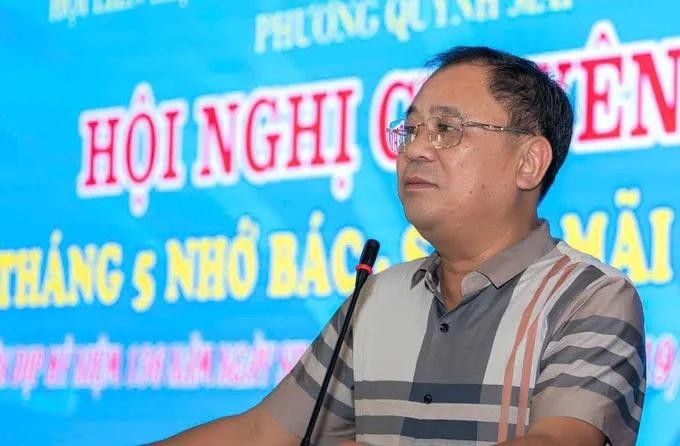
Vice Principal Ho Tuan Anh of Quynh Mai Junior High School (Quynh Mai Ward, Nghe An Province) commented that rarely do other nations boast a Teachers’ Day drawing such nationwide attention as in Vietnam. Nearly half a century since its designation, November 20 has consistently been cherished by all levels of government and walks of life.
Having spent over 30 years in education, Vice Principal Tuan Anh still eagerly anticipates the holiday. “It isn’t because of flattering well-wishes, but rather because it marks a career milestone, fueling my motivation and passion while reminding me of a teacher's core responsibility,” he explained.
Yet in certain areas, some parents present lavish gifts stretching far beyond ordinary gratitude, hoping educators will grant special attention to their children. Others view gift-giving as an unwritten obligation, worrying their kids might be unfairly picked on otherwise, all of which turn November 20 into a heavy burden. Meanwhile, some schools have turned lighthearted activities into extravagant campaigns merely to stand out.
Ordinary educators simply wish for a modest, joyful tribute that genuinely feels like their own holiday, rather than being dragged through mandatory events. “Should there be gifts, we simply hope they stem from sincere affection,” he added.

National Assembly Deputy Nang Xo Vi from Kon Tum Ethnic Boarding High School (Quang Ngai Province) voiced that realizing breakthroughs under the Politburo’s Resolution No. 71-NQ/TW must begin by securing implementation conditions, particularly regarding the teaching workforce.
Currently, localized teacher surpluses and shortages persist, urgently demanding synchronized solutions. Beyond recruitment, the sector needs to review, regulate, and rotate teachers across localities while compiling accurate staffing statistics by educational tier, subject, and region to propose additional payroll quotas. Concurrently, staffing norms must adjust to match the general curriculum, school types, regional characteristics, and enrollment scale.
Tasked with setting curricula, standards, working regimes, and educator policies, the Ministry of Education and Training needs tighter coordination with other ministries and localities to align professional needs with personnel and financial resources. In disadvantaged regions, the hurdle isn’t merely recruiting teachers, but retaining capable ones over the long haul through comprehensive salaries, allowances, official housing, commuting conditions, and career growth.
Now that the Law on Teachers has taken effect, its policies, especially salary provisions, must roll out swiftly. Moreover, evaluating teacher quality must pivot from ticking paperwork boxes toward practical competence and tangible student progress.

According to teacher Chau Hien Duc, Youth Union Secretary and Grade 4 Head at Luong Dinh Cua Primary School (Ban Co Ward, HCMC), meeting educational innovation demands while preserving teachers' devotion requires practical change. “I’m hoping administrative regulations and workflows will be streamlined, trimming away truly unnecessary tasks,” he shared.
Such streamlining grants educators breathing room to invest in lesson planning, care for each student, and pursue professional growth. Student assessment should emphasize personal progress, knowledge application, and character building, giving teachers flexibility to design real-world learning scenarios and ample time to observe and guide pupils.
In this digital era, teachers still hold the vital role of guiding, inspiring, and instilling moral values so students navigate technology safely and responsibly. That’s why educators require substantive training, suitable learning materials, reliable equipment, and stable infrastructure. They should also be encouraged to experiment with fresh methods without buckling under the pressure of chasing empty formalities or superficial achievements.