To reach a production line, research results may take years of testing. Therefore, when drafting regulations on potential and strong research groups, it is necessary to clearly define support policies after recognition.
Research groups call for stable 3-5 year funding to drive innovation
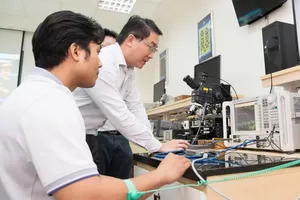
From a national-level project, the applied biotechnology research group of Industrial University of Ho Chi Minh City transferred a set of microorganism strains to enterprises manufacturing preparations for fish sauce and soybean paste fermentation.
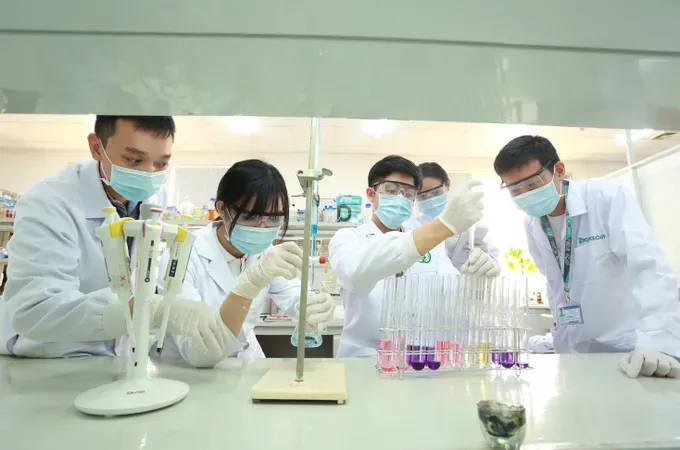
Associate Professor Doctor Trinh Ngoc Nam, Head of the Office of Science Management and International Cooperation at the university, said many domestic enterprises are using these preparations in production.
As of November 2026, the university recognized 19 groups, including 5 strong research groups and 14 potential groups, up from 11 groups in 2024. The university stipulates a funding level of VND2 billion (US$78,000) for a strong group and VND500 million for a potential group to invest in facilities and equipment over a 3-year cycle. Leaders of strong groups receive a 40 percent reduction in teaching quotas during the first year and 30 percent in the next two years.
At Ho Chi Minh City University of Technology, nine strong research groups are operating according to internal regulations.
Ha Thi My Ngan, Deputy Head of the Department of Science and Technology at the university, stated that the university allocates funding over a 2-year cycle, evaluating annually based on progress, committed products, and funding efficiency.
In the most recent evaluation, all groups achieved their registered output targets. Upon completing the cycle, further sponsorship is considered based on achieved results and plans for the new phase.
For the Food Biology and Nutrition Research Group at International University (Vietnam National University Ho Chi Minh City), projects funded by the National Foundation for Science and Technology Development and Vietnam National University Ho Chi Minh City since 2010 helped assemble lecturers, doctoral candidates, master's students, and undergraduates around research directions on Vietnamese agricultural products.
The group developed directions such as producing resistant starch and extracting bioactive natural compounds. However, according to Professor Doctor Pham Van Hung, Vice Rector of the university and leader of the group, a project funding period of 2 to 3 years makes it difficult for the group to develop laboratory results into commercial products.
Professor Pham Van Hung called for stable funding over a three-to-five-year period, adequate technical staff, and procurement mechanisms that allow research groups to acquire supplies and chemicals in line with project schedules.
New draft circular proposes standards for strong research groups
A draft circular from the Ministry of Education and Training proposes that at least 50 percent of the members of a strong research group must be full-time faculty or researchers affiliated with the lead institution. The group must also include doctoral and master’s students with relevant expertise. Furthermore, the draft circular encourages the participation of independent experts, as well as members from businesses and research institutes.
Under the proposal, research groups in the fields of natural sciences, engineering, and technology would be required to achieve a minimum total score of 150 and an average score of 15 to qualify as strong research groups. For social sciences and humanities, the corresponding thresholds would be a minimum total score of 100 and an average score of 10.
Recognition evaluation results are calculated within the most recent 5 years up to the application submission time. Each product is scored only once in the same cycle. If multiple groups co-create a product, points are divided according to documented contribution proportions.
Associate Professor Trinh Ngoc Nam argued that international publication is an important benchmark for basic research. For applied research, patents, software, prototypes, and results used by enterprises need equivalent recognition.
Industrial University of Ho Chi Minh City proposed tracking long-term research through milestones such as completing datasets, verifying processes, or testing prototypes.
Meanwhile, Doctor Ha Thi My Ngan suggested adding examples of criterion selection according to main research directions of interdisciplinary groups and recognizing products contributing to multiple fields. Intermediate milestones help track progress, while final-term products are still evaluated according to group commitments.
The draft circular also proposes that leaders of strong research groups must have successfully advised at least two doctoral candidates, while allowing alternative products in certain cases.
Professor Pham Van Hung proposed putting postgraduate advising results into evaluation criteria after a period of operation, thereby creating opportunities for capable young scientists to lead even if they have not had sufficient time to advise doctoral candidates through to dissertation defense.
According to the draft circular, to help groups maintain research directions over a 5-year cycle, universities assigning tasks can define funding, research time, equipment usage conditions, and target milestones.
By the evaluation period, the council reviews results, individual member contributions, and the practical application of products. On that basis, the university can decide which investments to maintain, which research directions need more time, and which groups are ready for larger tasks.