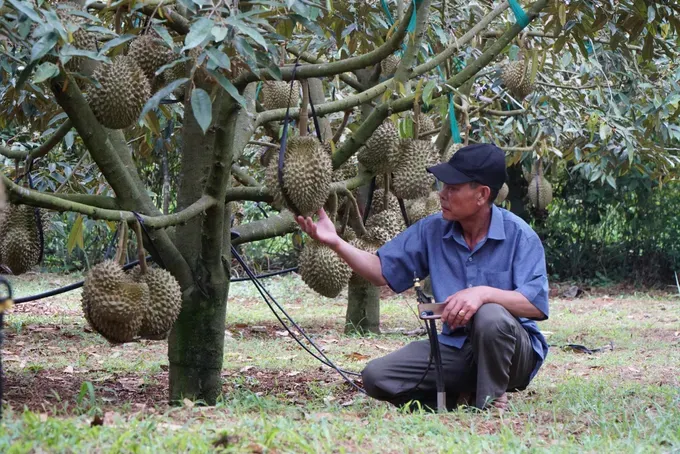
Specifically, Grade A Thai durians are now commonly purchased at VND49,000–52,000 (US$1.86– US$1.98) per kilogram, while Grade B fetches VND32,000–35,000 (US$1.22- US$1.33) per kilogram. Mixed-quality, lower-grade, or defective fruit is selling for only VND20,000–25,000 (US$0.76 – US$0.95) per kilogram.
For Ri6 durians, farm-gate prices range from VND18,000 (US$0.68) to VND24,000 (US$0.91) per kilogram, depending on quality, while companies are offering prices about VND10,000–15,000 (US$0.38 – US$0.57) per kilogram higher for direct procurement. Compared with early July, durian prices have fallen by an additional 20–25 percent.
According to the Vietnam Fruit and Vegetable Association, durian prices have declined as supply has surged, with several Southeast Asian countries entering the harvest season simultaneously, while demand from China has yet to recover strongly. In addition, prolonged rainfall in the Southeastern region has reduced fruit quality, increasing the incidence of under-ripe or poorly developed flesh. As a result, export companies have tightened their procurement standards, putting further downward pressure on prices.
Mr. Ngo Xuan Nam, Deputy Director of the National Notification Authority and Enquiry Point for Sanitary and Phytosanitary Measures (Vietnam SPS Office) under the Ministry of Agriculture and Environment, said that export requirements for durians vary depending on the destination market.
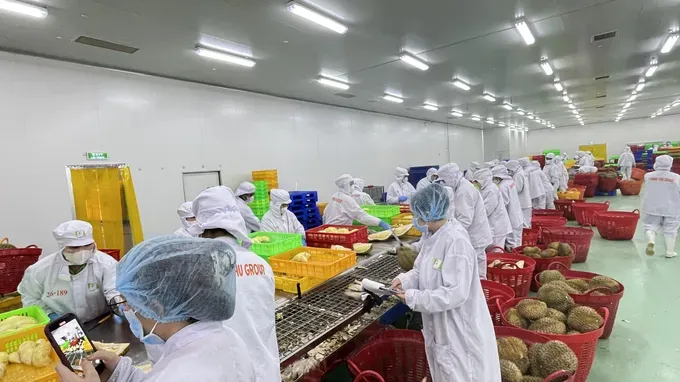
For the Chinese market, Vietnam has signed protocols on inspection, plant quarantine, and food safety for frozen durian exports, requiring exporters to fully comply with all stipulated regulations. To export fresh durians to China, shipments must originate from registered growing areas and registered packing facilities while also meeting China's phytosanitary and food safety requirements.
Under current regulations, only laboratories approved by the General Administration of Customs of China (GACC) are authorized to issue certificates for cadmium and Auramine O (Basic Yellow 2) testing, which are required for customs clearance in China.
For frozen durians, exporters must also comply with China's Decree No. 280, which took effect on June 1, 2026, concerning the registration of overseas food production establishments. Companies that were previously granted registration codes will be transitioned to the new regulatory framework, while newly established exporters must complete the required registration procedures in accordance with the new regulations.
According to Mr. Ngo Xuan Nam, the situation presents both challenges and opportunities for businesses to diversify their product offerings. Beyond fresh fruit, enterprises can develop a wider range of value-added durian products, including dried durian, pastries, ice cream, beverages, and blended food products, to expand into new markets and enhance the export value of Vietnamese durians.