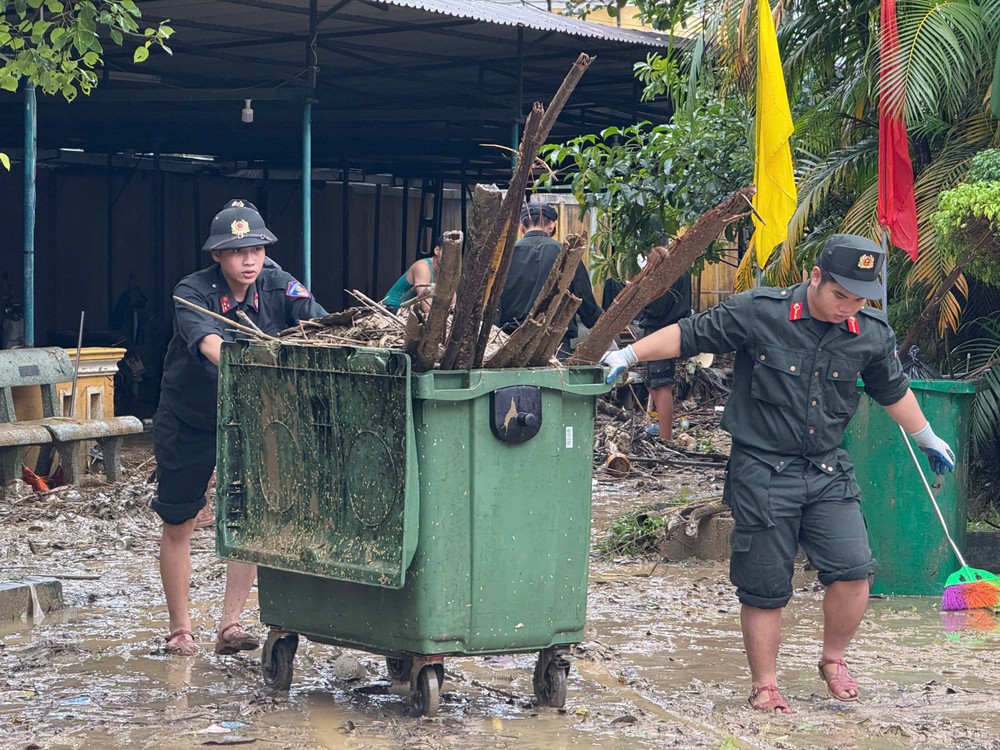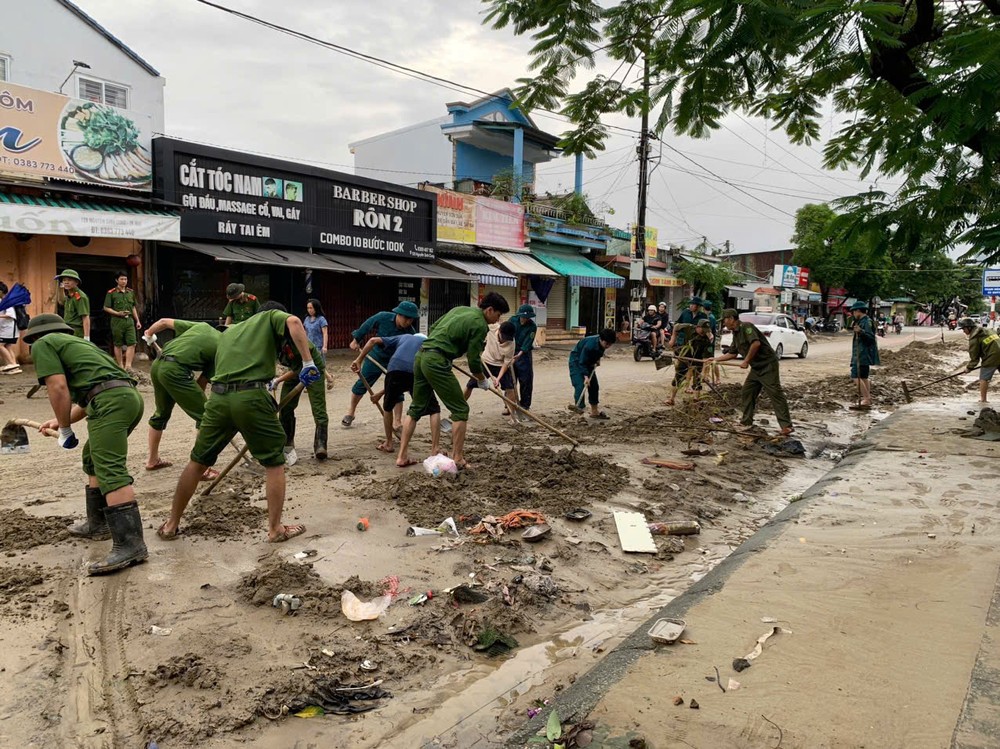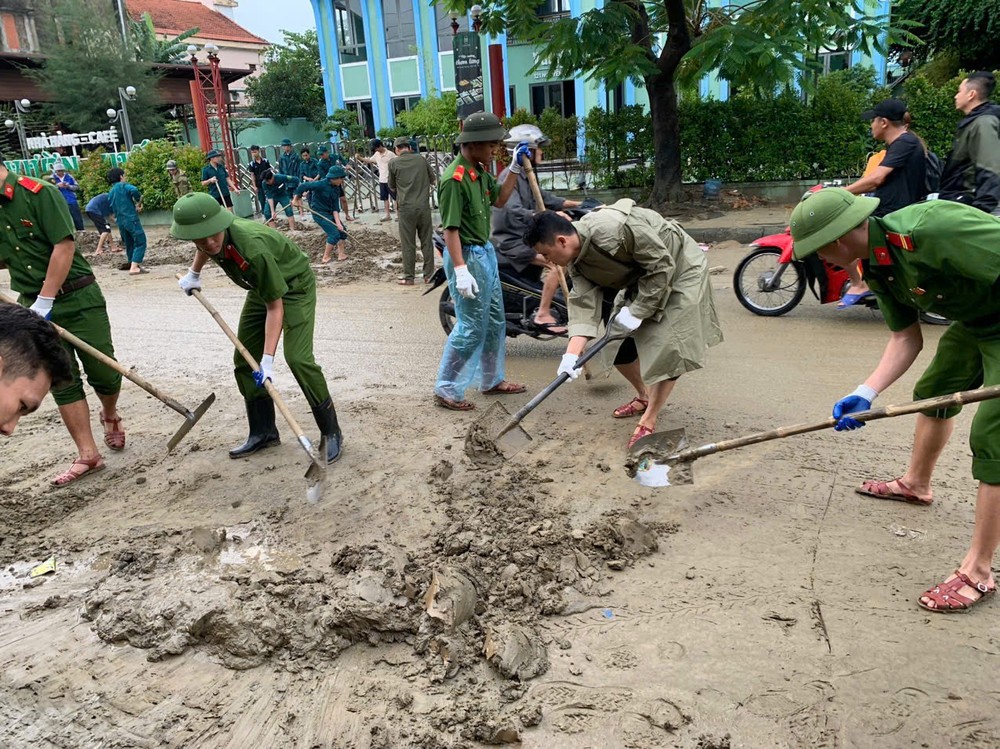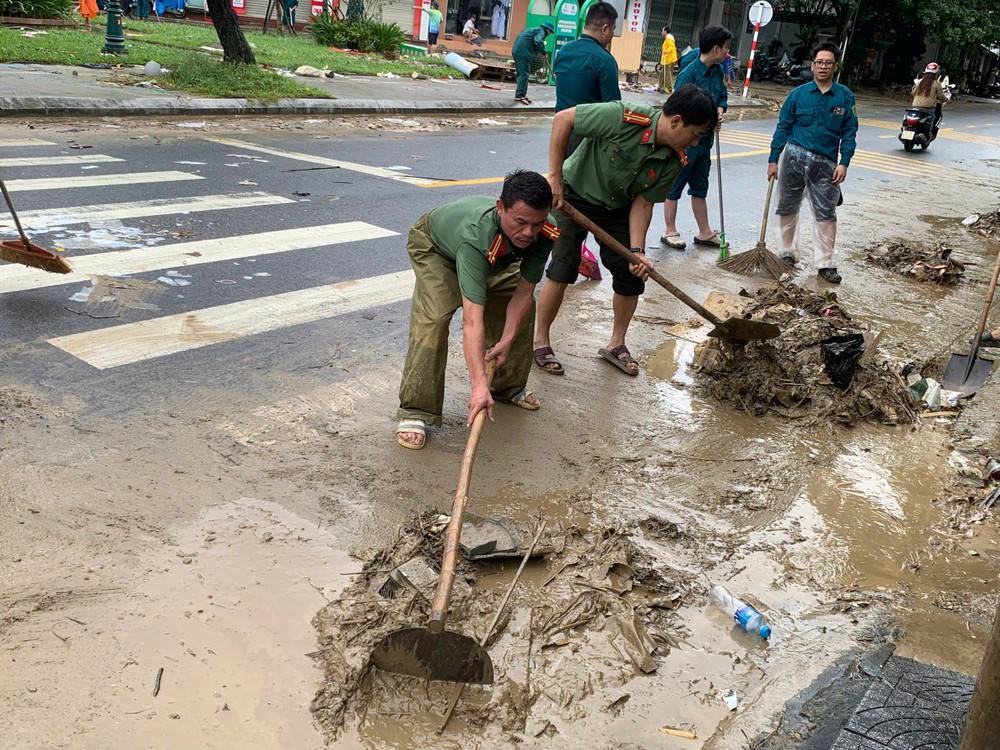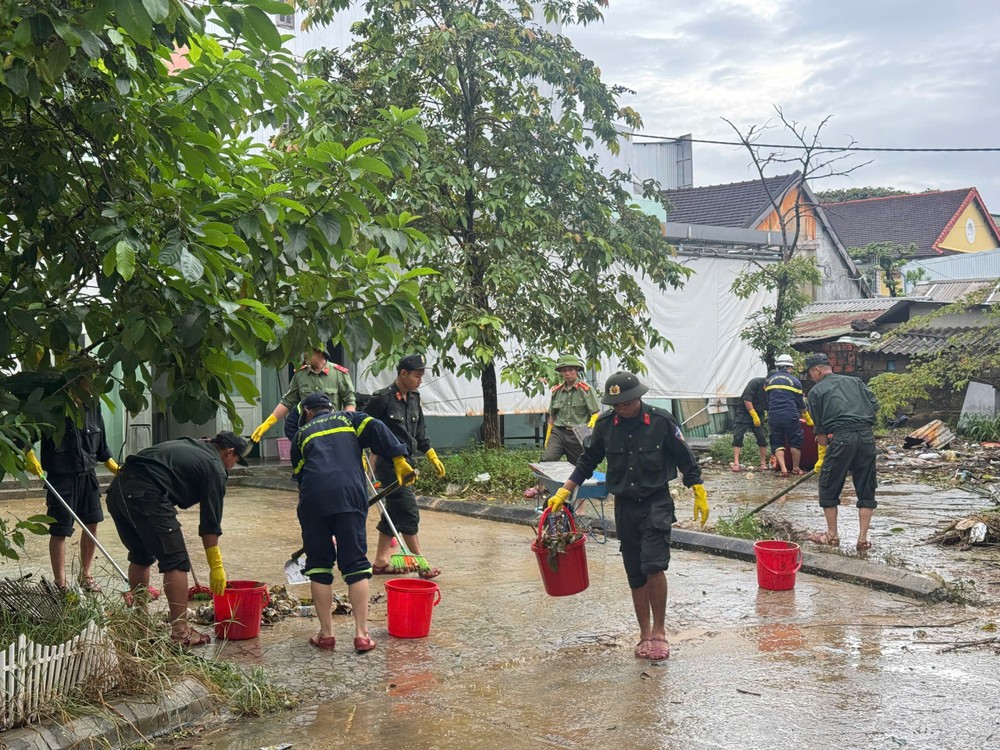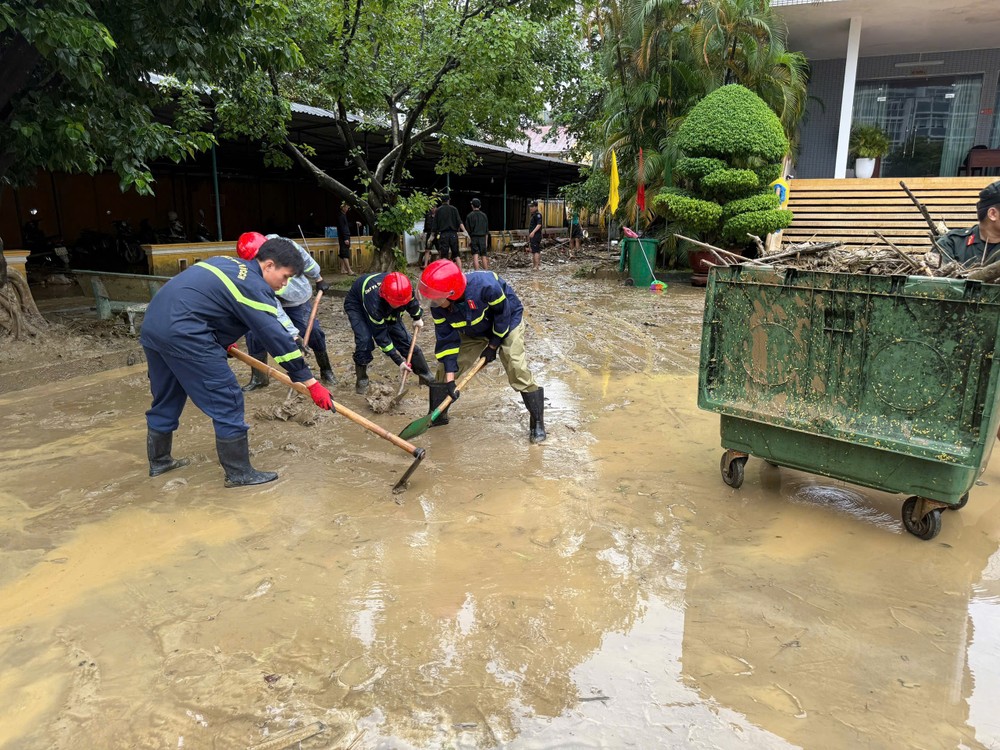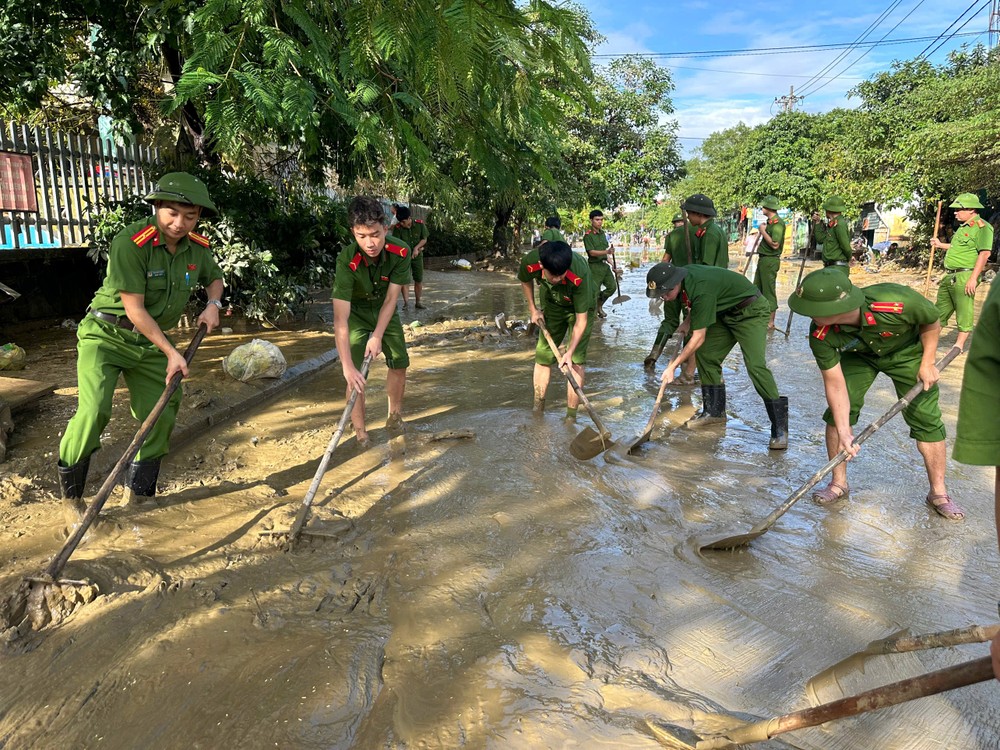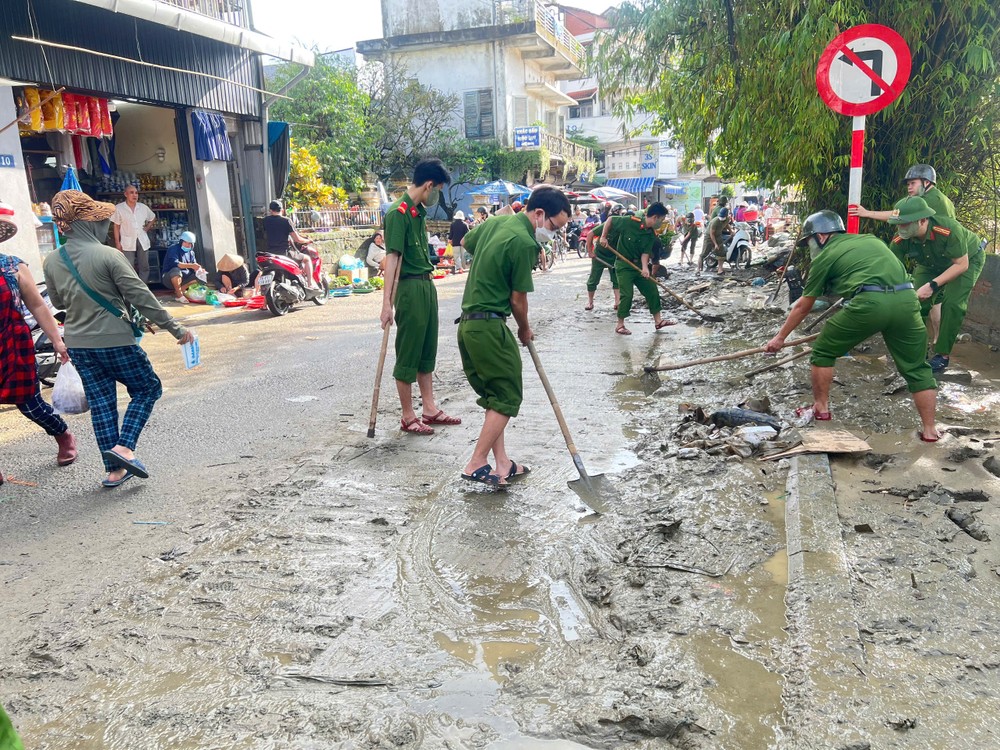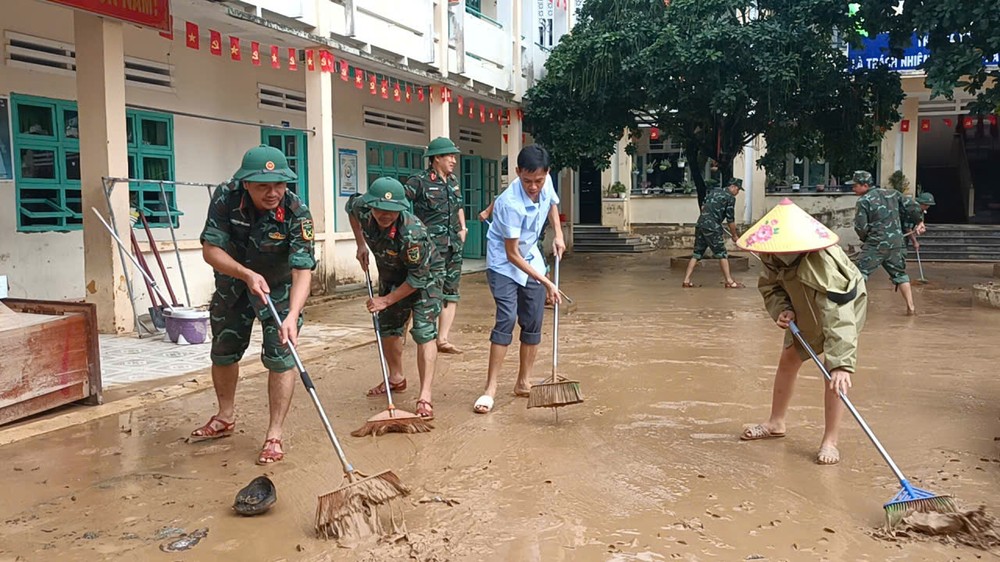
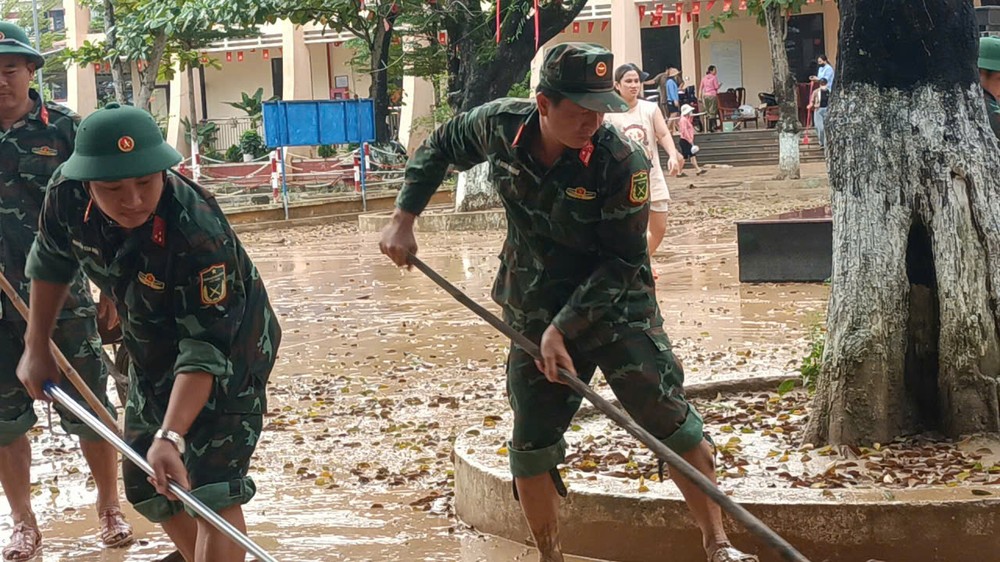
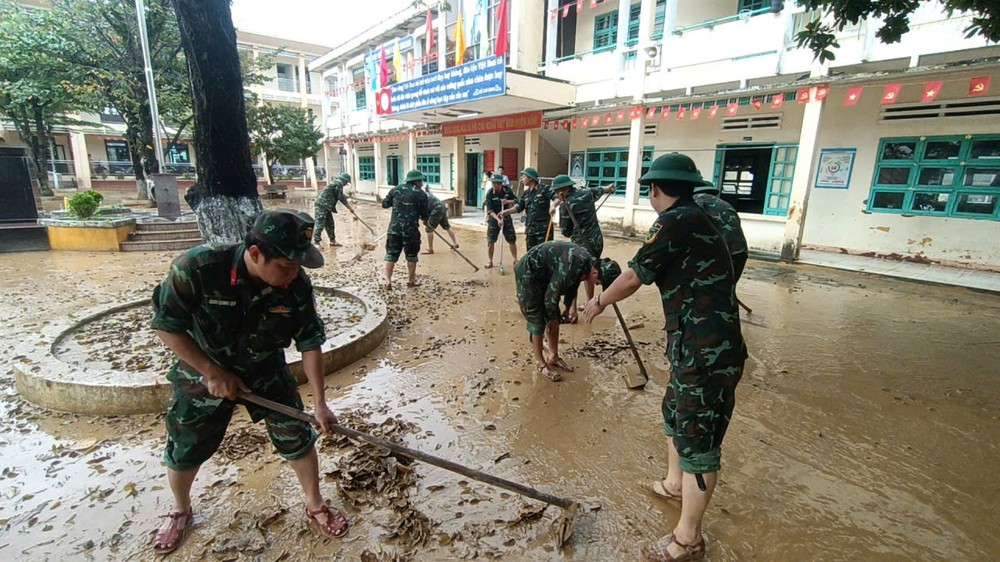
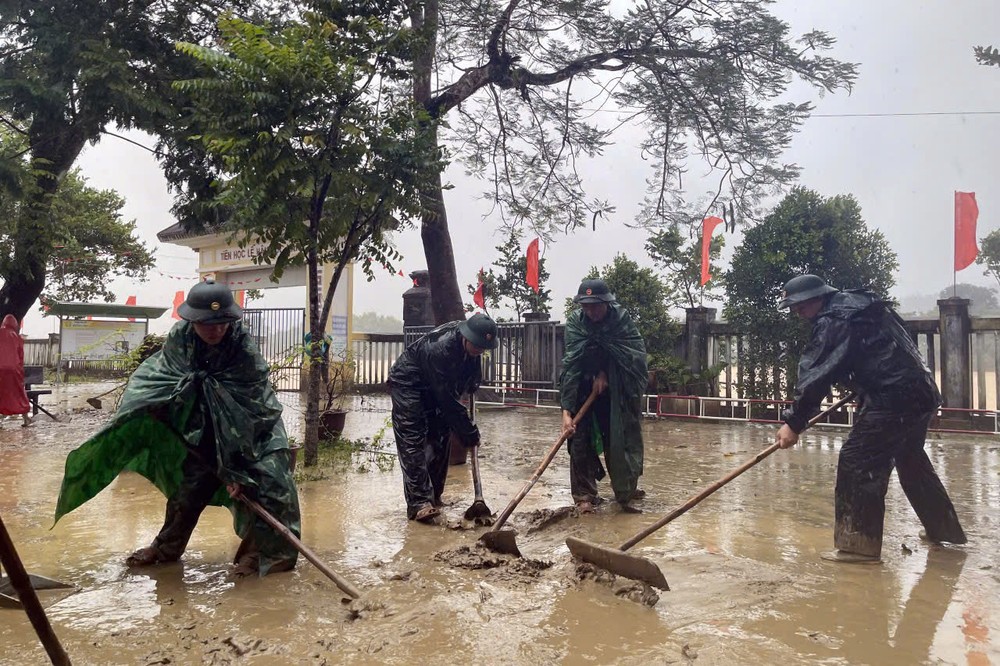
They focused their efforts on helping schools, community centers, and numerous households in Quang Ngai Province, Da Nang City, and Hue City return to normal life and prepare for students to resume classes.
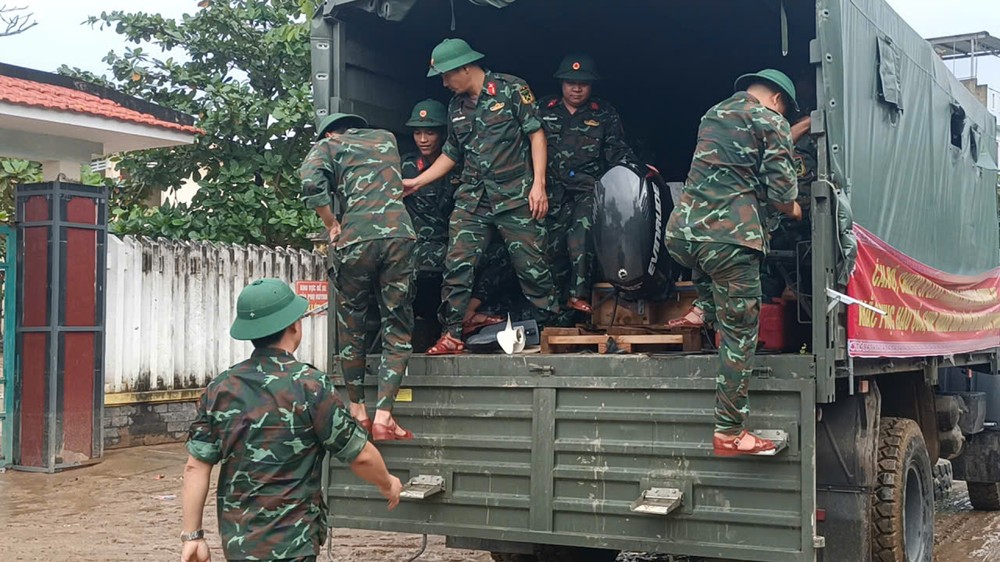
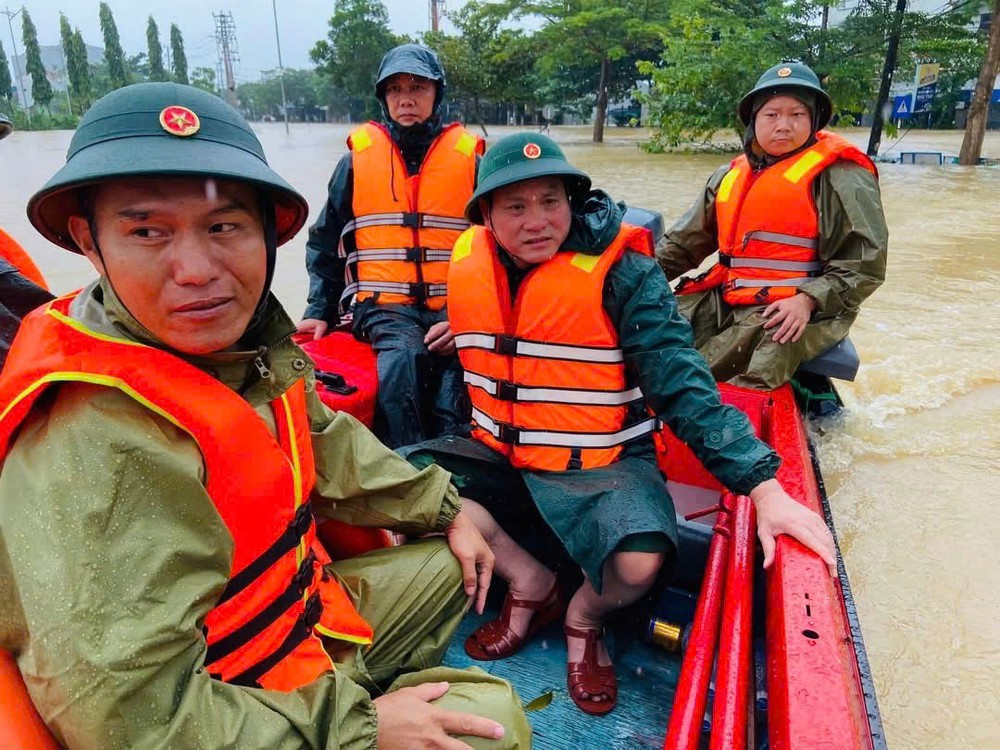
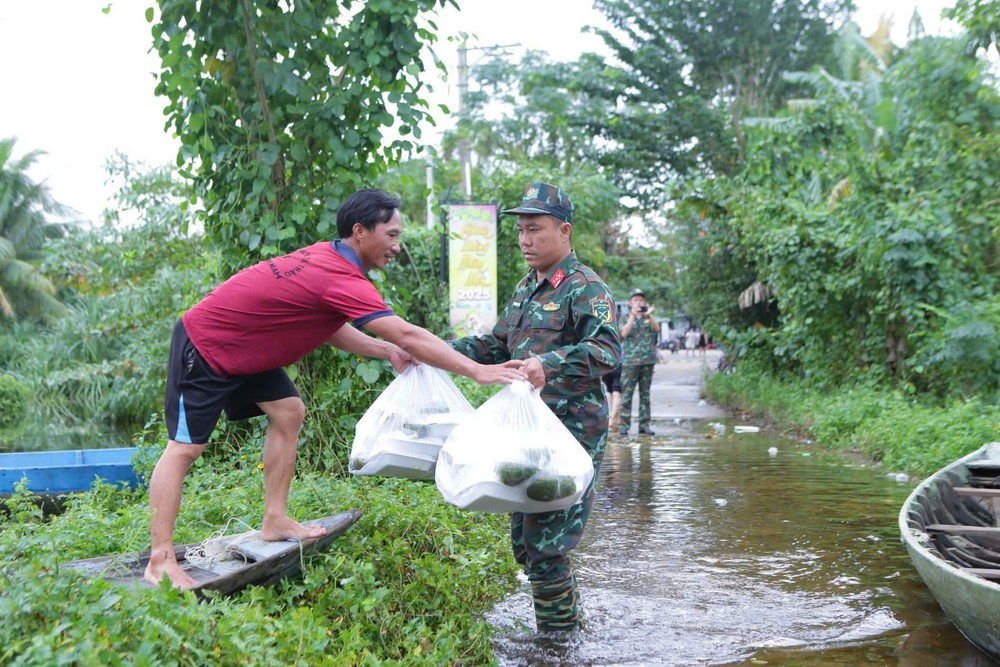
Amid the floods, more than 11,800 officers and soldiers of Military Region 5, supported by hundreds of vehicles, canoes, motorboats, and specialized equipment, braved rising waters to carry out rescue missions, evacuate residents, and deliver food and essential supplies to isolated communities.
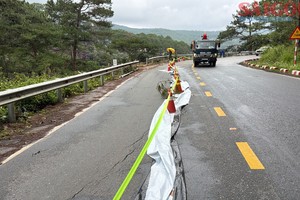
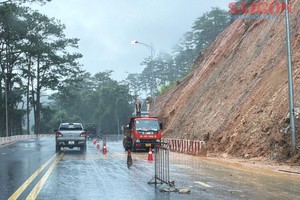
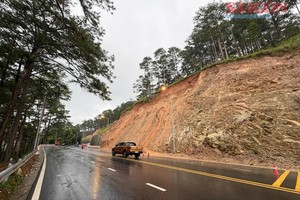
Days of torrential rain from Da Nang to Quang Ngai left 54 communes and wards submerged, while 107 landslide sites buried dozens of houses and severely disrupted traffic. Forces evacuated more than 7,200 households — nearly 24,000 people — to safe locations, and distributed nearly 10 tons of dry rations, thousands of boxes of instant noodles, over 76,000 bottles of drinking water, and 12,000 meal boxes, along with milk and canned meat, to residents in deeply flooded areas.
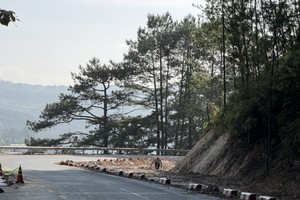
Combat engineer units under Military Region 5 worked with local authorities to clear 40 landslide points and reopen key routes, helping residents resume production and stabilize their lives.
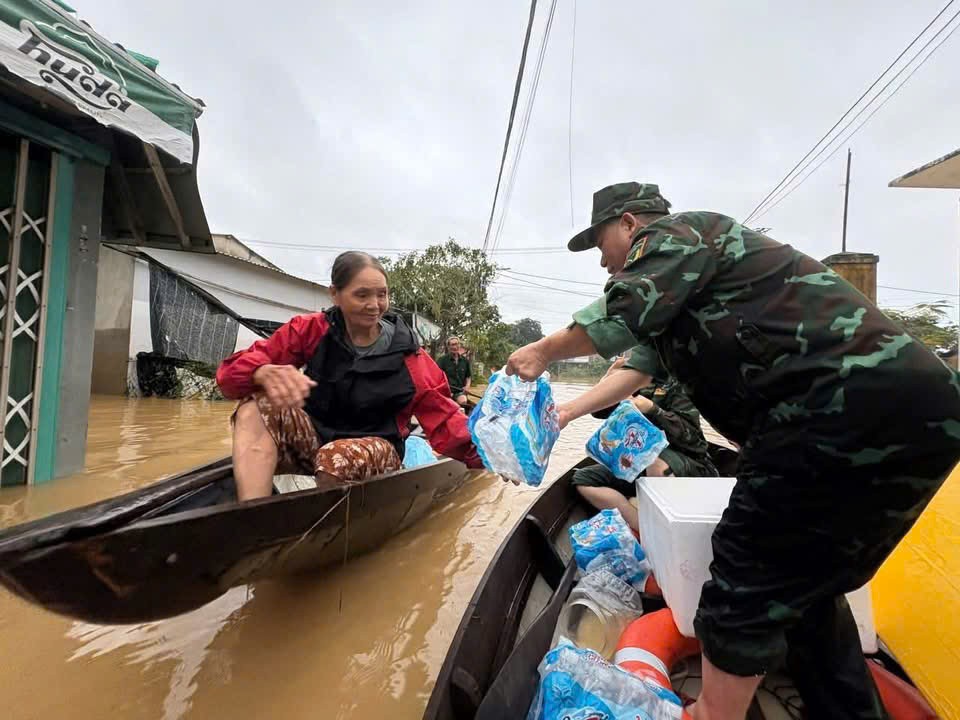
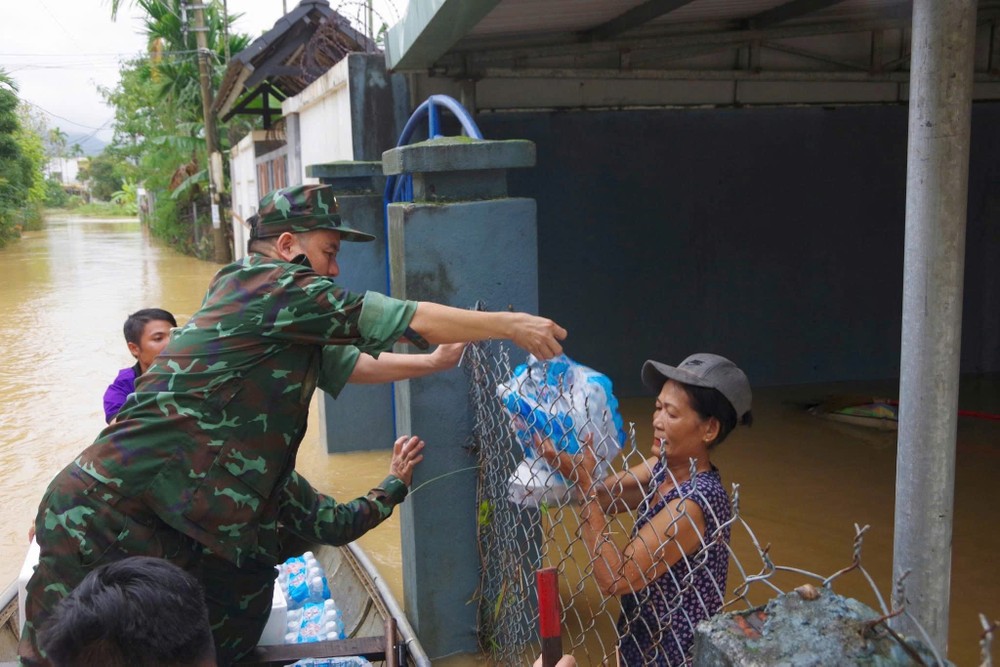
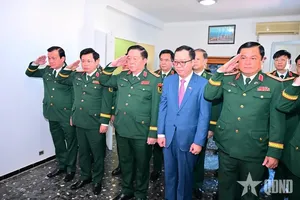
At a meeting, Lieutenant General Le Ngoc Hai commended the dedication and tireless efforts of soldiers across Military Region 5. “In any circumstance,” he stressed, “our armed forces must be the first to arrive and the last to leave — ensuring no one goes hungry or cold, and that no one is left behind.”
The Military Region 5 Commander also instructed units to remain closely engaged with localities, continue searching for missing persons, repair landslide damage, clean schools, clinics, and bridges, and take proactive measures to prevent post-flood disease outbreaks and environmental pollution, while guaranteeing absolute safety for both troops and civilians. He further emphasized the need to strengthen communication and public outreach to maintain political stability and social order, preventing hostile forces from exploiting natural disasters to spread misinformation or incite unrest.
In remote communes, such as Tra Leng, Tra Tan, Ngoc Linh, and Son Ha, soldiers from Military Region 5 continued to work tirelessly around the clock — clearing roads, assisting residents, and serving as a vital source of strength and reassurance for local communities.
On October 30, as heavy rains caused severe flooding in Da Nang City and neighboring areas, the Logistics and Technical Services Department of Military Region 5 directed agencies and units to launch various relief operations to help residents recover from the disaster and stabilize their lives.
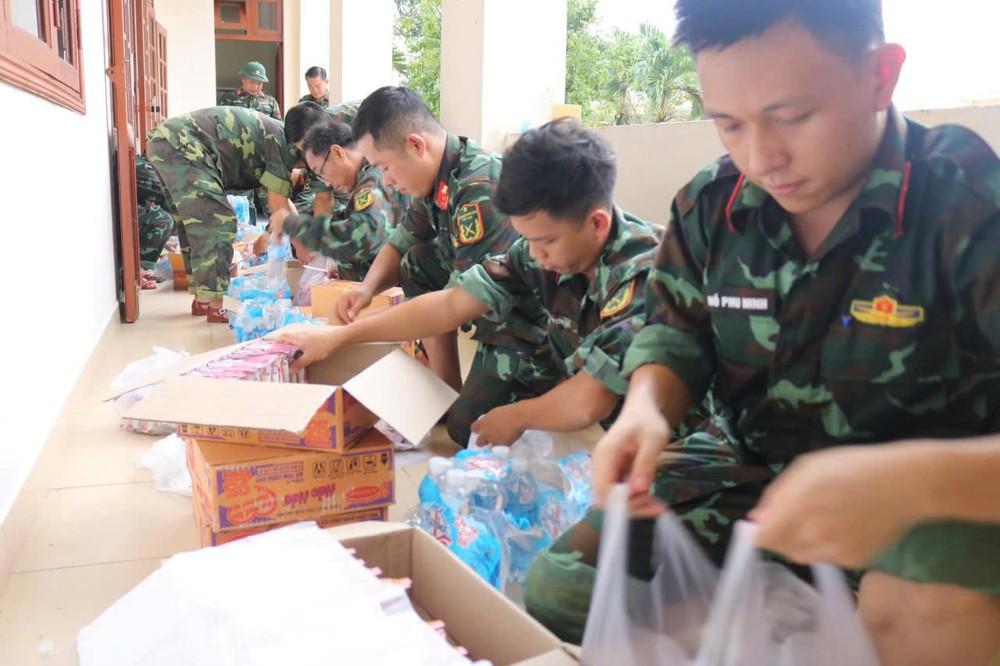
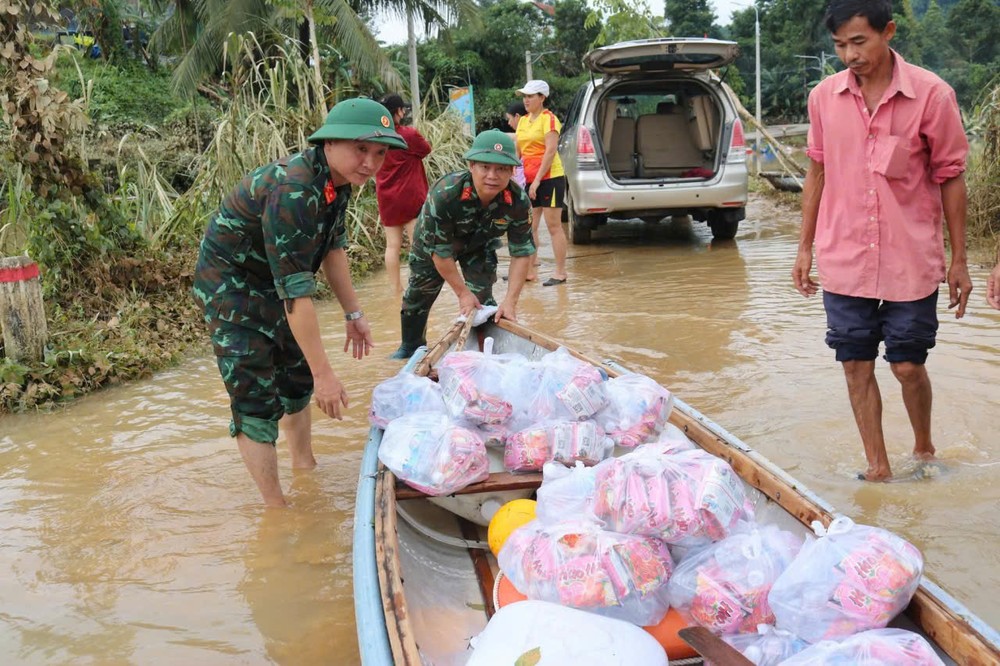
Functional units under the Department coordinated closely with local authorities to cook and distribute meals, provide drinking water and medicines, and assist in evacuating residents and property from deeply flooded areas, ensuring the safety of life and property.
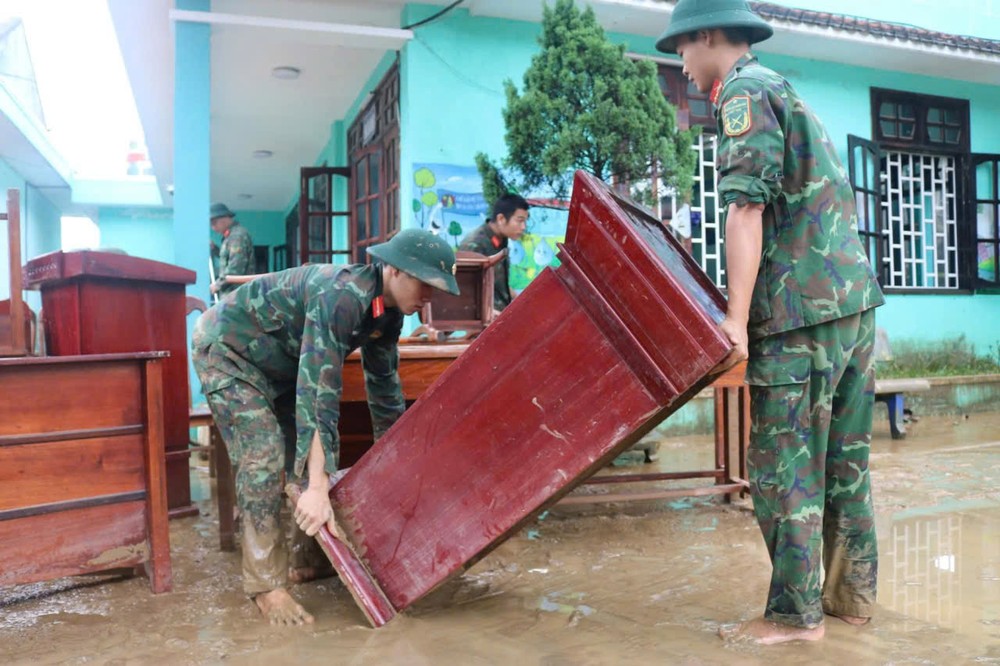
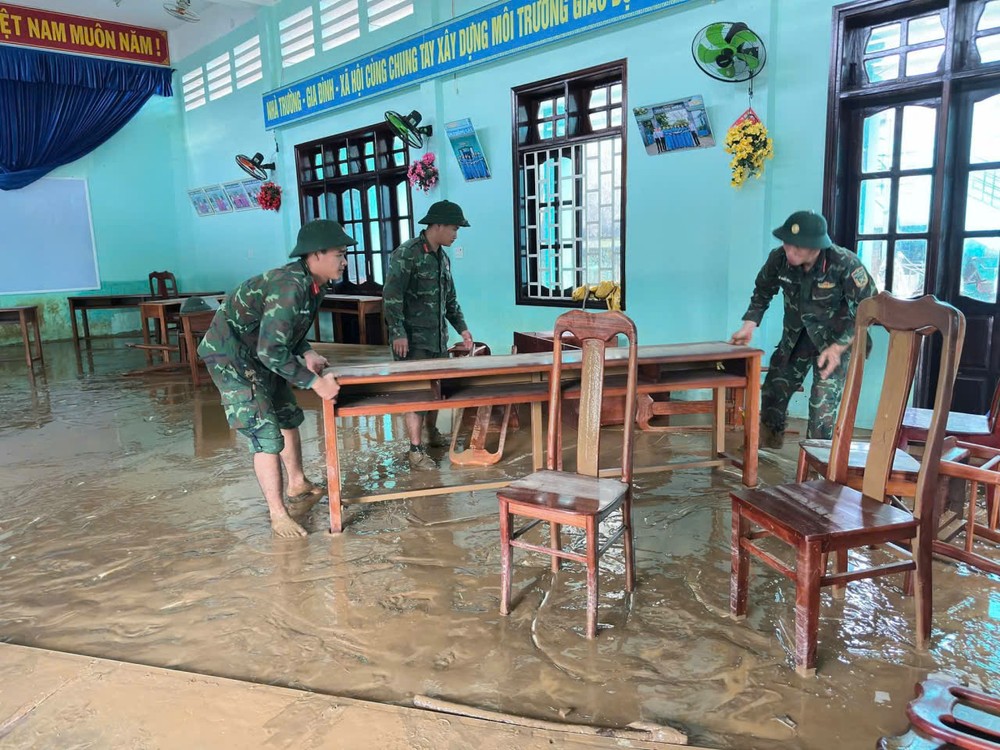
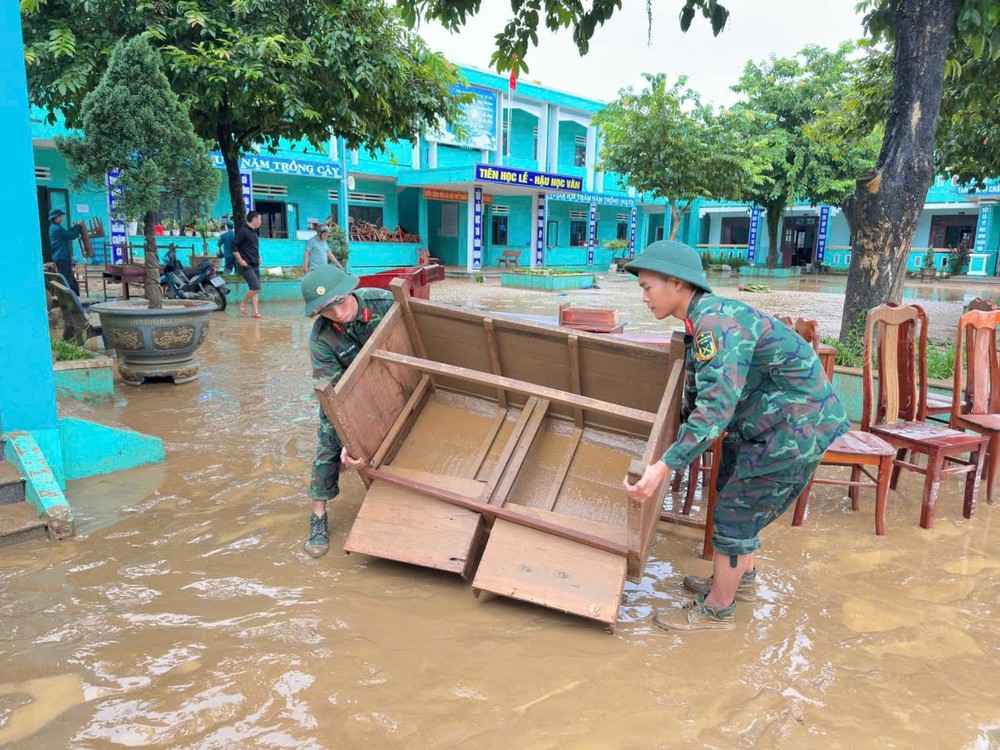
As floodwaters began to recede in many parts of Da Nang City, units under Military Region 5 promptly arrived at affected sites to help with large-scale cleanup and waste collection on October 31.
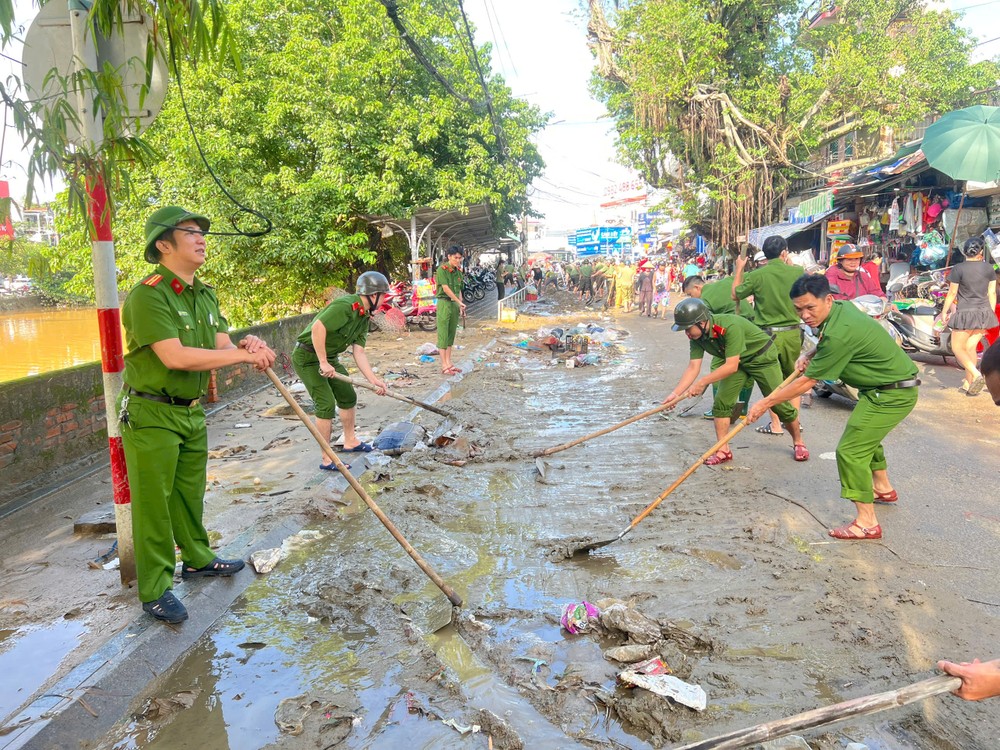
Under the plan, starting October 31, Military Region 5 forces — alongside Da Nang’s local armed units — joined efforts to help localities recover from the floods. Their key tasks included clearing mud, restoring sanitation, repairing damaged infrastructure, and accelerating environmental restoration to help residents quickly return to normal life.
The Da Nang City Military Command also issued an urgent order mobilizing forces to prioritize mud removal and disinfection at Duy Xuyen General Hospital (Nam Phuoc Commune) and Dien Ban Regional General Hospital (Dien Ban Ward). Both hospitals serving tens of thousands of residents in these areas have been heavily affected by flooding. After days under water, their entire premises, corridors, and departments were coated in thick mud, with damp medical equipment posing contamination risks that could hinder medical operations.
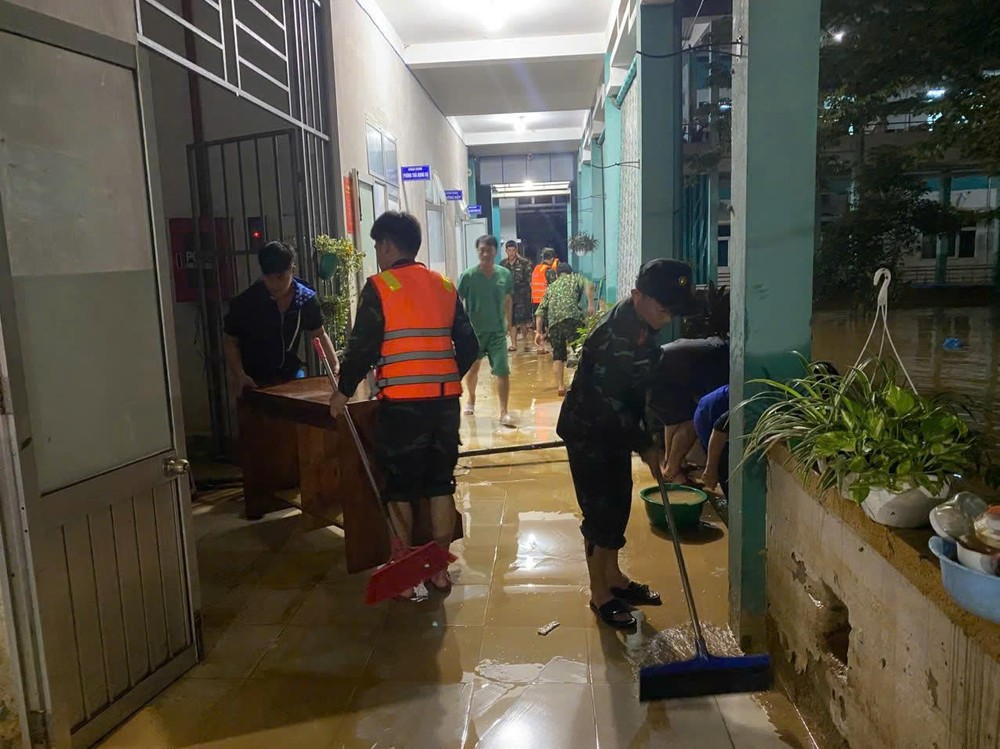
Hundreds of officers and soldiers from the city’s armed forces, along with militia members, self-defense forces, and medical staff from the two hospitals, urgently carried out environmental sanitation, pumped out water, removed mud, and disinfected all affected areas. Heavy machinery, pumps, chemicals, and lime powder were mobilized to expedite restoration so the hospitals could soon resume normal operations and provide proper medical care to the public.
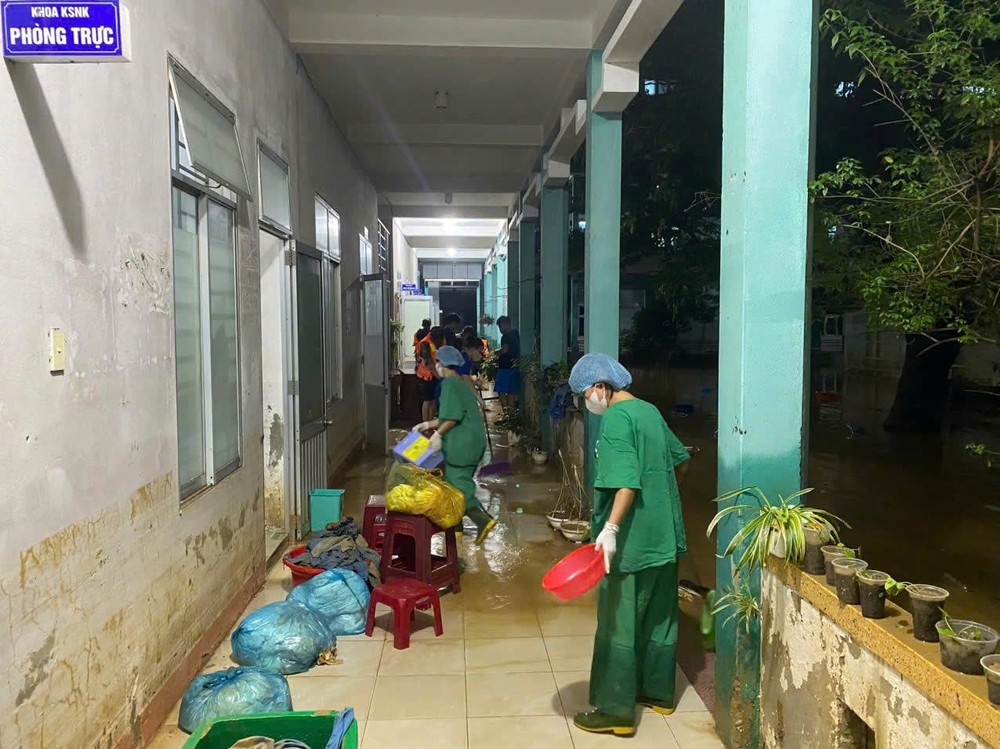
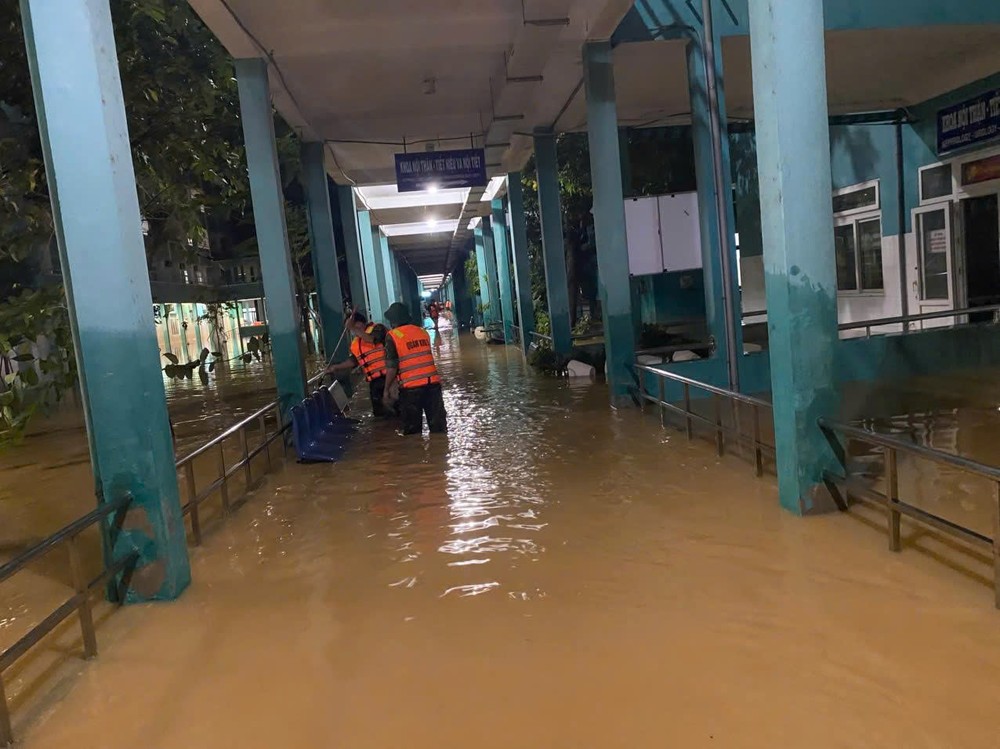
At Quang Nam Regional General Hospital, which was also flooded, the Women’s Union and Youth Union Branch of the Logistics and Technical Services Department organized a program to deliver 200 meals to stranded patients and their families.
The Ministry of Public Security’s Bureau of Health and Hospital 199, in coordination with Hue City Police, conducted extensive disinfection in Vy Da Ward and several other key locations on the morning of October 31. The task force also provided medicines, chemicals, equipment, and supplies to the Hue City Police for epidemic prevention and first-aid operations.
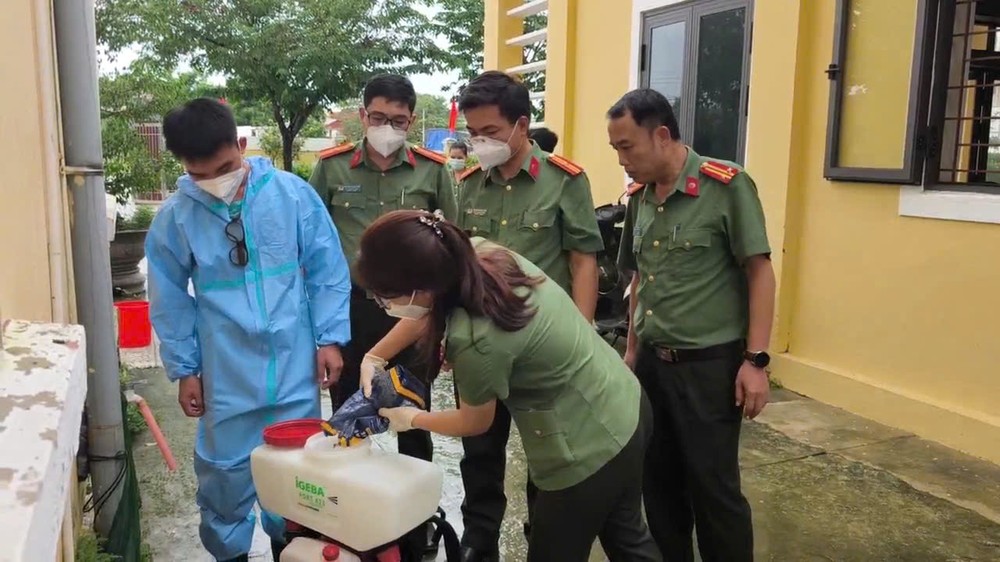
Major Nguyen Dinh Van, Deputy Head of Division 2 under the Ministry of Public Security’s Bureau of Health, noted that as floodwaters recede, the risk of disease outbreaks is extremely high, requiring priority disinfection in densely populated residential areas, schools, medical stations, and locations where water sources have been contaminated.
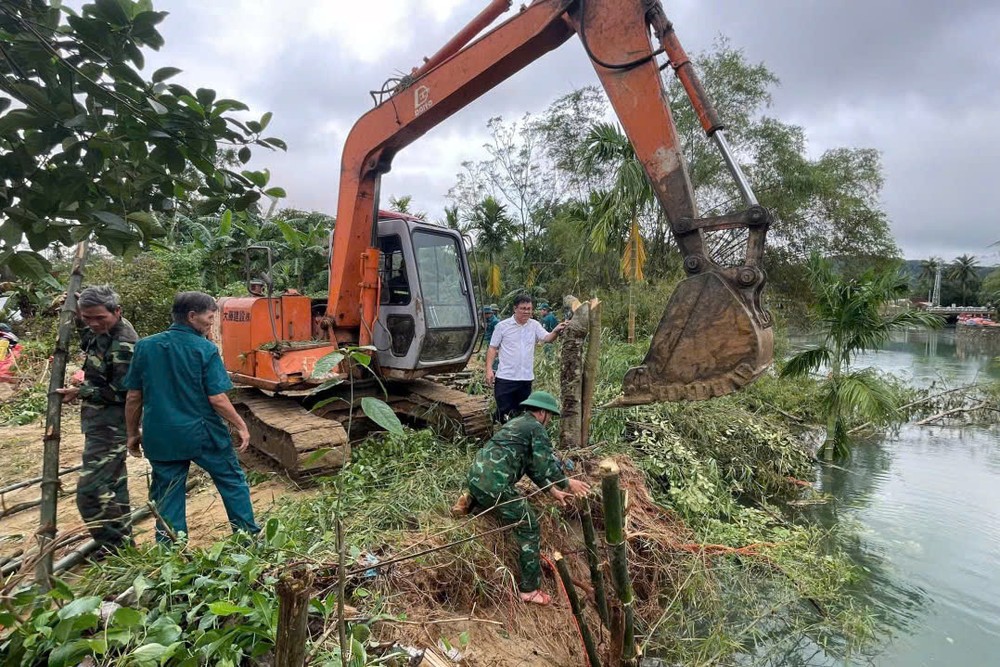
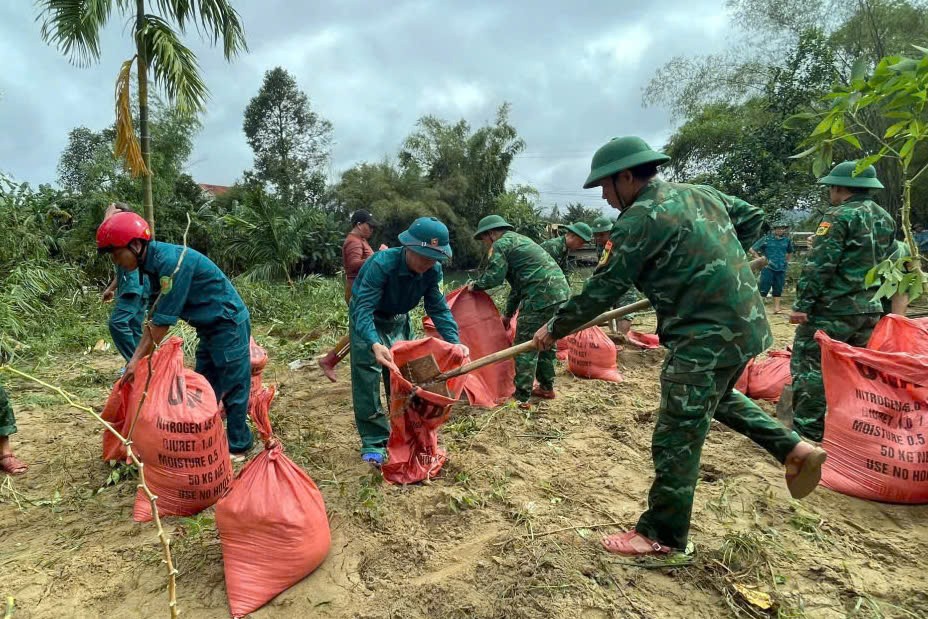
Hue City mobilized its full strength — military, police, and youth union members — to urgently clear mud and debris, unclog drains, and clean streets following the floods on the same morning.
The Hue City Border Guard Command, in coordination with Phuc Hung Thinh Co., Ltd., distributed 3,000 relief packages (each worth VND250,000), including 1,000 for patients at Hue Central Hospital and 2,000 for residents in the severely flooded wards of Thuan An and Thuan Hoa.
Meanwhile, the Phong Hai Border Guard Station, in collaboration with the Vietnam Fatherland Front Committee of Phong Phu Ward, handed out 120 gift sets to households in Giap Nam and Ke Mon residential groups. Each package contained 5 kilograms of rice, ten packs of instant noodles, and ten cartons of milk, with a total value of VND24 million.