Unity and efficiency
According to Dr Nguyen Duc Quyen of HCMC Cadre Academy, Vietnam is entering a phase of profound transformation, with the economy shifting towards a growth model based on innovation, science-technology, and data.
The administrative apparatus must be streamlined, local governments must operate more effectively, and society demands higher standards of transparency, accountability, and efficiency. These factors create positive developmental pressure, forcing the cadre corps to fundamentally alter their mindset, standardize their capabilities, and refine their working methods.
The draft Document for the 14th Party Congress explicitly states: “It is necessary to build a contingent of cadres at all levels, especially strategic ones and leaders, who possess sufficient qualities, capabilities, and prestige commensurate with their duties.”
This is not merely an inheritance of past directions but a new strategic plan for the 2025-2030 period, as the nation transitions to development based on innovation, digital transformation, organizational streamlining, and local autonomy.
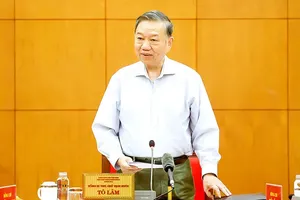
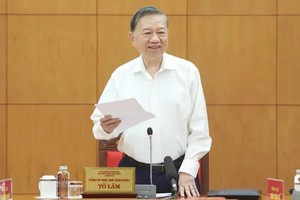
Discussing personnel preparations for the 14th Congress, General Secretary To Lam emphasized that this is not just preparation for a single term. More broadly, it is preparation for the future development of the Party organization, specific sectors, localities, and agencies. Even wider, it concerns the destiny of the Party, the survival of the regime, and the development of the nation and its people.
This necessitates selecting and introducing individuals who possess political mettle, ethical integrity, as well as exemplary conduct and who place national and public interests above all else. They must have sharp strategic vision and organizational capacity to unlock bottlenecks, clear resource channels, and rally collective strength.
Crucially, they must possess executive capability: designing clear and specific goals, establishing individual accountability, measuring performance through data, and pursuing policies “to the end” with high public service discipline.
Dr Huynh Thanh Dien from Nguyen Tat Thanh University emphasized that implementation capacity and individual accountability are now paramount. Policies demand thorough execution with clear objectives and timelines, leaving no room for ambiguity. Cadres must master tasks, coordinate effectively, and bear ultimate responsibility for results, finally eliminating the mindset of “leaving it to the collective.”
Synchronized movement
At the implementation level, civil service capacity, service attitude, and understanding of citizens’ actual needs determine policy quality.
Deputy Prime Minister Pham Thi Thanh Tra emphasized that building the cadre contingent must ensure synchronization and rational decentralization. This implies unity in ideology, goals, standards, and processes across levels, alongside clarity in roles, responsibilities, and capabilities.
From these orientations, it appears personnel work is no longer just about professional requirements but also demands vision and systemic organizational capacity. This lays the foundation for shifting from “administrative management” to “development governance,” where levels have distinct roles yet operate uniformly toward a common goal. Each leverages its strengths while linking closely with others to generate aggregate power for the political system.
In personnel work, synchronization ensures consistency in ideology and goals across levels, not rigid uniformity. Meanwhile, decentralization scientifically assigns roles: strategic levels plan, executives deploy, and grassroots interact with citizens to deliver results.
Replacing past fragmentation, a new interconnected mindset aligns training and planning with specific titles and the overall structure. This shift drives the Ministry of Home Affairs’ proposal to base placement on job position requirements rather than administrative factors.
By establishing specific competency levels, ranging from general, professional, to managerial ones, the system aims to ensure every cadre is perfectly suited to their specific role within the national apparatus.
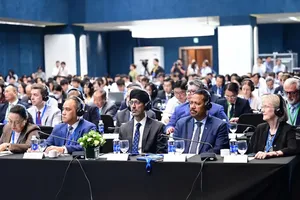
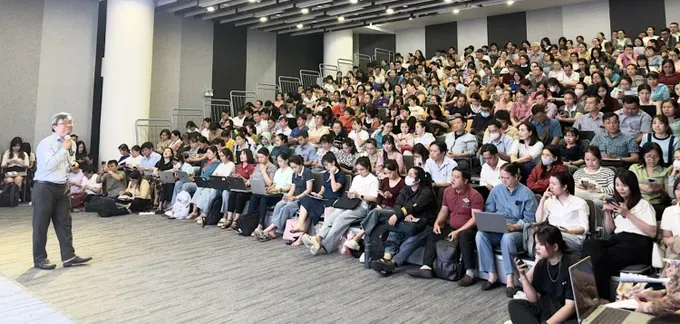
The Ho Chi Minh National Academy of Politics and the Central Organization Commission have revolutionized training for 14th Party Central Committee candidates. The Politburo launched four specific classes to update skills, featuring direct engagement from General Secretary To Lam. By tightly linking training with planning requirements and title standards, this systematized approach ensures the cadre corps is fully prepared to meet the rigorous demands of the new era.
In many localities, the spirit of decentralization and interconnectivity is promoted through concentrated training programs where cadres from departments, agencies, wards, communes, and special zones jointly participate in online courses on digital transformation and administrative reform.
Consequently, the gap between top-level planning and grassroots execution is narrowed, creating initial consistency in awareness and implementation. Some localities, including HCMC, have assigned young, tech-savvy cadres to support and guide citizens in accessing online public services and processing residential data. These examples demonstrate that correct decentralization accelerates the efficiency of the entire system.
Dr Huynh Thanh Dien emphasizes that personnel work must go beyond mere selection to create an ecosystem where talent thrives. This requires high standards to encourage striving, protective mechanisms for peace of mind, and transparency to correctly recognize capability.
Ultimately, national governance quality hinges on people: those with vision to lead, integrity to maintain discipline, and capability to deliver results. By establishing strict, scientific standards, the nation ensures its apparatus is operated by individuals with the heart and capacity to shoulder unprecedented challenges. Thus, effective personnel work serves as the decisive fulcrum for Vietnam to step into the future with confidence and aspiration.