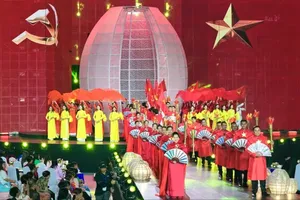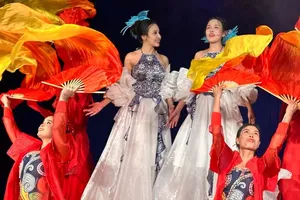
Domestic audiences witnessed an unprecedented explosion of large-scale musical events throughout 2025. A slew of high-caliber programs, grand music festivals, and buzzy international performances took place, showcasing significant investment and world-class production standards.
It wasn’t just major metropolitan areas getting in on the action; many smaller localities hosted musical events rich in regional identity, effectively promoting local cultural values.
Coupled with this was the robust spread of televised music competitions and live concerts. These events, drawing tens of thousands of attendees night after night, reflect a vibrant picture of a Vietnamese music scene deeply tethered to increasing demands for entertainment and interaction.
Shows such as “Anh Trai Vuot Ngan Chong Gai” (Call Me by Fire Vietnam), “Chi Dep Dap Gio” (Sisters Who Make Waves Vietnam), “Anh Trai Say Hi” (Say Hi with Bros), “Em Xinh Say Hi” (Beautiful Girls Say Hi), Y-Concert, Hozo City Tet Fest, GenFest, 8Wonder Festival, and School Fest have established themselves as familiar musical landmarks.
Furthermore, artists like My Tam, Ha Anh Tuan, Soobin, Hoa Minzy, Phuong My Chi, DTAP, and Vu have cemented their personal brands through specialized, high-concept music projects.
The year 2025 also marked the debut of the IFPI's (International Federation of the Phonographic Industry) Official Vietnam Chart and the relaunch of the Billboard Vietnam Official platforms, including the Vietnam Hot 100 and Top Vietnamese Songs.
These platforms are instrumental in defining new success standards, elevating V-Pop’s stature, and inching Vietnamese artists closer to international benchmarks. Essentially, these foundations have created the runway for Vietnamese music to break out and develop even more vigorously in the coming year.
Citing sociological reports and market analysis, Assoc Prof Dr Nguyen Van Thang Long from the School of Communication & Design at RMIT University Vietnam and Head of the Vietnam Music Industry Overview Research Group 2025-2026 offered a strategic perspective.
“Traditional music globally is seeing a strong reaffirmation as audiences increasingly gravitate toward authentic cultural expressions and diverse musical narratives,” Dr Long analyzed. “With an annual growth rate of 4.56 percent, traditional music revenue is forecast to reach US$52.3 billion by 2030.”
This trend presents a double-edged sword, both an opportunity and a challenge, for organizers and Vietnamese artists who are actively crafting projects that tell the story of Vietnamese identity.
Musician Huy Tuan asserts that artists ramping up investment in personal projects will leave a significant imprint on the 2026 landscape. It appears that this investment isn’t limited to releasing tracks or organizing performance nights; artists are strategically leveraging social media and digital content. The goal is to build their image, enhance communication, connect deeply with fandoms, and spread their brand, thereby professionalizing the performance market.
However, the emergence of AI in both composition and performance is predicted to drastically alter the market dynamics. Even in early 2026, audiences were reportedly “abuzz” over AI-generated creativity in Tet music and love songs.
The copyright conundrum has already surfaced, evidenced by the lawsuit filed by singer Huong My Bong against singer Nguyen Vu regarding the track “Say Mot Doi Vi Em” (Drunk on You for a Lifetime), a song that was previously performed by AI on the “Ken Quach” channel.
Musician Nguyen Van Chung shared a sobering perspective on this shift: “The fact that audiences are gradually accepting AI music poses a genuine challenge for real composers. Income and brand recognition will become increasingly elusive. It’s a hurdle, yet at the end of the day, it’s also a motivation for artists to strive harder.”
The portrait of the music scene in 2026 is being sketched out: vibrant and brilliant, yet fraught with challenges. To truly become a key cultural industry, the Vietnamese market demands comprehensive professionalization, a sustainable development strategy, and crucially, the cultivation of a distinct and unique V-Pop identity.
“In 2026, Vietnamese music will be defined by key trends, namely the utilization of traditional materials and patriotic spirit in the digital era; world-class localized music; AI creativity; the pivotal role of fandoms in reshaping the market; ‘green’ music; and the music industry serving as a development engine for local economies,”
Assoc Prof Dr Nguyen Van Thang Long – Head of the Vietnam Music Industry Overview Research Group 2025-2026