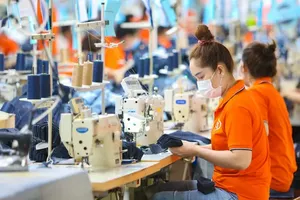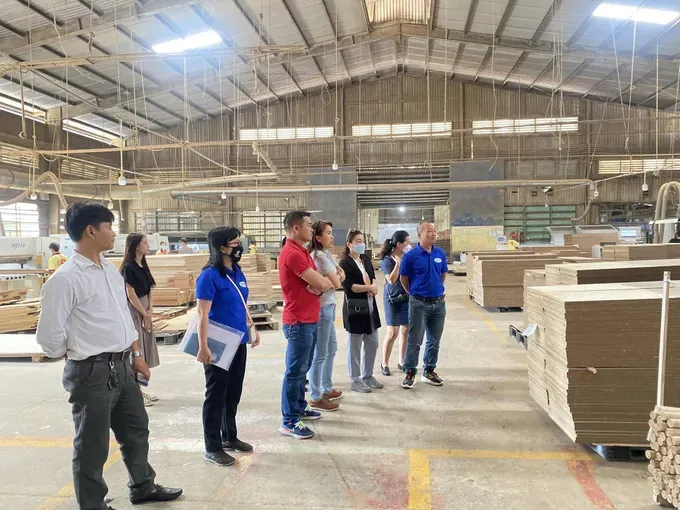
The Vietnam Timber and Forest Product Association (VIFOREST), in coordination with the Handicraft and Wood Industry Association of Ho Chi Minh City (HAWA), held a seminar on October 2 on building a legal, high-quality, and sustainable domestic wood market.
The seminar, titled “Building a Legal, Quality and Sustainable Domestic Wood Market,” was held as part of the Vietnam Furniture and Construction Exhibition at the Saigon Exhibition and Convention Center (SECC) in Ho Chi Minh City.
According to the Vietnam Timber and Forest Product Association, Vietnam’s exports of wood and wood products exceeded US$12 billion in the first nine months of this year.
Mr. Nguyen Hoai Bao, Vice Chairman and Secretary General of HAWA, said the results demonstrate the production and management capabilities of Vietnamese wood and furniture businesses, as well as their ability to meet stringent requirements in international markets. This means the wood industry should also focus on developing a sufficiently strong domestic market.
With a population of more than 100 million, rapid urbanization, and growing demand for housing, construction, and living spaces, the domestic market should be approached by the wood industry through a long-term strategy.

Mr. Ngo Sy Hoai, Secretary General of the Vietnam Timber and Forest Product Association, said the domestic market should be positioned as a proactive growth driver for the wood industry, with sufficient scale to establish standards for products, traceability, and sustainable consumption.
The market should be expanded into the construction sector, including doors, flooring, structural components, and prefabricated houses, as well as indoor and outdoor furniture for households, offices, and hotels. Opportunities also exist in biomaterials and new materials associated with the circular economy.
However, a major weakness is that although demand exists, the market lacks adequate supporting infrastructure. Craft villages, household producers, and small businesses play an important role but lack common standards. Construction timber, wood panels, and furniture for construction projects also lack consistent standards for quality and safety.
As a result, the market does not yet fully meet consumers’ demand for wood products that are legally sourced, safe, durable, and responsibly produced.
Mr. Ngo Sy Hoai proposed that relevant ministries and agencies give the domestic market a strategic position on par with other markets and regard legally sourced timber as the minimum standard for all domestic transactions. A strong domestic market would help establish standards for legal timber and promote sustainable consumption.