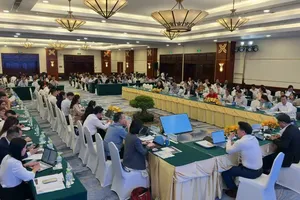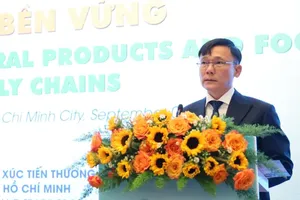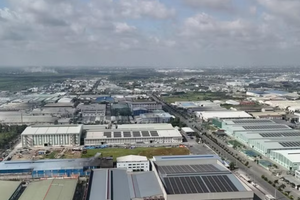
Speaking at the conference, Deputy Head of HEPZA, Le Van Thinh, stated that under the Law on Urban Development, the Ho Chi Minh City People’s Council holds the authority to issue criteria, roadmaps, and policies for eco-industrial parks. The city government tasked HEPZA with drafting two implementing resolutions.
The first draft resolution outlines criteria for eco-industrial parks and clusters in the city, alongside a roadmap and support mechanisms to transition existing operational industrial sites into eco-friendly zones.
The second draft resolution sets out mechanisms and policies to transform operating export processing zones and industrial parks into new functional zones.
HEPZA is holding this consultation with the hope that once enacted, these resolutions will serve as a catalyst and leverage to accelerate the transformation of existing export processing zones and industrial zones into ‘Industrial 2.0’ functional zones, Mr. Thinh stressed.

During the feedback session, Lawyer Nguyen Van Hau, Chairman of the Vietnam Jurists Commercial Arbitration Center, argued that certain provisions in the draft resolution on eco-industrial park criteria contradict administrative reform principles.
Specifically, lawyer Nguyen Van Hau noted that requiring a separate certification procedure lasting up to 40 working days alongside investment project adjustment procedures could create an unnecessary "sub-license." He stated this violates Article 7 of the Law on Urban Development, which strictly prohibits adding new administrative procedures.
Regarding the same draft resolution, Mr. Pham Ngoc Thuan, Vice Chairman of the Board of Directors at Becamex IDC, suggested that limiting recognition to domestic eco-industrial standards would be a missed opportunity.
Mr. Thuan proposed that the city government and the drafting committee collaborate with international organizations such as the World Bank’s International Finance Corporation (IFC) to help local eco-industrial parks meet global standards. International recognition, he noted, could facilitate smoother export processes for goods produced in these zones into demanding foreign markets.