The event at the Hanoi-based National Broadcasting Center at 58 Quan Su, which has quickly become a focal point of the celebrations, offers a powerful and immersive journey back in time.
Historical storytelling technology
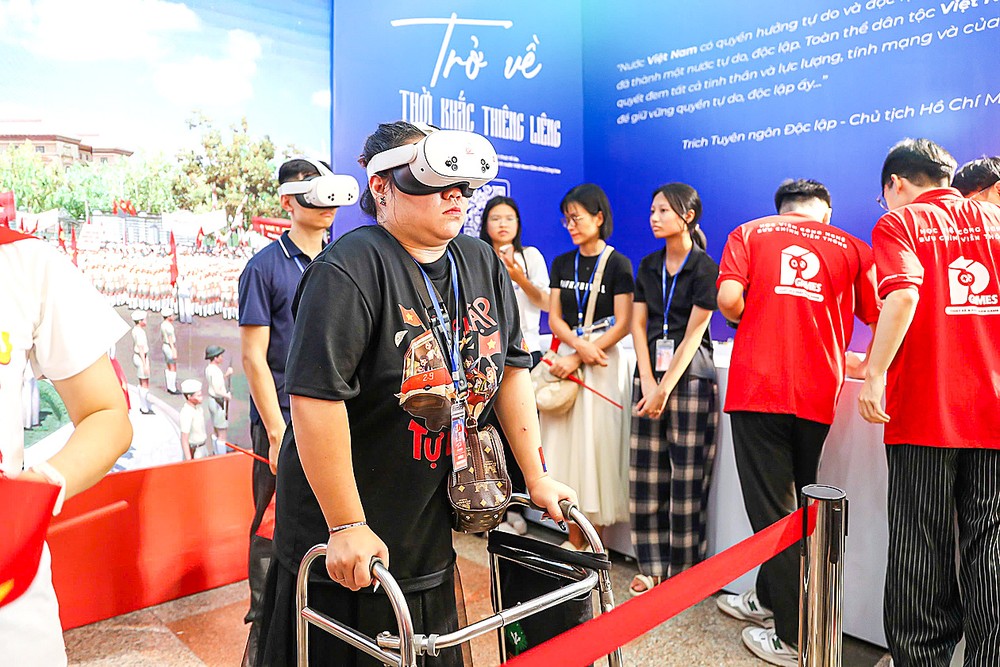
The VR experience allows visitors to witness the historic moment of September 2, 1945, when President Ho Chi Minh read the Declaration of Independence. Upon wearing the VR glasses, participants are transported to Ba Dinh Square, surrounded by a surging sea of people waving the national flag. The meticulously recreated scene includes every detail, from the period costumes and loudspeakers to the warm autumn sunlight.
The emotional experience is heightened by the sound of cheers and President Ho Chi Minh's voice echoing the famous words: 'Vietnam has the right to enjoy freedom and independence...'
'Returning to the Sacred Moment' is more than just a historical exhibit; it is an emotional and visceral experience. Instead of simply observing history, visitors 'relive' it, sharing in the emotions of the tens of thousands who were present at the birth of a free nation.
The project's popularity has exceeded all expectations. On its opening day, nearly 2,000 people experienced the VR exhibit in person, and within just six hours, nearly 30,000 online registrations were recorded. The powerful impact of the experience was evident in the emotional reactions of the visitors, including elderly people wiping away tears and children cheering. This overwhelming response demonstrates how technology, when combined with historical narrative and patriotism, can create profound and memorable connections.
Resident Nguyen Ha Phuong and her mother reflected on their emotional experience, stating that hearing the oath in that environment made them want to shout it out loud. It was so moving. This profound experience was the result of the dedicated efforts of a team over several months. The design research team collaborated closely with historians and cultural researchers to create a space that was both vibrant and meticulously accurate, down to the details of costumes, hairstyles, shoes, and vehicles.
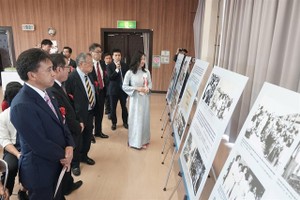
Notably, the technical solution implemented ensured the software operated seamlessly while recreating the imagery of tens of thousands of individuals in the historic Ba Dinh Square. Many young persons, particularly students, also conveyed their enthusiasm. This initiative serves not only as an experience but also as a historical exploration that aligns with the modern technological era. The integration of VR and AR technology was utilized for the first time at the President Ho Chi Minh Relic Site within the Presidential Palace. Black and white photographs and artifacts that appeared to be dormant suddenly came to life. By simply scanning their phones, visitors can witness Uncle Ho reading the Declaration of Independence or see the image of the crowd present at the ceremony.
Lieutenant Khuat Duy Long from the Vietnam Department of Peacekeeping remarked that AR simulates very realistically. As a result, he feels as though he is standing in the midst of Ba Dinh Square during that time.
Modern technology brings history to life, inspiring the young generation
A number of new exhibitions are using technology to transform how historical stories are told, making them more engaging and accessible for today's generation. This approach goes beyond traditional displays to create interactive and multisensory experiences that connect the past with the present.
At the historical site of 48 Hang Ngang, where President Ho Chi Minh drafted the Declaration of Independence, a hologram recreates the scene of him working at his desk, bathed in a warm light. Meanwhile, 3D mapping projects the heroic atmosphere of Ba Dinh Square, allowing visitors to feel as if they are reliving the crucial moments leading up to the nation's birth.
This blend of tradition and modernity turns the exhibition into more than just a display. It becomes a space where history is told in a way that engages all the senses, making the sacred past feel incredibly vivid and real.
Another example is the 'Keeping the Oath of Independence' exhibition at the Vietnam Military History Museum. By using augmented reality (AR) and sensor frames, over 300 artifacts are brought to life as moving films. Students on school tours are particularly enthusiastic, constantly using their phones to 'capture' these dynamic moments.
Additionally, the A80 - Proud of Vietnam mobile app acted as a 'digital assistant' during the National Day ceremonies. The app featured a digital map showing the parade route, medical stations, and other essential services. It also allowed users to create electronic cards and '80 years' avatars to share their national pride on social media. The app was downloaded more than 1 million times in just a few days, demonstrating its convenience and wide appeal.
This trend continues with upcoming events like the 'Hanoi Flag Tower - Fatherland and the Desire for Peace' exhibition, which will open at the Hanoi Flag Tower. The 200-year history of the Flag Tower will be recreated using original artifacts, maps, 3D models, documentary films, and 3D mapping light art, offering a rich, layered look at this historic landmark.
From the hologram at 48 Hang Ngang, AR at the Ho Chi Minh Historical Site, to VR in the project ‘Returning to the Sacred Moment’ and AI for photo restoration, the A80 application has truly become a bridge connecting the past and the present.
For the younger generation, history is no longer dry; it has transformed into a visual, memorable, and emotionally resonant experience. For those who have lived through the war, technology serves as a 'time machine,' transporting them back to their poignant memories.