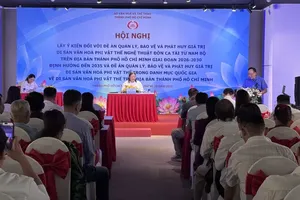
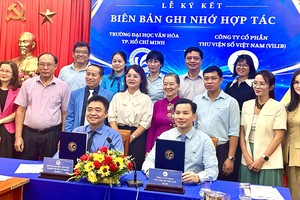
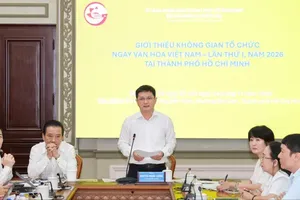
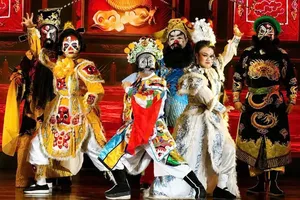
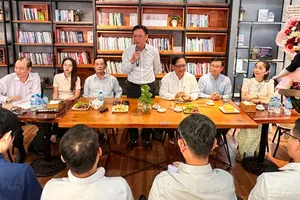
The discussion, themed “Current Issues in Theatrical Composition and Performance”, attracted the participation of the HCMC Party Committee’s Commission for Propaganda and Mass Mobilization, the HCMC Department of Culture and Sports, as well as various artists, actors, directors, playwrights, alongside representatives from both private and public theaters.
During the dialogue, Deputy Head Dinh Thi Thanh Thuy of the HCMC Party Committee’s Commission for Propaganda and Mass Mobilization reminisced about the golden era of HCMC’s theater, particularly emphasizing its enduring vitality through various periods of historical turbulence, most recently demonstrated by its robust recovery efforts following the Covid-19 pandemic.
“Post-pandemic, the spiritual fortitude derived from the core values instilled by the arts empowered theater practitioners to boldly overcome formidable adversities, actively pursue their profession, keep the stages operating vibrantly,” shared the Deputy Head.
As an individual deeply intertwined with the city’s cultural and artistic life for numerous years, she also frankly assessed the prevailing “bottlenecks” within the contemporary theater scene, notably highlighting profound difficulties in the realm of scriptwriting.
Indeed, a considerable period has elapsed since the city’s stages witnessed productions that resonated profoundly or accurately reflected the contemporary concerns of modern audiences. While there’re periodic plays reflecting daily activities, they merely succeed in portraying a narrow fraction of reality. Many novel scripts remain overly simplistic and commercially driven, catering exclusively to the immediate entertainment demands of spectators.
There is an evident absence of masterpieces characterized by ideological depth, humanistic value, and educational profoundness. This consequently leads to a stark truth where numerous producers, relentlessly pursuing profit margins, invest superficially and frivolously in theatrical productions; meanwhile, certain talented artists adopt a complacent approach to their performances.
Worrying about the current dilemma of HCMC’s theatrical arts, director Ton That Can, Vice Chairman of the HCMC Stage Association, confided: “HCMC boasts numerous exceptional and dedicated playwrights; however, theaters solely commission scripts in preparation for upcoming festivals or competitive exhibitions. Meanwhile, the remuneration allocated to writers and directors in public theaters currently remains alarmingly low, entirely disproportionate to the immense talent and intellectual effort they invest. Furthermore, HCMC’s theater sector is persistently missing out on the international tourist demographic due to an acute shortage of specialized tourism-oriented programs featuring concise durations and content tailored to fulfill tourists’ desires to explore indigenous culture. This constitutes a pivotal trajectory to significantly accelerate the development of the cultural industry.”
An enduring, albeit not novel, melancholy reality afflicts HCMC’s theater, namely a severe scarcity of dedicated performance venues.
People’s Artist Kim Xuan expressed her apprehension: “When discussing HCMC’s theatrical arts, the ‘social-resource mobilized’ theater model is frequently cited. In reality, the vast majority of operational stages today are privately owned. Nevertheless, they are compelled to operate under remarkably precarious conditions, forced to meticulously calculate venue rentals, lease costs, and potential break-even margins for every single performance. No individual dares to commit to long-term investments when continually haunted by the anxiety of future performance locations and escalating rental fees. I myself and countless fellow artists passionately hope the city will soon invest in infrastructure and artistic venues to support both public and ‘social-resource mobilized’ theaters, providing them with the stable conditions necessary for superior and more sustainable long-term development.”
In addition, numerous theatrical artists articulated personal concerns, advocating for stringent regulations regarding artist remuneration, legal rights, and protective mechanisms within artistic endeavors. They also emphasized the necessity to tighten the management of production quality and performance duration following the HCMC Arts Council’s preliminary review; to elevate the training standards for the succeeding generation of human resources; to assist backstage personnel; and to direct substantial attention toward the contingent of traditional arts playwrights.
The comprehensive discussion between the HCMC Party Committee’s Commission for Propaganda and Mass Mobilization, the HCMC Department of Culture and Sports, and artists, actors, directors, writers, as well as private and public theaters, has partially elucidated the current inadequacies plaguing theatrical composition and performance.
Consequently, this necessitates “fueling the passion,” alongside the unwavering companionship and empathy of governmental authorities at all levels towards artists and theater practitioners. This collective effort is directed towards the ultimate goal of preserving traditional cultural and artistic values while creating optimal conditions for the younger generation of artists to cultivate their talents, unequivocally propelling the advancement of the theatrical scene in HCMC.