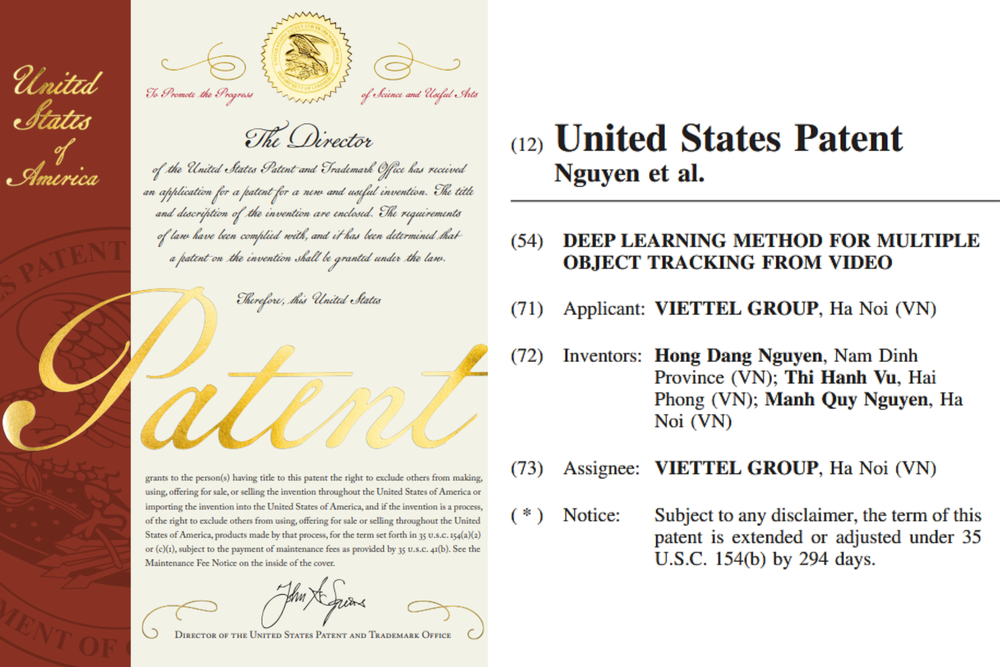
The patented solution, entirely invented and mastered by Vietnamese engineers, marks the first time a research project from the Viettel Artificial Intelligence and Data Service Center (Viettel AI) has been awarded a Utility Patent by the US authority.
Notably, the patent was granted without any objections during the examination process, underscoring the solution’s clear novelty, rigorous technical documentation, and low dispute risk under US intellectual property standards—widely regarded as among the most stringent in the global technology market.
Multi-object tracking remains one of the most complex challenges in video analytics and surveillance systems. Beyond simply detecting the presence of individuals or objects within a frame, the technology must consistently maintain accurate identification of each subject throughout movement—even when they are temporarily obscured, exit and re-enter the frame, or when multiple individuals with similar appearances are present simultaneously.
In practice, many systems struggle with identity mismatches, particularly in environments characterized by fluctuating lighting conditions, crowded spaces, rapid motion, or complicated camera angles. These limitations often stem from conventional approaches that divide the problem into separate processing stages, where errors at one stage can accumulate across the tracking pipeline, reducing overall accuracy and increasing processing time.
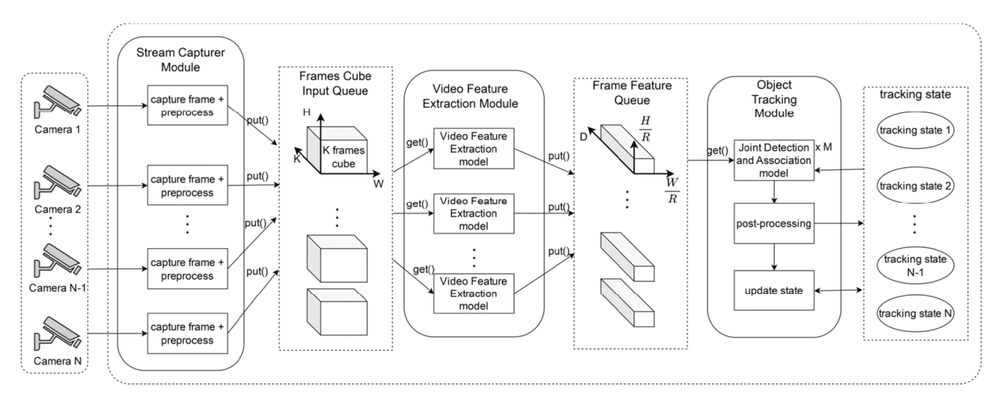
In response, Viettel AI adopted a fundamentally different strategy. Its research team designed a novel end-to-end trainable AI model capable of learning and processing the entire tracking workflow within a unified architecture rather than fragmented steps. This integrated approach enhances system stability, minimizes identity confusion, optimizes processing speed, and enables deployment in complex real-world environments.
According to Mr. Nguyen Manh Quy, Director of Viettel AI, recognition by the USPTO reflects the company’s ability to master core technologies—from addressing real-world challenges to deploying solutions at scale. He described the patent as a critical milestone in Viettel’s efforts to develop sovereign AI technologies researched, developed, and controlled in Vietnam, meeting both domestic requirements and international standards.
The technology has already been deployed in camera-based surveillance systems across numerous monitoring sites, including People’s Committee offices at various levels, tourist attractions, shopping malls, school gates, hospitals, gold shops, and other public spaces. It supports automated detection of incidents, such as unauthorized entry into restricted areas, climbing over walls or fences, illegal dumping, and abandoned objects in public venues or museums.
Field evaluations indicate that the system can detect traffic safety violations and identify crowd formations with accuracy exceeding 95 percent, operating reliably under continuous 24/7 monitoring conditions. The solution has also been integrated into smart urban management platforms in Da Nang, Thai Nguyen, Quang Tri, Hung Yen, and Ho Chi Minh City.
Patent protection in the US not only recognizes a specific technological breakthrough but also affirms Viettel AI’s growing command of foundational AI technologies. It represents a significant step toward expanding the application of “Make in Vietnam” AI products and bringing them to international markets.
The USPTO, one of the world’s oldest and most rigorous patent authorities, requires applicants to demonstrate novelty, inventive step, and practical applicability in production and business. The examination and grant process typically spans two to three years or longer, depending on the complexity of the invention, and involves multiple rounds of stringent technical review.