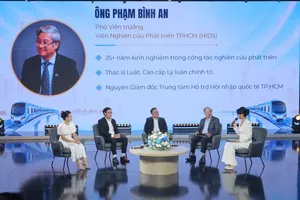
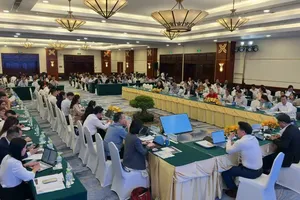
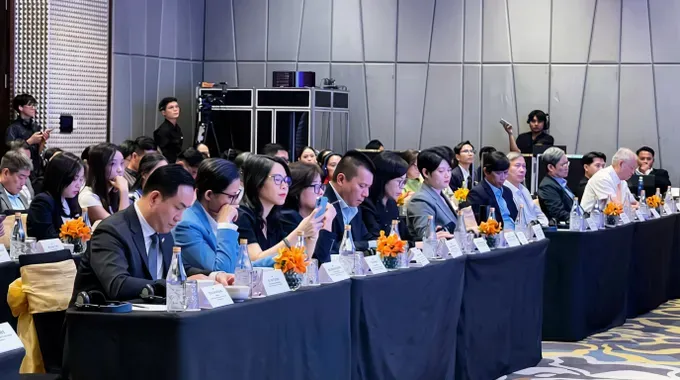
Global supply chains are deeply integrated into Vietnam's manufacturing and export sectors; however, the foreign direct investment (FDI) sector currently accounts for over 80 percent of total export turnover. This was heard at a dialogue forum titled "Vietnam and ASEAN in the Global Value Chain: From Signals to Action" hosted by the Center for the Fourth Industrial Revolution in Ho Chi Minh City (C4IR HCMC).
At the forum, Mr. Nguyen Duc Huy, Deputy Director of C4IR HCMC, noted that Vietnam's manufacturing and exports are deeply embedded in global supply chains. In the first seven months of 2026 alone, the FDI sector contributed US$255.89 billion—an increase of 26.4 percent—to the total export turnover of $319.53 billion, representing 80.1 percent of the total.
This level of integration extends beyond just the output stage. Domestic production relies heavily on imported raw materials and components, meaning that any fluctuation in global supply chains can rapidly impact Vietnam's manufacturing operations, order volumes, and exports.
According to Mr. Huy, as supply chains undergo restructuring, the criteria corporations use to select suppliers have shifted. Low costs are no longer sufficient to secure orders; businesses must demonstrate their ability to meet standards, manage data effectively, and ensure rapid delivery.
This shift also presents an opportunity to elevate the standing of Vietnam and ASEAN within the global value chain.
Ms. Van Nguyen, Lead for the Regional Agenda at the World Economic Forum’s (WEF) Center for Advanced Manufacturing and Supply Chains, suggested that ASEAN could emerge as a reliable manufacturing hub if the region's economies successfully integrate their complementary strengths in manufacturing, technology, standards, and workforce capabilities. In doing so, the region would not only be positioned to attract additional investment flows but also to retain a greater share of value within the production chain.
To transform this opportunity into genuine competitiveness, Ms. Anne-Katrin Pfister, Policy Lead, Digital Trade, Asia Pacific at the WEF suggests that ASEAN needs to digitize trade flows from end to end, build cross-border interoperable digital infrastructure, and establish reliable data flows.
In particular, small and medium-sized enterprises (SMEs) must be integrated into digital supply chains; this would enable them not only to participate more deeply but also to gradually increase the value they retain within the global supply chain.