It is compelling businesses to transform if enterprises wish to participate in global value chains.
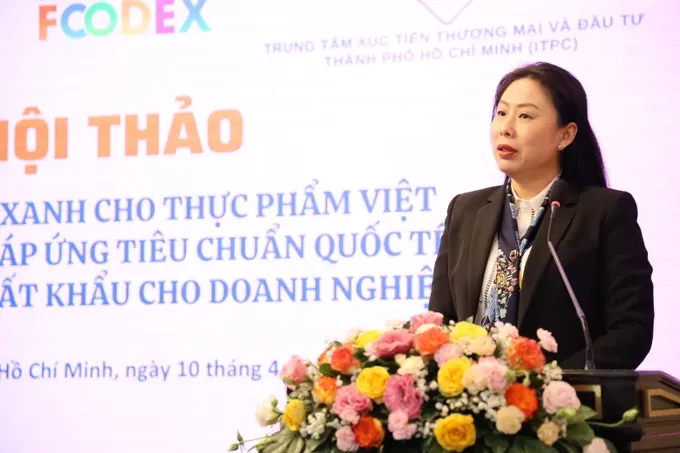
Speaking at the event, Ms. Ho Thi Quyen, Deputy Director of ITPC, noted that the global healthy food market is projected to reach over US$860 billion by 2026, growing at more than 10 percent annually. In parallel, more than 70 percent of consumers are willing to pay a premium for environmentally friendly products. This is no longer a short-term trend but has become a new market standard.
This shift is creating a dual pressure on businesses. On the one hand, consumers are moving from a focus on “tasty food” to “safe and responsible consumption,” requiring products to ensure traceability, health safety, and environmental friendliness. On the other hand, major export markets such as the European Union, the United States, and Japan are simultaneously tightening regulations on traceability, packaging, emissions, and corporate social responsibility across the entire supply chain.
Mr. Hoang Van Viet, Chairman of GIBA, noted that the fundamental shift in the market lies in the fact that consumers are “no longer purchasing standalone products but the entire system behind the product.” This has made standards such as traceability, safety certification, and environmental compliance mandatory conditions for goods to be accepted.
Meanwhile, although Vietnam’s agro-forestry-fisheries export turnover has surpassed US$50 billion annually, value added remains largely concentrated in the mid-range segment. According to experts, this is not due to product quality, but rather the lack of transparent systems and supply chain governance that meet international standards.
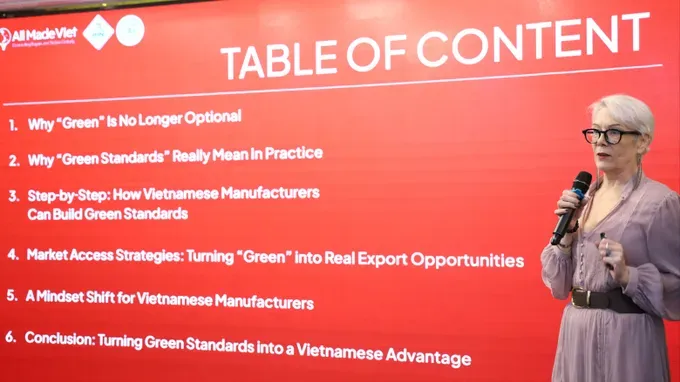
Ms. Liney Weishappel, CEO of AllMadeViet, stated that “going green” is no longer an option but has become a mandatory technical requirement. To enter major markets, businesses must develop a comprehensive framework built on four pillars: food safety, traceability, environmental management, and social responsibility.
According to Ms. Liney Weishappel, the fundamental shift in the market lies in how partners are selected. Importers are no longer seeking low-cost suppliers; instead, they prioritize businesses with stable, transparent operational systems and the capacity for long-term improvement. This forces Vietnamese enterprises to move from price-based competition to competing on quality and reputation.

In this context, the “green passport” is not a single certification but a system of trust. Once this system is met, businesses can not only overcome technical barriers but also enhance product value and gain deeper access to premium market segments.
The seminar is expected to help businesses clearly define a transformation roadmap, thereby restructuring value chains toward greater sustainability. This is no longer a long-term initiative but a prerequisite for Vietnamese food products to maintain and expand their export market share.