Alongside growing strategic trust between the two countries, Singaporean investment in Vietnam has surged in recent years, giving the city-state first place among 69 countries and territories investing in Vietnam in the first seven months of 2026 with US$7.5 billion, accounting for 35.6 percent of total registered investment.
According to the Ministry of Foreign Affairs, more than five decades since establishing diplomatic relations in 1973, Vietnam and Singapore have developed increasingly trusted political ties, closely aligned interests, and dynamic cooperation.
Political trust has been translated into practical cooperation, notably through the establishment of a Strategic Partnership in 2013 and its upgrade to a Comprehensive Strategic Partnership in 2025. This was reinforced by General Secretary of the Communist Party of Vietnam Central Committee and President To Lam’s visits to Singapore in 2025 and 2026 and Singaporean Prime Minister Lawrence Wong’s trip to Vietnam in 2025.
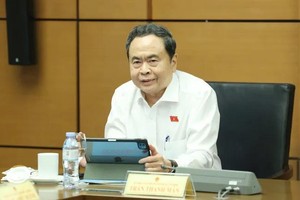
The official visit to Singapore by Politburo member and Standing Member of the Party Central Committee’s Secretariat Tran Cam Tu from August 24 to 25, at the invitation of Singapore’s People’s Action Party (PAP), and his co-chairmanship of the first Vietnam–Singapore Strategic Dialogue further demonstrate the high level of political trust between the two Parties and countries, providing a strong stepping stone for deeper bilateral cooperation.
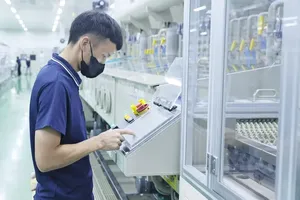
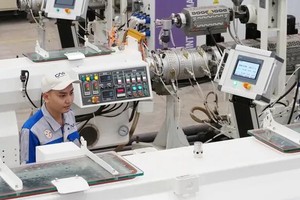
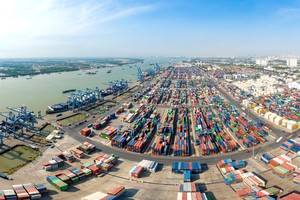
Economic, trade, and investment ties are among the clearest manifestations of this relationship. Singapore is Vietnam’s second-largest foreign investor, with more than 4,500 valid projects and a total registered capital of US$97 billion across various sectors, including manufacturing, logistics, finance, and high technology.
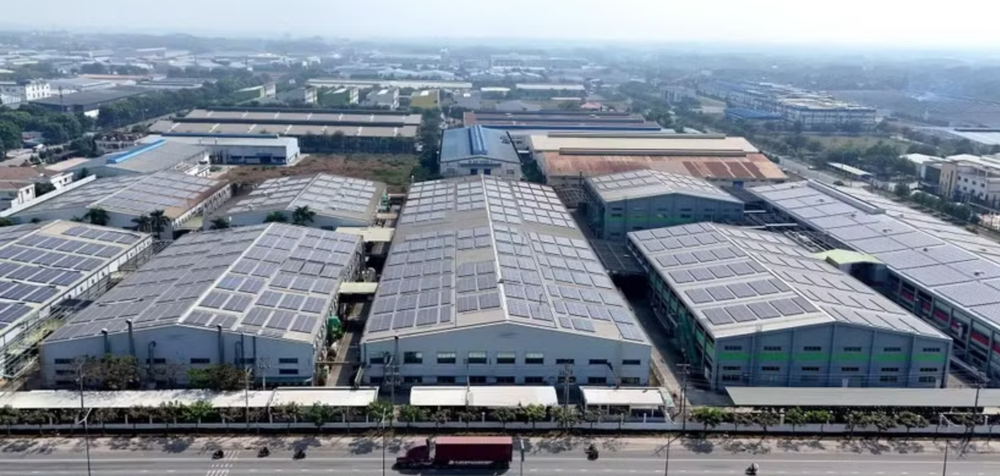
The network of 28 Vietnam–Singapore Industrial Parks (VSIP) nationwide is a prominent symbol of successful cooperation. In July, Da Nang city approved the VSIP Da Nang project, covering nearly 250 ha with a total capital of about VND3.73 trillion (US$138 million) and a 50-year operating term. This project is the latest addition to the VSIP network.
Beyond VSIP, major Singaporean investors such as Mapletree, Keppel Land, CapitaLand, Banyan Tree, Grab, Shopee, UOB, and KinderWorld have also established a strong presence in Vietnam and continued expanding their investments.
Singaporean businesses see fresh opportunities in Vietnam’s ambitious development goals and strong leadership. The presence of major firms has helped Singapore consolidate its position as the largest ASEAN investor in Vietnam and narrow the gap with the Republic of Korea, the country’s largest foreign investor.
Since 2020, Singapore has consistently ranked first among countries and territories investing in Vietnam. Its investors registered more than US$8.994 billion in 2020, followed by US$10.7 billion in 2021, US$6.455 billion in 2022, US$6.8 billion in 2023, US$10.2 billion in 2024, nearly US$9.4 billion in 2025, and US$7.477 billion in the first four months of 2026.
The strong investment flow reflects not only the potential of the Vietnamese market but also the close bilateral relationship, particularly since the two countries upgraded ties to a Comprehensive Strategic Partnership in March 2025.
Trade has also grown rapidly. According to Enterprise Singapore (ESG), Vietnam remained Singapore’s 10th-largest trading partner in the first seven months of 2026, with bilateral trade reaching nearly SGD33 billion, up 43.1 percent year on year. Singapore’s exports to Vietnam rose 9 percent to SGD17.8 billion, while imports from Vietnam surged 126.8 percent to SGD15.1 billion, highlighting the significant role of transshipment and re-export activities in their trade ties.
Economic experts said Vietnam’s appeal is also linked to Singapore’s role as a regional financial, logistics, and investment hub where numerous investment funds and multinational corporations are based. Consequently, some capital registered as Singaporean investment is in fact international capital managed, channeled, or invested through the city-state, contributing to Singapore’s large FDI presence in Vietnam.
Economist Vo Tri Thanh, Director of the Institute for Brand and Competitiveness Strategy, noted that the two economies share a high degree of international integration and are among ASEAN’s leading economies in negotiating and signing bilateral and multilateral free trade agreements, creating a favorable framework for trade and investment.
An increasing number of Singaporean SMEs and startups are also entering Vietnam. While their projects may be smaller in scale, Singapore’s average investment capital is generally higher than the overall average for FDI projects in Vietnam, potentially creating opportunities for Vietnamese businesses.
Regarding Mr. Tran Cam Tu’s visit, Deputy Minister of Foreign Affairs Nguyen Manh Cuong said it is expected to generate substantive progress in three areas.
First, it will elevate strategic exchanges and coordination between the two Parties, strengthen political trust, and expand cooperation in the Party building, leadership and governance capacity development, and implementation of the Comprehensive Strategic Partnership. The Party-to-Party channel will also help promote stronger links among Party and State agencies, legislatures, localities and people’s organizations.
Second, the visit is set to create a breakthrough in technological connectivity by turning the “three-side cooperation model"—linking the State, businesses, and researchers in both countries—into concrete projects, moving beyond technology transfer towards jointly developing technologies, products, and ecosystems serving both countries.
Third, the two sides seek to elevate personnel training cooperation, making it a pillar of bilateral ties and a key contributor to developing high-quality human resources in response to emerging development requirements in each country.
“We firmly believe that the visit by the Standing Member of the Party Central Committee’s Secretariat and the first Strategic Dialogue will provide fresh momentum, making the Vietnam–Singapore Comprehensive Strategic Partnership deeper, more effective, and more sustainable for the benefit of the peoples of both countries and a united and prosperous ASEAN,” Mr. Cuong said.