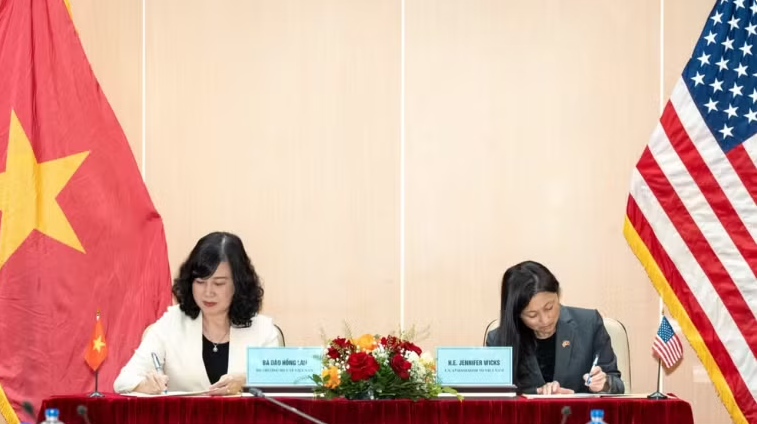
Vietnam and the US have signed a five-year memorandum of understanding (MoU) on health cooperation, aimed at promoting collaboration in the prevention and control of infectious diseases.
The cooperation will also support Vietnam in strengthening its healthcare capacity and gradually enhancing self-reliance in HIV/AIDS and tuberculosis prevention and control programs, as well as in responding to emerging and re-emerging infectious diseases.
The signing took place within the framework of the global health strategy of President Donald Trump's administration.
The move is regarded as an important area of cooperation as the two countries seek to strengthen healthcare systems that are resilient and adaptable to disease threats.
According to the US Embassy, strengthening domestic resources and enhancing self-reliance are among the priorities identified by Vietnam in the law on disease prevention, the Politburo's Resolution No. 72-NQ/TW on breakthrough measures to enhance public health protection, care and improvement, and the national target programme on healthcare, population and development.
Since 2004, the total value of US health assistance to Vietnam has exceeded US$930 million.
The US embassy stressed that the co-investment model is significant in ensuring that achievements made through decades of US assistance continue to be received, maintained and sustainably built upon by Vietnamese healthcare facilities.
The two countries also recognise that a healthy population is essential for Vietnam to achieve its economic development goals, thereby contributing to deeper economic and security cooperation within the framework of the Vietnam-US comprehensive strategic partnership.
Over the past more than two decades, Vietnam and the US have carried out numerous cooperation activities to prevent and control infectious diseases, save patients’ lives, and strengthen the healthcare system.