Economists have called on Vietnam to improve the quality of growth, strengthen the economy's resilience and speed up the implementation of existing policies to cope with growing global uncertainties, even as the country's economy expanded by 8.18 percent in the first half of 2026.
A report by the Institute of Vietnam and World Economy under the Vietnam Academy of Social Sciences noted that the economy continued to perform well despite an uncertain global outlook. While the GDP growth of 8.18 percent was the highest in many years, foreign trade turnover continued to increase, and key manufacturing industries regained momentum, providing a crucial cornerstone for the realisation of the whole year's growth target.
However, the figures just reflected positive short-term results. Long-term success would depend not only on the growth pace but also on the quality and resilience of the economy and the sustainability of growth engines.
Phan Duc Hieu, a member of the National Assembly's Committee for Economic and Financial Affairs, said the wide gap in growth forecasts made by international organisations showed that the global economy remained highly unpredictable. Given this, he said, economic forecasts should be used only as a reference while policy decisions should be based on actual developments.
According to Phan Duc Hieu, a member of the National Assembly's Committee for Economic and Financial Affairs, the Government and the National Assembly have already introduced a series of resolutions and measures to support growth. Instead of issuing more new policies, authorities should now focus on effectively implementing existing ones so that they quickly produce positive effects for businesses and the economy.
Dr Nguyen Tu Anh, Director of Policy Research at VinUniversity, said the first-half growth was encouraging although it fell short of the country's ambition of achieving double-digit expansion. He noted that setting an ambitious target has motivated the whole system to work harder, adding that without such a target, actual growth might have been lower.
Dr Nguyen Tu Anh also pointed to growing interest in Vietnam from international investment funds, including major wealth management funds serving high-net-worth clients. This, he said, suggested that Vietnam is increasingly being viewed as an attractive emerging market.
However, he identified several issues that require close attention. First, Vietnam's electronics and computer sector has shifted into a trade deficit because domestic production still relies heavily on imported chips, components and materials. As production expands, imports of high-tech inputs also increase. Second, different types of foreign direct investment (FDI) face different risks. Export-oriented manufacturing projects are less affected by exchange rate fluctuations because their revenues are mainly earned in foreign currencies. In contrast, shorter-term investment flows are more sensitive to exchange rate movements and confidence in the Vietnamese dong. Maintaining exchange rate stability would therefore help attract more investment, he said.
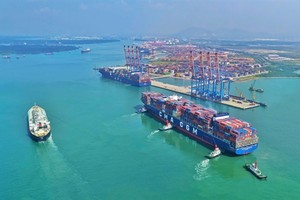
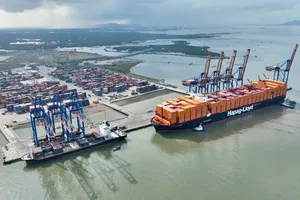
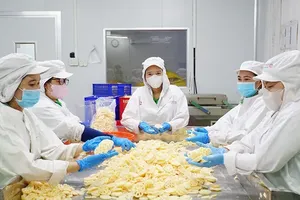
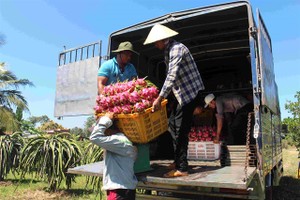
He also noted that export performance has become uneven. High-tech industries such as electronics have continued to record strong growth while traditional sectors including textile – garment and footwear have grown more slowly. He said domestic companies still have limited participation in high-value technology supply chains. Meanwhile, changing trade policies of major partners and stricter sustainability requirements from the European Union, including the Carbon Border Adjustment Mechanism (CBAM), could create additional pressure on Vietnam's exports in the coming months.
To maintain export growth and reduce dependence on imported materials, Nguyen Anh Duong from the Institute for Policy and Strategy Studies proposed three priorities. These include closely monitoring changes in global trade policies and market demand, especially from major partners; providing stronger support for traditional export industries through key investment projects; and attracting higher-quality FDI that is more closely connected with domestic enterprises rather than focusing only on export-oriented production. Duong said only a small share of Vietnamese enterprises currently export directly. Therefore, policies should focus on workforce training and supply chain development to help more local businesses, especially small and medium-sized enterprises, join the supply chains of major foreign investors.
Meanwhile, Dr Ly Dai Hung from the Institute of Vietnam and World Economy stressed the importance of maintaining enough room for independent monetary policy governance. He said Vietnam's foreign exchange reserves are currently supported by relatively favourable interest rate conditions compared with previous periods. However, if global interest rates rise again, capital outflow risks could return, making early policy preparation essential.
HE also said stronger links between foreign-invested companies and domestic suppliers remain critical. Many large FDI enterprises still lack a capable local supporting industry, limiting domestic value creation. Addressing this issue through targeted policies, he said, would help improve the quality of growth and strengthen Vietnam's long-term economic resilience.