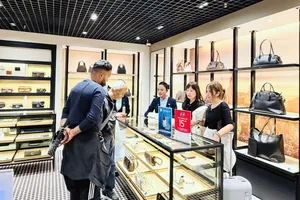
According to the Ministry of Industry and Trade, Vietnam's total retail sales of goods and consumer service revenue reached nearly 3.9 quadrillion Vietnamese dong in the first six months of 2026, up 12.9 percent from a year earlier. Excluding price factors, growth still stood at 7.3 percent.
The figures show that domestic consumption continues to be an important driver of economic growth. However, strong sales alone do not necessarily indicate a truly robust retail market.
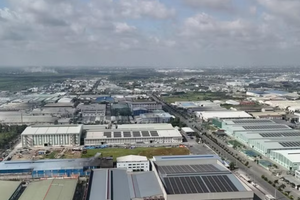
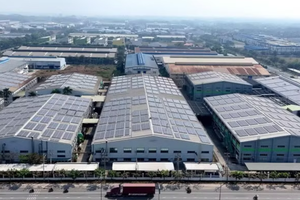
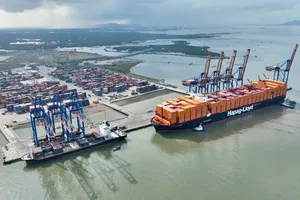
Discussions of the retail sector have traditionally focused on revenue growth, changes in consumer spending, and movements in the consumer price index (CPI). Yet the real strength of a retail market lies in the capacity of its distribution networks, logistics, warehousing, commercial infrastructure, consumer data systems, e-commerce platforms, and the ability to connect producers with consumers.
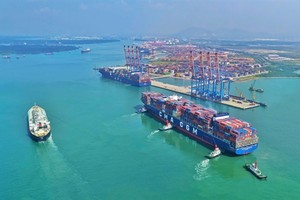
In practice, an efficient retail market not only generates revenue but also contributes to macroeconomic stability. Maintaining market stability therefore depends not only on price management measures or short-term interventions but, more importantly, on reducing logistics, warehousing, and distribution costs throughout the supply chain.
When logistics systems operate efficiently, warehousing networks are developed in a coordinated way, and distribution centers are well connected to production areas, goods move more quickly and intermediary costs decline. Businesses gain greater control over supplies, while consumers benefit from easier access to products at more reasonable prices.
For that reason, many countries no longer regard retail simply as the final stage of the distribution process but as an essential component of economic infrastructure. The value of retail infrastructure lies not in the number of supermarkets or shopping malls that are built, but in its ability to reduce costs across the entire supply chain.
For Vietnam, this requirement has become increasingly urgent as the retail market enters a new phase of competition. Pressure is mounting from the expansion of both domestic and international retail chains, the rapid growth of e-commerce, and the rise of cross-border online shopping. With just a few taps on a smartphone, consumers can choose products from a wide range of domestic and international platforms.
In addition to brand reputation, consumers are placing greater emphasis on price, delivery speed, product quality, and after-sales service. This shift in purchasing behavior is forcing Vietnamese retailers to compete through operational efficiency rather than simply expanding their store networks. If logistics costs remain high, warehousing systems are fragmented, distribution chains are poorly integrated, and digital transformation is slow, the competitive advantage will increasingly shift to companies with stronger supply chain management capabilities.
Developing the retail market is therefore no longer solely the responsibility of the trade sector. It is a cross-sector challenge involving manufacturing, agriculture, logistics, e-commerce, and Vietnam's broader digital transformation. A modern retail system should provide seamless links from raw material production to factories, from factories to distribution centers, and from distribution centers to consumers. When supply chains operate efficiently, businesses reduce costs, consumers benefit, and the economy gains additional room for growth.
Vietnam's population of more than 100 million provides the country with a large consumer market. However, the strength of that market depends not simply on population size but on the ability to translate consumer demand into a driver of production and economic growth. Achieving that goal requires retail infrastructure to be recognized and developed as a key component of the country's economic infrastructure.
The strength of Vietnam's retail market should therefore be measured by longer-term indicators, including its ability to ensure stable supplies, reduce distribution costs, improve business competitiveness, and provide consumers with convenient access to goods at reasonable prices. When these conditions are met, retail will no longer represent the final link in the distribution chain but will instead become a key driver of national competitiveness and sustainable economic growth.