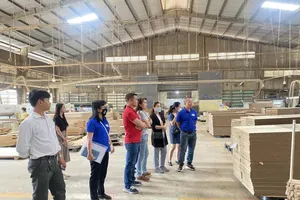
The Ho Chi Minh City Export Processing and Industrial Zones Authority (HEPZA), in collaboration with the HCMC Industrial Business Association (HBA) and the HCMC Supporting Industries Association (HASI), held a seminar on July 2 to raise awareness of environmental regulations and financial solutions for businesses operating in the city's industrial parks.
Opening the event, Mr. Tran Viet Ha, Deputy Head of HEPZA, said efficient resource utilization had become a key determinant of business competitiveness. Environmental standards, greenhouse gas emission reduction targets, and increasingly stringent Environmental, Social, and Governance (ESG) reporting requirements now play a decisive role in determining whether products can join global supply chains.
Beyond mounting pressure from international markets, Vietnamese enterprises are also entering a new phase of compliance with domestic circular economy regulations. The 2020 Law on Environmental Protection formally established the circular economy as a national development strategy, while Decree No.110/2026/ND-CP and Circular No.24/2026/TT-BNNMT completed the legal framework governing Extended Producer Responsibility (EPR).
Under the new regulations, manufacturers and importers are required to recycle a wide range of products and packaging while fulfilling financial obligations for products deemed difficult to recycle.
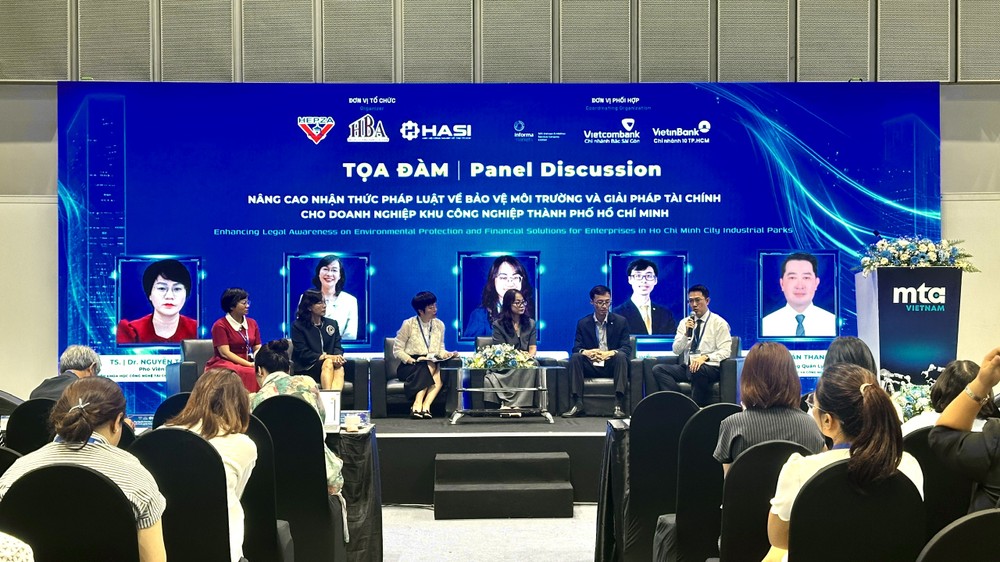
Mr. Tran Viet Ha said businesses must shift from a waste management approach to comprehensive resource management, turning environmental responsibility into a core competitive advantage rather than a compliance burden.
HEPZA is accelerating the transformation of traditional export processing and industrial zones into eco-industrial parks by helping businesses improve resource efficiency, promote industrial symbiosis, reduce landfill waste, measure carbon emissions, and gain access to green financing, advanced technologies, and workforce training, he added.
Assoc. Prof. – Dr. Le Thi Kim Oanh, Dean of the Faculty of Environment at Van Lang University, said Vietnam's evolving environmental policies and development strategies reflected a fundamental shift in the rules governing global trade.
She stressed that the circular economy extends far beyond post-production recycling. Instead, it begins with product design, emphasizing material optimization, longer product life cycles, reuse, and remanufacturing before recycling becomes necessary. The ultimate objective, she said, is to generate greater economic value from every unit of resource consumed.